
Key Takeaways
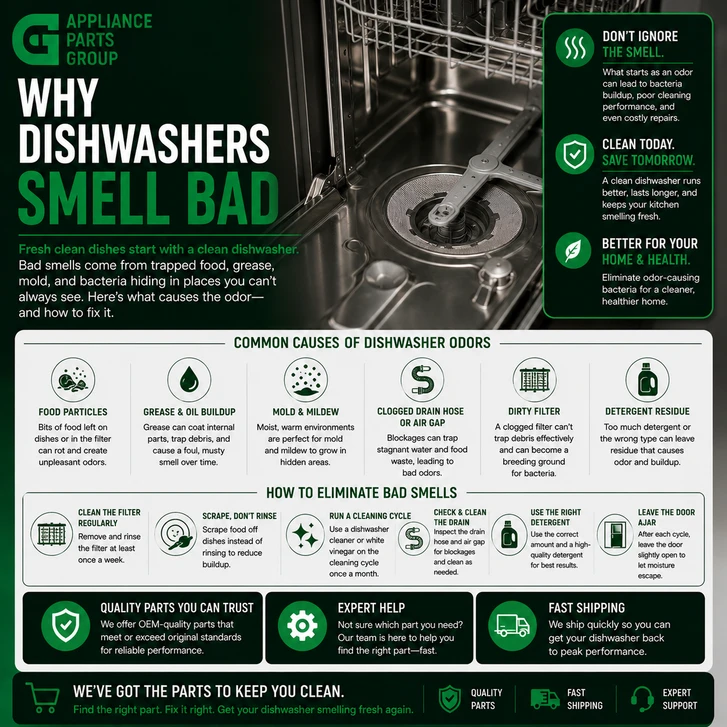
- Most dishwasher odors are caused by trapped food debris, a dirty filter, standing water, grease buildup, or drainage problems.
- A dishwasher that smells like sewage may have a drain hose, garbage disposal, air gap, or household plumbing issue that allows drain odors to reach the dishwasher.
- Cleaning the filter, spray arms, door gasket, sump area, and interior can eliminate many common dishwasher smells without replacing parts.
- Persistent odors accompanied by standing water may indicate a clogged drain hose, restricted check valve, or failing drain pump.
- Regular cleaning, correct loading, proper detergent use, and periodic inspection of dishwasher components can help prevent odors from returning.
Introduction
Opening the dishwasher and being greeted by a bad smell can be especially frustrating when the appliance is supposed to clean your dishes. Dishwasher odors can range from a mild stale-food smell to strong rotten-egg, musty, or sewage-like odors. Fortunately, many dishwasher smells have relatively simple causes.
Food particles are one of the most common sources. Small pieces of food can collect in the dishwasher filter, sump, spray arms, door gasket, or other areas that remain damp between cycles. Grease and detergent residue can also accumulate over time, creating a film that traps debris and produces unpleasant odors.
However, a bad-smelling dishwasher is not always just a cleaning problem. Standing water, improper drainage, a clogged drain hose, an incorrectly installed drain connection, or a malfunctioning drain pump can allow dirty water to remain inside the machine. Plumbing issues can also send odors from a sink drain or garbage disposal back toward the dishwasher.
The smell itself, when it appears, and whether water remains in the bottom of the tub can provide important clues. This guide explains the most common reasons dishwashers smell bad, what homeowners can safely check, which parts may require replacement, and how to keep odors from returning.
Why Does My Dishwasher Smell Bad?
Dishwashers regularly handle food residue, grease, detergent, warm water, and moisture. Although most debris should be washed away during the cycle, small amounts can remain behind. A warm, damp dishwasher provides an environment where residue can begin producing noticeable odors.
If the dishwasher drains correctly and the odor is minor, cleaning is usually the best place to start. If the smell is strong, returns immediately after cleaning, or is accompanied by standing water, the drainage system deserves closer inspection.
1. A Dirty Dishwasher Filter
Many modern dishwashers use a removable filter assembly near the bottom of the tub. Its job is to prevent larger food particles and debris from circulating through the wash system or entering areas where they could interfere with operation.
Over time, grease, food particles, labels, seeds, broken glass, and other debris can collect around the filter. If organic material remains wet for several days, it can produce a strong sour or rotten smell.
Check the owner's manual for instructions before removing the filter because designs vary by manufacturer and model. If the filter is designed for homeowner removal, take it out and rinse away loose debris with warm water. A soft brush can help remove buildup from the screen. Avoid damaging the filter mesh.
2. Food Debris in the Sump Area
The sump is the low area at the bottom of the dishwasher where water collects before being circulated or drained. Even when the visible filter looks clean, debris may sometimes collect around accessible portions of the sump.
Look for pieces of food, broken dish fragments, labels, bones, seeds, or other material near the filter opening. Never reach blindly into the sump because broken glass or sharp objects may be present.
If components must be disassembled to reach the debris, follow the manufacturer's service information or consider using a qualified appliance technician.
3. Standing Water in the Dishwasher
A small amount of water in certain areas beneath the filter may be normal on some dishwasher designs. A noticeable pool of dirty water remaining across the bottom of the tub after a completed cycle, however, can indicate a drainage problem.
Standing wash water quickly becomes a source of odor because it can contain food residue, detergent, grease, and other material removed from dishes.
Drainage problems can involve the filter, drain hose, sink connection, garbage disposal connection, air gap, check valve, or dishwasher drain pump. If your dishwasher both smells bad and is not draining completely, solving the drainage problem is more important than simply masking the odor.
4. A Clogged or Improperly Routed Drain Hose
The dishwasher drain hose carries wastewater from the dishwasher to the household drain system. Grease and debris can sometimes restrict the hose, especially if other parts of the drainage system have also accumulated residue.
Installation is important as well. Dishwasher drain hoses generally need to be routed according to the appliance manufacturer's instructions and applicable plumbing requirements. The proper arrangement helps reduce the possibility of contaminated sink or disposal water flowing backward toward the dishwasher.
If the dishwasher began smelling shortly after installation, replacement, or plumbing work, checking the drain hose arrangement is worthwhile.
5. Garbage Disposal Buildup
Many dishwashers drain through a connection at the kitchen garbage disposal. In these installations, odors that appear to come from the dishwasher may actually originate in the disposal or nearby sink plumbing.
If the sink or disposal smells bad too, clean and inspect that area. Also watch how quickly the sink drains. A slow kitchen drain can indicate a plumbing restriction that should be corrected.
If a dishwasher has recently been installed with a new garbage disposal and will not drain, verify that the disposal's dishwasher connection was prepared according to the disposal manufacturer's installation instructions.
6. A Dirty Dishwasher Door Gasket
The door gasket provides a seal around the dishwasher opening, but its folds and edges can also collect grease, food residue, and detergent film. Because some portions of the gasket may not receive the same washing action as the center of the tub, buildup can remain unnoticed.
Wipe the gasket gently with a damp cloth and inspect it for residue. Pay particular attention to corners and the lower portion of the door. Follow the dishwasher manufacturer's cleaning recommendations and avoid cleaners that could damage rubber or surrounding surfaces.
A gasket that is torn, hardened, distorted, or no longer sealing correctly may eventually need replacement.
7. Grease and Detergent Buildup
A dishwasher can look reasonably clean while still having a thin layer of grease or residue on internal surfaces. Over time, that buildup can trap food particles and contribute to stale odors.
Water temperature, detergent selection, detergent quantity, loading practices, cycle selection, and water hardness can all influence cleaning performance. Always follow the detergent and dishwasher manufacturers' recommendations rather than automatically adding extra detergent.
8. Clogged Spray Arms
Dishwasher spray arms distribute wash water over the dishes. Small particles or mineral deposits can sometimes block individual spray openings. Restricted spray arms do not necessarily create an odor directly, but poor water distribution may leave more food residue behind inside the dishwasher and on dishes.
Check that the spray arms rotate freely and inspect accessible openings for visible obstructions. Follow the owner's manual before removing a spray arm because attachment methods vary between models.
Why Does My Dishwasher Smell Like Sewage?
A sewage-like odor deserves particular attention because the smell may originate outside the dishwasher. Household drain gases, a dirty garbage disposal, a drain connection problem, or wastewater flowing backward can all create smells that seem to come from the appliance.
First determine whether the sink drain or disposal has the same smell. If it does, the source may be the plumbing system rather than the dishwasher itself. If the smell is isolated to the dishwasher, inspect the filter, standing water, drain hose arrangement, and dishwasher drainage system.
If you suspect a household plumbing or sewer-gas problem, contact a qualified plumber rather than attempting to cover the odor with cleaning products.
Why Does My Dishwasher Smell Like Rotten Eggs?
A rotten-egg smell can sometimes result from decomposing food trapped in the filter or sump. Check for food particles first and thoroughly clean homeowner-accessible components according to the manufacturer's directions.
If a similar sulfur-like smell is present from multiple hot or cold water fixtures in the home, the issue may be related to the water supply rather than the dishwasher. In that situation, further investigation of the home's water system may be appropriate.
Why Does a Dishwasher Smell Musty?
A musty smell often develops when moisture remains inside a dishwasher for extended periods. It can be more noticeable in appliances that are used infrequently or remain closed for long periods between cycles.
Clean the filter, gasket, interior surfaces, and other manufacturer-approved accessible areas. After a cycle is complete and conditions allow, following the manufacturer's guidance for ventilation can help moisture dissipate.
Step-by-Step Troubleshooting
- Turn off electrical power when necessary. Disconnect power before inspecting or servicing components that require access beyond normal cleaning areas. Never work on electrical components while the dishwasher is energized.
- Remove the dishes and inspect the tub. Look for visible food debris, standing water, labels, broken glass, or other objects.
- Inspect and clean the filter. If your model has a homeowner-removable filter, remove and clean it according to the owner's manual.
- Check the sump area. Carefully remove visible debris from accessible areas. Be alert for sharp pieces of glass or ceramic.
- Inspect the spray arms. Confirm that the arms can move normally and check accessible spray openings for debris.
- Clean the door and gasket. Wipe residue from the gasket, lower door area, and edges of the tub using manufacturer-approved cleaning methods.
- Run a recommended cleaning cycle. Use a dishwasher cleaning product or cleaning procedure approved for your appliance. Do not mix household cleaning chemicals.
- Run the dishwasher and check drainage. After the cycle, determine whether an unusual amount of dirty water remains in the tub.
- Check the sink and garbage disposal. If the dishwasher connects to the disposal, determine whether odors or slow drainage are also present at the sink.
- Inspect the drain hose if needed. With power disconnected, examine accessible sections for kinks, damage, or installation problems. Follow the manufacturer's specifications for hose routing.
- Consider the drain pump. If the dishwasher consistently fails to drain despite a clear filter, hose, and household drain connection, the drain pump or another drainage component may require diagnosis.
- Use the model number when ordering parts. Dishwasher parts can look similar while having important differences. Verify replacement parts against the complete appliance model number before ordering.
Common Parts That May Need Replacement
If cleaning does not eliminate the odor, a mechanical or drainage issue may be contributing to the problem. Several dishwasher components may be involved.
Dishwasher Filter
A damaged, heavily deteriorated, or missing filter may no longer control debris properly. Replacement filters are model-specific, so use the dishwasher model number to locate the correct OEM component.
Drain Pump
The drain pump moves wastewater out of the dishwasher. If the pump is obstructed, damaged, or electrically defective, water may remain in the tub after a cycle. Because multiple problems can produce the same symptom, diagnose the drainage system before replacing the pump.
Drain Hose
A drain hose may require replacement if it is damaged, severely restricted, leaking, or otherwise unable to function correctly. Replacement hoses must be compatible with the dishwasher and installed using the routing specified for the appliance.
Check Valve
Some dishwasher drainage systems use a check valve or similar component to help control the direction of water flow. A damaged or obstructed valve can contribute to drainage or backflow problems on applicable models.
Door Gasket
If the gasket has deteriorated or become damaged, replacement may be required to maintain the intended seal. Cleaning can remove surface residue but cannot restore physically damaged gasket material.
Spray Arms
Cracked, damaged, or severely restricted spray arms can reduce washing performance. Poor washing may leave additional food debris behind, contributing indirectly to odors.
For replacement components, Appliance Parts Group supplies genuine OEM appliance parts for many major appliance manufacturers. Always confirm compatibility using the model number before purchasing a replacement component.
Preventative Maintenance Tips
- Clean the filter regularly. Follow the maintenance interval recommended for your dishwasher model.
- Remove large scraps before loading. Avoid placing bones, labels, large food pieces, and other debris into the dishwasher.
- Use the correct detergent. Follow both the dishwasher and detergent manufacturer's recommendations.
- Do not routinely overload the racks. Poor loading can interfere with spray-arm movement and prevent water from reaching dishes effectively.
- Inspect spray arms periodically. Make sure they turn freely and are not blocked by tall dishes or utensils.
- Clean the gasket and door edges. These areas can accumulate residue even when the tub looks clean.
- Pay attention to slow drainage. Correct drainage problems before standing dirty water begins creating persistent odors.
- Use appropriate cleaning products. Follow manufacturer instructions and never mix cleaning chemicals.
When a Bad Dishwasher Smell Means You Need a Repair
An occasional mild odor that disappears after cleaning usually does not indicate a major failure. Repeated odors combined with drainage problems are different.
Consider further diagnosis if the dishwasher regularly leaves substantial dirty water in the tub, produces unusual drain-pump noises, stops during cycles, leaks, displays an error code, or fails to clean dishes despite a clean filter and proper loading.
Electrical diagnosis and internal dishwasher repairs can involve exposed wiring, sharp metal edges, hot components, and water connections. If you are not comfortable servicing the appliance, contact a qualified appliance repair professional.
Another useful resource is Appliance Parts Group's guide to why dishwashers leak, since drainage, hose, pump, and gasket problems can sometimes produce both odor and leakage symptoms.
Frequently Asked Questions
Why does my dishwasher smell bad even after I clean it?
If the filter and interior have already been cleaned, check for standing water, drainage restrictions, drain hose problems, garbage disposal odors, or debris in less visible areas. A recurring smell may indicate that the underlying source has not been corrected.
Why does my dishwasher smell like sewage?
Sewage-like smells can be associated with the sink drain, garbage disposal, drain hose installation, wastewater backflow, or household plumbing. Determine whether the sink has the same odor before assuming the dishwasher itself is responsible.
Can a dirty dishwasher filter cause a bad smell?
Yes. Food particles and grease trapped in a dishwasher filter can remain wet between cycles and develop a strong odor. Cleaning a removable filter is one of the first troubleshooting steps for a smelly dishwasher.
Why is there dirty water sitting in the bottom of my dishwasher?
Significant standing water can result from a clogged filter, restricted drain hose, sink or disposal problem, obstructed drainage component, or faulty drain pump. The exact cause should be diagnosed before parts are replaced.
Can a bad drain pump make my dishwasher smell?
It can indirectly. If a malfunctioning drain pump prevents wastewater from leaving the dishwasher, dirty water and food residue may remain in the tub and produce an odor.
How often should I clean my dishwasher filter?
The proper cleaning interval depends on the dishwasher design, frequency of use, and manufacturer recommendations. Check your owner's manual for the maintenance schedule for your specific model.
Why does my dishwasher smell worse when I have not used it for several days?
Food residue and moisture left inside a closed dishwasher can become more noticeable over time. Cleaning the filter and interior and addressing any drainage problem can help prevent odors during periods of infrequent use.
Can the garbage disposal make my dishwasher smell?
Yes. Dishwashers are commonly connected to the kitchen drainage system near the garbage disposal. Odors or drainage problems in that area can sometimes appear to originate inside the dishwasher.
Should water remain under the dishwasher filter?
Some dishwasher designs may retain a small amount of water below the filter or in the sump. A large amount of dirty water covering the bottom of the tub after a completed cycle is more likely to indicate a drainage problem.
Can a clogged spray arm cause dishwasher odors?
A clogged spray arm usually affects cleaning performance rather than creating odor directly. However, reduced washing action can leave additional food residue inside the dishwasher, which can eventually smell.
What dishwasher parts should I check if odors keep returning?
Depending on the symptoms and dishwasher design, inspect the filter, drain hose, drain pump, check valve, spray arms, door gasket, and accessible sump components. Always identify parts using the complete model number.
When should I call an appliance repair technician for a smelly dishwasher?
Professional diagnosis is a good choice when odors are accompanied by persistent standing water, electrical problems, leaks, error codes, unusual noises, or a drainage failure that cannot be resolved through normal homeowner maintenance.
Entities and Terms
- Dishwasher filter
- Dishwasher sump
- Drain pump
- Drain hose
- Check valve
- Door gasket
- Spray arm
- Circulation system
- Garbage disposal
- Dishwasher air gap
- Drain connection
- OEM dishwasher parts
Find the Right Dishwasher Parts
When a bad dishwasher smell turns out to be a drainage or component problem rather than simple buildup, identifying the correct replacement part starts with the model number. Appliance Parts Group offers genuine OEM replacement parts and resources for a wide range of appliance brands.
This article was written by an AI program as part of a beta test by Appliance Parts Group to explore how artificial intelligence can help inform and educate our customers.
Our goal is to use AI tools to provide clear, reliable information so you can make confident, well-informed purchasing decisions.