
Key Takeaways
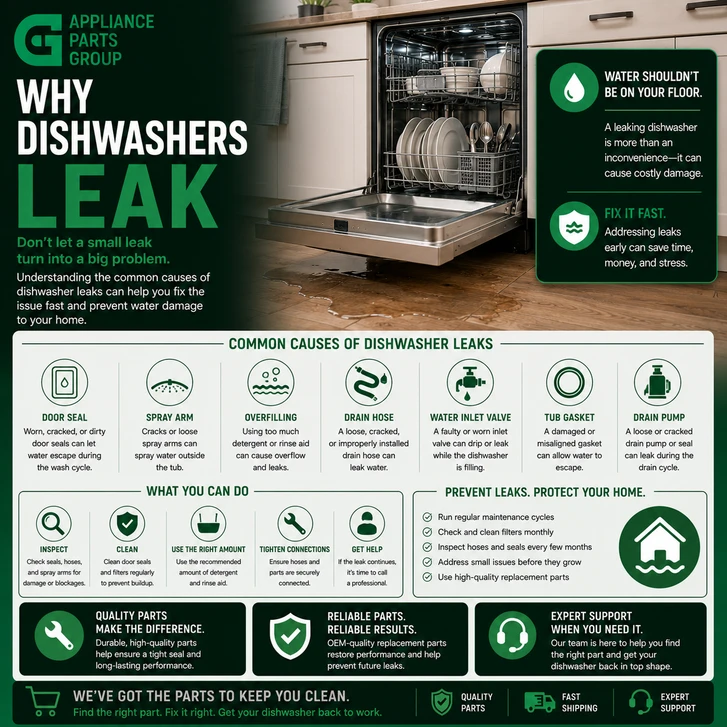
- Most dishwasher leaks are caused by worn door gaskets, clogged spray arms, damaged hoses, faulty valves, or leaking pump assemblies.
- The location of the leak is the best clue for identifying the failed component.
- Front-door leaks often come from gasket issues, oversudsing, improper loading, or spray arm problems.
- Leaks underneath the dishwasher may involve the drain hose, inlet valve, circulation pump, drain pump, or hose connections.
- Using OEM replacement parts helps ensure the correct fit and dependable sealing performance.
Introduction
A leaking dishwasher is one of the most frustrating kitchen appliance problems because it can damage flooring, cabinets, baseboards, and subfloor materials before the source is obvious. Sometimes the leak appears as a small puddle near the front of the appliance. Other times, water collects underneath the unit where hoses, valves, and pumps are hidden from view.
The good news is that many dishwasher leaks come from common wear items or maintenance issues. A cracked door gasket, loose hose clamp, clogged spray arm, or faulty water inlet valve can all allow water to escape during a wash or drain cycle. By identifying when and where the leak happens, homeowners can narrow down the likely cause and determine which part may need cleaning, adjustment, or replacement.
Common Reasons Dishwashers Leak
Worn Door Gasket
The door gasket is the rubber seal that runs around the dishwasher door opening. Its job is to keep water inside the tub while the spray arms are running. Over time, heat, detergent, food residue, and normal wear can cause the gasket to harden, crack, flatten, or pull away from the frame.
If water is leaking from the front of the dishwasher, especially near the sides or bottom corners of the door, the gasket should be one of the first parts inspected. Look for tears, gaps, loose sections, hardened rubber, or debris stuck along the sealing surface.
Damaged Bottom Door Seal
Some dishwasher models use a separate lower door seal or splash shield. This part helps prevent water from escaping along the bottom edge of the door. If the lower seal becomes warped, brittle, or damaged, water may drip from the lower front edge of the appliance.
Clogged or Cracked Spray Arms
Spray arms move water throughout the dishwasher tub. If the spray arm holes become clogged with food particles or mineral deposits, water may spray in the wrong direction. Instead of circulating evenly, the water may hit the door seal with too much force and cause a leak.
A cracked spray arm can create a similar problem by sending a concentrated stream of water toward the door. Cleaning or replacing the spray arm may restore proper water flow.
Improper Loading
Overloading the dishwasher can block the spray arms, prevent the door from closing correctly, or redirect water toward the front seal. Large pans, cutting boards, and utensils can interfere with spray arm rotation or create splash-back during the cycle.
If a dishwasher only leaks during certain loads, improper loading may be the cause.
Too Much Detergent or Oversudsing
Using too much detergent or the wrong type of soap can create excessive suds. Dishwashers are designed for low-sudsing dishwasher detergent only. When too many suds form, they can push water and foam past the door seal.
Oversudsing is especially common when liquid dish soap is accidentally used instead of dishwasher detergent.
Faulty Water Inlet Valve
The water inlet valve controls how much water enters the dishwasher. If the valve sticks open or does not shut off properly, the tub may overfill. Too much water inside the dishwasher can cause leaking around the door or underneath the appliance.
A failing inlet valve may also leak from the valve body or connection points beneath the unit.
Float Switch Problems
The float and float switch help monitor the water level inside the dishwasher. If the float is stuck, blocked by debris, or not moving freely, the dishwasher may overfill. This can lead to water escaping through the door or overflow area.
Damaged Drain Hose
The drain hose carries used water from the dishwasher to the sink drain, garbage disposal, or air gap. If the hose is cracked, kinked, punctured, or loose at a connection point, water may leak during the drain cycle.
Leaks from the drain hose are often found underneath the dishwasher or inside the sink cabinet.
Loose Hose Clamps or Fittings
Even if a hose is not damaged, loose clamps or fittings can allow water to escape. Vibrations from normal dishwasher operation may loosen connections over time. Inspecting clamps, elbows, and hose connections can help locate smaller leaks.
Leaking Circulation Pump
The circulation pump moves water through the spray arms during the wash cycle. If the pump seal wears out or the pump housing cracks, water may leak from underneath the center of the dishwasher.
A circulation pump leak may appear only while the dishwasher is washing, not while it is filling or draining.
Leaking Drain Pump
The drain pump removes water from the dishwasher at the end of the cycle. If the drain pump seal or housing fails, water may leak underneath the appliance during draining.
Cracked Dishwasher Tub
A cracked tub is less common but can happen on older dishwashers or units that have been damaged. If the tub itself is cracked, water may leak consistently from the same area during operation.
How Leak Location Helps Diagnose the Problem
Water Leaking from the Front Door
A front-door leak usually points to a door gasket, bottom seal, oversudsing, spray arm issue, or loading problem. Inspect the seal first, then check for blocked spray arms and excessive suds.
Water Under the Dishwasher
Water underneath the appliance may indicate a leaking hose, loose clamp, water inlet valve, pump seal, pump housing, or internal connection. The lower access panel may need to be removed for inspection.
Water Near the Sink Cabinet
If water appears inside the sink cabinet, the drain hose connection, garbage disposal connection, air gap, or household plumbing may be the source.
Water Appearing Only During Fill
A leak that appears during the fill portion of the cycle may involve the water inlet valve, water supply line, float switch, or tub overfill condition.
Water Appearing Only During Drain
A leak during draining often points to the drain hose, drain pump, drain hose clamp, air gap, or sink drain connection.
Step-by-Step Troubleshooting
- Turn off power to the dishwasher. Disconnect power at the breaker or unplug the appliance before inspecting internal parts.
- Check the floor and cabinet area. Identify whether the water is coming from the front, side, underneath, or sink cabinet.
- Inspect the door gasket. Look for cracks, flattening, hardened rubber, loose areas, or food debris.
- Check the bottom door seal. Inspect the lower edge of the door for wear or damage.
- Look for oversudsing. Open the dishwasher after a leak and check for excessive foam or soap residue.
- Inspect dishwasher loading. Make sure large dishes are not blocking spray arms or pushing against the door.
- Clean the spray arms. Remove food particles or mineral buildup from the spray arm holes.
- Verify the dishwasher is level. An unlevel dishwasher can allow water to collect toward the door.
- Inspect the drain hose. Look for cracks, kinks, loose clamps, and leaks during the drain cycle.
- Check the water inlet valve. Look for leaks, corrosion, or signs of overfilling.
- Inspect the float assembly. Make sure the float moves freely and is not blocked by debris.
- Check pumps and seals. Look underneath the appliance for water near the circulation pump or drain pump.
Common Parts That May Need Replacement
Door Gasket
A worn or damaged door gasket is one of the most common causes of dishwasher leaks. Replacing the gasket can restore the seal around the dishwasher opening.
Bottom Door Seal
The lower door seal helps keep water from escaping along the bottom of the door. If it is warped, cracked, or missing, replacement may be necessary.
Spray Arm
A cracked or clogged spray arm can force water toward the door seal. Replacing a damaged spray arm can improve washing performance and prevent leaks.
Water Inlet Valve
If the dishwasher overfills or leaks while filling, the water inlet valve may be defective. An OEM inlet valve helps ensure proper fit and water flow control.
Float Switch
The float switch helps prevent overfilling. If it fails, the dishwasher may take in too much water and leak.
Drain Hose
A cracked or loose drain hose can leak during the drain cycle. Replacing the hose can help prevent water damage under the dishwasher or sink.
Circulation Pump Assembly
If water leaks from the center underside of the dishwasher during the wash cycle, the circulation pump or pump seal may be the cause.
Drain Pump
If the leak appears during draining, the drain pump housing or seal may need replacement.
Hose Clamps and Connectors
Loose clamps, worn connectors, and damaged fittings can create small but persistent leaks.
Why OEM Dishwasher Parts Are Important
Dishwashers rely on tight seals, controlled water flow, and properly fitted hoses. OEM replacement parts are designed to match the original appliance specifications, which can be especially important for gaskets, valves, pumps, hoses, and spray arms.
Using the correct OEM part helps ensure the replacement component fits properly and performs as intended for the specific dishwasher model.
Preventative Maintenance Tips
- Inspect the door gasket every few months for cracks, debris, or compression damage.
- Clean the dishwasher filter regularly to prevent water flow problems.
- Remove and rinse spray arms if dishes are not cleaning well or spray holes appear clogged.
- Use only dishwasher detergent and follow the recommended amount.
- Avoid overloading racks or blocking the spray arms.
- Check the drain hose and water supply line during routine maintenance.
- Keep the dishwasher level after installation or flooring changes.
- Run cleaning cycles as recommended by the appliance manufacturer.
Frequently Asked Questions
Why is my dishwasher leaking from the front?
A front leak is often caused by a worn door gasket, damaged bottom door seal, oversudsing, blocked spray arm, or improper loading.
Can a bad door gasket cause a dishwasher leak?
Yes. If the door gasket is cracked, flattened, loose, or hardened, water can escape around the dishwasher door.
Why is my dishwasher leaking underneath?
Leaks underneath the dishwasher may come from the drain hose, water inlet valve, circulation pump, drain pump, hose clamps, or internal water connections.
Can too much soap make a dishwasher leak?
Yes. Too much detergent or the wrong type of soap can create excessive suds that push water past the door seal.
Can a clogged spray arm cause leaking?
Yes. A clogged or cracked spray arm can direct water toward the door instead of distributing it evenly through the tub.
Why does my dishwasher only leak during the drain cycle?
A leak during draining often points to the drain hose, drain pump, drain hose clamp, air gap, or sink drain connection.
Why does my dishwasher only leak while filling?
A fill-cycle leak may involve the water inlet valve, water supply line, float switch, or an overfill condition.
Can an unlevel dishwasher leak?
Yes. If the dishwasher is not level, water may collect toward the front of the tub and leak through the door area.
Should I replace a leaking dishwasher hose?
Yes. A cracked, brittle, or punctured hose should be replaced to prevent continued leaking and possible water damage.
How do I know if the inlet valve is bad?
Signs of a faulty inlet valve include overfilling, leaking during the fill cycle, water entering the dishwasher when it is off, or visible leaking near the valve.
Is it safe to use a leaking dishwasher?
No. A leaking dishwasher can damage flooring, cabinets, and electrical components. It should be inspected and repaired before further use.
What is the most common dishwasher leak repair?
Replacing a worn door gasket is one of the most common dishwasher leak repairs, especially when water is leaking from the front door area.
Entities and Terms
- Dishwasher door gasket
- Bottom door seal
- Spray arm
- Water inlet valve
- Float switch
- Drain hose
- Circulation pump
- Drain pump
- Hose clamp
- Water supply line
- Dishwasher tub
- Dishwasher filter
- Air gap
- Garbage disposal connection
- Pump seal
This article was written by an AI program as part of a beta test by Appliance Parts Group to explore how artificial intelligence can help inform and educate our customers.
Our goal is to use AI tools to provide clear, reliable information so you can make confident, well-informed purchasing decisions.