
Key Takeaways
- Beverage centers are compact refrigeration appliances designed to keep drinks organized and chilled while fitting into kitchens, bars, entertainment spaces, offices, and outdoor living areas.
- Although they resemble small refrigerators, many beverage centers use specialized temperature controls, shelving, airflow systems, and glass-door designs tailored specifically for beverage storage.
- Common beverage center problems include inadequate cooling, excessive running, temperature fluctuations, frost buildup, unusual noises, and doors that do not seal properly.
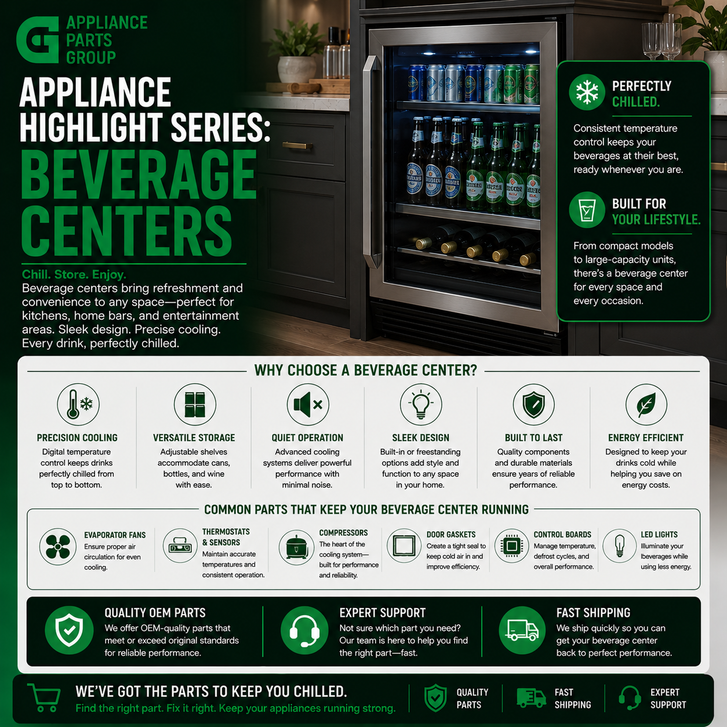
- Temperature sensors, thermostats, evaporator fans, condenser fans, control boards, door gaskets, relays, and compressors are among the components that may require service during the appliance's life.
- Regular cleaning, adequate ventilation, proper loading, and prompt replacement of worn OEM components can help a beverage center deliver dependable cooling for years.
Introduction
A beverage center can be one of those appliances you do not realize you need until you have one. Instead of filling the main refrigerator with cans, bottled water, soda, mixers, juice, and other drinks, a dedicated beverage center keeps everything organized and easy to reach.
These compact refrigeration appliances have become especially popular in home bars, finished basements, game rooms, kitchens, offices, outdoor entertainment areas, and other spaces where convenient access to cold drinks is important. Built-in models can fit neatly beneath a countertop, while freestanding units provide additional flexibility when designing a room.
At first glance, a beverage center may look like a miniature refrigerator. Internally, however, it contains many of the same types of refrigeration components found in a full-size refrigerator, including a compressor, condenser, evaporator, temperature controls, fans, sensors, and electronic components. Those parts work together to remove heat from the cabinet and maintain the temperature selected by the user.
Understanding how beverage centers work can make it easier to recognize early signs of trouble, perform basic maintenance, and determine when a replacement component may be needed.
What Is a Beverage Center?
A beverage center is a compact refrigeration appliance primarily designed for storing beverages. Depending on the model, the appliance may hold canned drinks, bottled beverages, mixers, water, juice, and similar items on shelves or racks designed to maximize storage capacity.
Many models feature a glass door so users can see the contents without opening the appliance. Other models use solid insulated doors that resemble an undercounter refrigerator. Adjustable shelving allows the interior configuration to be changed for different bottle and can sizes.
Beverage centers are commonly available as either freestanding or built-in appliances. A freestanding beverage cooler generally requires ventilation space around the cabinet according to the manufacturer's installation instructions. Built-in models are designed so the ventilation system can operate while the appliance is surrounded by cabinetry.
Some premium manufacturers specialize in undercounter refrigeration and beverage storage. For example, AGA Marvel beverage center and refrigeration parts are available through Appliance Parts Group for compatible models.
How Does a Beverage Center Work?
Most compressor-based beverage centers operate using the same fundamental refrigeration cycle as household refrigerators. The compressor circulates refrigerant through a sealed refrigeration system. Heat is absorbed from the interior cabinet and released through the condenser side of the system.
Inside the appliance, an evaporator becomes cold as refrigerant moves through it. Depending on the design, an evaporator fan may circulate chilled air around the stored beverages. A temperature sensor or thermostat monitors cabinet conditions and signals the refrigeration system when additional cooling is required.
The condenser releases heat removed from the cabinet. Some beverage centers use natural airflow around the condenser, while others use a condenser fan motor to improve heat removal.
Electronic models may use a control board to interpret temperature sensor readings, control the compressor and fans, operate lighting, manage alarms, and display the selected temperature.
Why Choose a Dedicated Beverage Center?
The biggest advantage of a beverage center is dedicated storage. Drinks can occupy a surprising amount of space in a household refrigerator, particularly before parties, holidays, or family gatherings. Moving beverages into a separate appliance leaves more room for food in the main refrigerator.
A beverage center can also reduce traffic at the primary refrigerator. Guests or family members can access drinks without repeatedly opening the kitchen refrigerator door.
Adjustable beverage shelves are another advantage. Many models are configured specifically for rows of cans and bottles, allowing more drinks to fit into a relatively small cabinet.
For homeowners designing entertainment areas, a built-in beverage center can also provide refrigeration where it is most useful. Instead of walking back to the kitchen, cold drinks can be kept directly in a wet bar, basement, patio kitchen, or entertainment room.
Common Beverage Center Problems
Beverage Center Not Cooling
A beverage center that runs but does not become cold enough is one of the most common refrigeration complaints. Several issues can produce this symptom.
Start with simple causes. Make sure the appliance has power, the temperature setting has not been changed accidentally, and the door is closing completely. Check that bottles or cans are not preventing the door from sealing.
A dirty condenser can reduce the appliance's ability to release heat. Restricted airflow around a built-in installation can also contribute to poor cooling.
If those conditions are normal, possible component-related causes include a failed temperature sensor, thermostat, evaporator fan, condenser fan, compressor starting component, control board, or sealed-system problem.
Beverage Center Runs Constantly
A refrigeration appliance will normally cycle on and off as necessary to maintain its selected temperature. If the beverage center appears to run almost continuously, it may be compensating for excess heat entering the cabinet or having difficulty removing heat from the refrigeration system.
A damaged or poorly sealing door gasket is one possible cause. Warm room air can continually enter through gaps around the door, forcing the refrigeration system to work longer.
Other possibilities include dirty condenser surfaces, blocked ventilation, frequent door opening, an unusually warm room, a sensor problem, or an issue with the cooling system.
Temperature Fluctuations
If beverages alternate between being too warm and unusually cold, inspect the temperature setting and interior loading first. Blocking interior air passages with tightly packed cans or bottles can interfere with airflow in some designs.
A temperature sensor or thermostat that is no longer reading conditions correctly can also produce inconsistent cooling. Electronic control problems may cause similar symptoms.
Excessive Frost or Ice
Frost inside a beverage center can indicate that humid outside air is entering the cabinet. Check the door gasket for gaps, tears, hardened sections, or debris preventing the gasket from contacting the cabinet.
Leaving the door open for extended periods can also introduce significant moisture. On models equipped with an automatic defrost system, excessive frost may require further diagnosis of defrost-related components.
Unusual Noises
Some operating sounds are completely normal. Compressors may hum, refrigerant can produce flowing or gurgling sounds, and fans generate airflow noise.
New rattling, scraping, grinding, or repeated clicking sounds deserve closer attention. A fan blade may be contacting ice or another object, a fan motor may be wearing out, or the compressor may be having difficulty starting.
Before replacing a part, confirm that the appliance is level and that bottles, shelves, or cabinet panels are not simply vibrating while the compressor runs.
Door Does Not Seal Correctly
A beverage center door must close securely to keep warm room air out of the refrigerated cabinet. Examine the door gasket closely if you notice condensation, long cooling cycles, or temperature problems.
Food residue, spilled beverages, or debris can sometimes keep the gasket from sealing. Clean the gasket and mating cabinet surface with a mild cleaning solution appropriate for the appliance.
If the gasket is torn, deformed, brittle, or permanently compressed, replacement may be necessary.
Step-by-Step Troubleshooting
- Confirm electrical power. Make sure the beverage center is plugged in securely and that the outlet is working. Check the household circuit breaker if the appliance is completely unresponsive.
- Check the control settings. Verify that the appliance has not been switched off or placed in a special mode. Confirm that the selected temperature is appropriate for the beverages being stored.
- Allow for recent loading. Adding a large quantity of room-temperature drinks can temporarily raise cabinet temperature. Give the appliance time to remove the added heat before assuming a component has failed.
- Inspect the door. Make sure bottles, cans, or shelves are not preventing the door from closing completely. Look around the entire gasket for visible gaps or damage.
- Check ventilation. Follow the manufacturer's clearance requirements. Do not block front ventilation grilles or other openings used to move air through the refrigeration compartment.
- Inspect accessible condenser areas. If the manufacturer's instructions permit homeowner cleaning, disconnect power and remove dust or debris from accessible condenser surfaces and ventilation areas.
- Listen for fan operation. On models equipped with fans, unusual silence, grinding noises, or scraping sounds may indicate a fan problem. Never place fingers or tools near a moving fan.
- Look for frost patterns. Significant frost or ice may point toward an airflow, door-sealing, or defrost problem. Do not chip ice from refrigeration components with sharp objects.
- Observe compressor operation. Repeated clicking followed by no sustained compressor operation may require professional diagnosis of the compressor and its starting components.
- Use the model number before ordering parts. Beverage center components can vary significantly between models that look almost identical. Verify the appliance's complete model information before purchasing an OEM replacement part.
Common Parts That May Need Replacement
Door Gasket
The door gasket forms the flexible seal between the door and cabinet. Over time, a gasket can become torn, compressed, hardened, or damaged. A poor seal allows warm, humid air into the beverage center and can increase cooling demand.
Temperature Sensor or Thermistor
Many electronic beverage centers use a thermistor or temperature sensor to monitor cabinet or evaporator temperature. The control board uses this information to determine when cooling is needed.
A sensor problem can contribute to temperatures that are too warm, too cold, or inconsistent.
Thermostat
Some beverage centers use a mechanical or electronic thermostat as part of the temperature-control system. If it no longer responds correctly to cabinet temperature, the compressor may run incorrectly or fail to start when cooling is needed.
Evaporator Fan Motor
Models using forced-air cooling may contain an evaporator fan that moves cold air through the interior. A failed fan can create uneven cabinet temperatures even when the refrigeration system itself is producing cooling.
Condenser Fan Motor
A condenser fan helps move air across the condenser and compressor compartment on models equipped with one. If the fan stops, heat can accumulate around refrigeration components and cooling performance may decline.
Electronic Control Board
Modern beverage centers may rely on a control board for compressor operation, fan operation, temperature monitoring, lighting, alarms, and display functions. Control boards should generally be diagnosed only after power, wiring, sensors, and other relevant components have been checked.
Compressor Relay, Overload, or Starting Components
The compressor may use a relay, overload protector, capacitor, or combination starting device. When one of these components fails, the compressor may click repeatedly, fail to start, or operate intermittently.
Compressor
The compressor is the heart of a vapor-compression refrigeration system. Compressor diagnosis and sealed-system repair require specialized tools and training and are generally jobs for a qualified refrigeration technician.
When replacing serviceable components, use the appliance's full model number to identify the correct part. Appliance Parts Group provides genuine OEM appliance replacement parts for many refrigeration and appliance brands. If you are uncertain about compatibility, contact Appliance Parts Group with the model number for assistance identifying the correct component.
Preventative Maintenance Tips
Good maintenance cannot prevent every component failure, but it can reduce unnecessary stress on the cooling system and make emerging problems easier to identify.
Keep Ventilation Areas Clear
Do not cover ventilation grilles or crowd a freestanding appliance into a space that does not meet its installation requirements. Refrigeration systems must release heat to the surrounding environment.
Clean Dust From Accessible Areas
Dust and pet hair can accumulate around ventilation openings and condenser areas. Follow the manufacturer's maintenance instructions when cleaning these surfaces. Disconnect electrical power before servicing accessible mechanical areas.
Clean the Door Gasket
Wipe the gasket regularly to remove spills and sticky residue. While cleaning it, inspect for cracks, tears, or sections that no longer contact the cabinet properly.
Avoid Overloading the Interior
A beverage center is designed to hold a substantial number of drinks, but tightly packing every available space can restrict airflow in models that depend on interior air circulation. Keep designated air passages clear.
Close the Door Promptly
Leaving the door open allows warm, humid air into the appliance. This adds heat the refrigeration system must remove and can contribute to condensation or frost.
Check Temperature Periodically
Do not wait until drinks feel obviously warm to notice a cooling problem. Periodically checking the displayed or measured cabinet temperature can help reveal a developing issue.
Address New Noises Quickly
If a normally quiet appliance begins rattling, grinding, scraping, or repeatedly clicking, investigate the source. A relatively small fan or mounting issue may become more serious if it is ignored.
Beverage Centers vs. Wine Coolers
Beverage centers and wine refrigerators can look very similar, but they may be designed around different storage priorities.
A general beverage center is intended for products such as canned soda, bottled water, mixers, and other cold drinks. Wine refrigerators may use temperature ranges, shelving configurations, and storage zones developed specifically for wine bottles.
Some premium undercounter appliances combine both purposes or include separate zones. Before using any beverage refrigeration product for long-term wine storage, consult the appliance manufacturer's recommended operating temperatures and intended use.
Built-In Beverage Centers and Installation
Built-in beverage centers have become popular because they can be integrated beneath kitchen or bar countertops while providing the finished appearance of a permanent appliance.
Installation requirements matter. A model designed for built-in installation may direct warm air through a front-mounted ventilation system. Blocking that airflow with trim, rugs, stored items, or other obstructions can interfere with heat removal.
Freestanding beverage refrigerators should not automatically be converted into built-in appliances. Always follow the installation configuration and clearances specified for the exact model.
Homeowners planning outdoor entertainment spaces may also want to read APG's Appliance Highlight Series: Outdoor Kitchens, which covers specialty refrigeration and other appliances commonly installed in outdoor living areas.
When Should You Call a Professional?
Basic cleaning, checking settings, inspecting a gasket, and verifying airflow are reasonable first steps for many homeowners. More complex electrical and refrigeration work requires additional caution.
Consider contacting a qualified appliance or refrigeration technician when troubleshooting involves compressor testing, sealed refrigerant lines, refrigerant recovery, electrical control diagnosis, or a problem that cannot be isolated safely.
Disconnect electrical power before accessing internal service areas. If you smell burning insulation, see damaged wiring, or find evidence of overheating, discontinue use until the appliance has been evaluated.
Frequently Asked Questions
What is a beverage center?
A beverage center is a compact refrigeration appliance designed primarily to organize and chill canned and bottled drinks. Many models are installed beneath countertops in kitchens, bars, offices, and entertainment areas.
Is a beverage center the same as a mini refrigerator?
Not necessarily. Although the appliances use similar refrigeration principles, beverage centers may have specialized shelving, glass doors, temperature controls, and airflow systems designed around beverage storage rather than general food storage.
Why is my beverage center not getting cold?
Possible causes range from incorrect settings and poor ventilation to a damaged door gasket, dirty condenser area, failed fan, temperature sensor problem, control issue, compressor starting problem, or sealed-system failure.
Why does my beverage center run constantly?
Continuous operation can occur when the cabinet is gaining excess heat or when the refrigeration system is struggling to reach the selected temperature. Check the door seal, ventilation, condenser cleanliness, room conditions, and temperature setting first.
Why is there frost inside my beverage center?
Frost often forms when moist room air enters the refrigerated cabinet. Check whether the door is being left open, whether stored items prevent it from closing, and whether the door gasket seals correctly.
What temperature should I set my beverage center to?
The appropriate setting depends on the appliance and the beverages being stored. Follow the temperature range and usage recommendations in the owner's manual for your specific model.
Why is my beverage center making noise?
Some compressor, fan, and refrigerant-flow sounds are normal. New grinding, scraping, rattling, or repetitive clicking may indicate a fan problem, vibration, loose component, or compressor starting issue that should be investigated.
Can a damaged beverage center door gasket affect cooling?
Yes. A damaged gasket can allow warm room air into the cabinet. This can cause longer cooling cycles, temperature instability, condensation, or frost accumulation.
How often should I clean my beverage center?
Clean spills and interior surfaces as needed and inspect ventilation areas, the door gasket, and accessible condenser areas periodically according to the manufacturer's maintenance instructions. Homes with pets or high dust levels may require more frequent cleaning.
Can I replace beverage center parts myself?
Some accessible components may be suitable for experienced DIY repair, but the difficulty varies significantly by model. Electrical diagnosis, compressor work, and sealed refrigeration-system repairs should be handled by qualified professionals.
How do I find the correct replacement part?
Locate the complete appliance model number on the manufacturer's identification label and use that information when searching for parts. Components can differ between visually similar models, so model-specific verification is important.
Where can I find OEM beverage center parts?
Appliance Parts Group supplies genuine OEM appliance replacement parts for many refrigeration brands. Browse AGA Marvel parts, visit all products, or contact APG for help identifying a model-specific component.
Entities and Terms
- Beverage center
- Undercounter refrigerator
- Beverage cooler
- Compressor
- Condenser
- Evaporator
- Evaporator fan motor
- Condenser fan motor
- Temperature sensor
- Thermistor
- Thermostat
- Electronic control board
- Compressor relay
- Overload protector
- Door gasket
- Refrigeration system
- OEM replacement parts
Keeping Your Beverage Center Ready for the Next Gathering
A beverage center provides a simple benefit: cold drinks where you want them without sacrificing valuable space in the main refrigerator. Behind that convenience is a compact refrigeration system that depends on proper airflow, temperature sensing, door sealing, and reliable mechanical and electronic components.
When cooling performance changes, start with basic conditions such as settings, door closure, loading, ventilation, and cleanliness. These checks can resolve simple problems and provide useful clues when a component has actually failed.
If a replacement part is necessary, identify the appliance by its complete model number before ordering. Model-specific OEM components help ensure that the replacement is designed for the appliance being repaired.
Appliance Parts Group supplies genuine OEM replacement parts for household and specialty refrigeration equipment. Browse AppliancePartsGroup.com or contact the APG team when you need assistance locating a compatible part for your beverage center.
This article was written by an AI program as part of a beta test by Appliance Parts Group to explore how artificial intelligence can help inform and educate our customers.
Our goal is to use AI tools to provide clear, reliable information so you can make confident, well-informed purchasing decisions.