
Key Takeaways
- Outdoor kitchens have evolved from simple grills into fully equipped cooking and entertaining spaces.
- Weather-resistant appliances and OEM replacement parts are essential for long-term performance.
- Proper maintenance helps prevent corrosion, electrical failures, and premature component wear.
- Outdoor refrigeration, cooking, and storage appliances require different care than indoor appliances.
- Understanding common replacement parts can help homeowners keep outdoor kitchens operating efficiently year-round.
Introduction
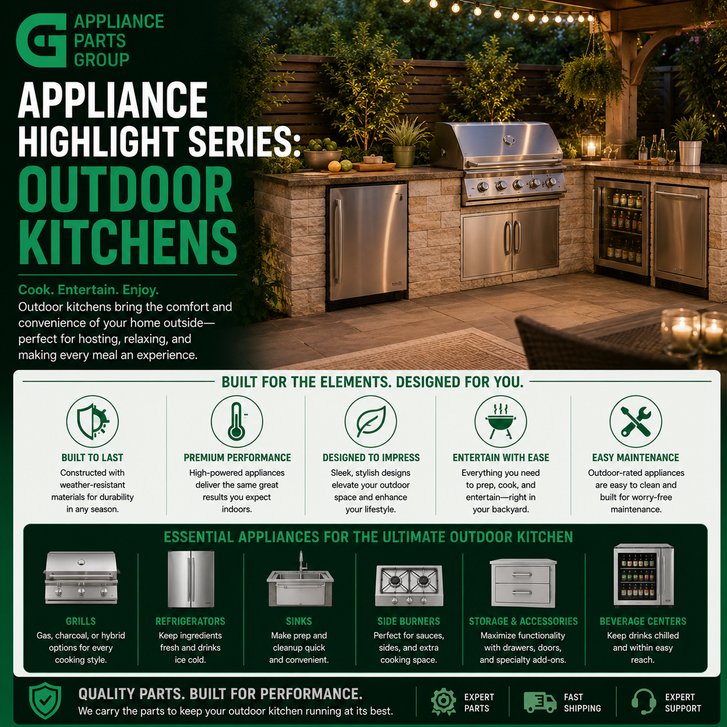
Outdoor living spaces have become one of the most desirable home upgrades for homeowners who enjoy cooking, entertaining, and spending time outside. What was once limited to a backyard grill has evolved into a complete outdoor kitchen featuring refrigerators, ice makers, beverage centers, side burners, pizza ovens, storage cabinets, sinks, and even outdoor-rated dishwashers.
An outdoor kitchen can make hosting easier, reduce trips back and forth to the indoor kitchen, and create a more functional backyard space. However, outdoor appliances face conditions that indoor appliances rarely encounter. Heat, humidity, rain, dust, insects, grease, UV exposure, and seasonal temperature changes can all place stress on appliance components.
In this Appliance Highlight Series article, we’ll explore the most common outdoor kitchen appliances, how they work, what problems homeowners may notice, and which OEM replacement parts may help keep them operating reliably.
What Is an Outdoor Kitchen?
An outdoor kitchen is a dedicated cooking, cooling, storage, and food preparation area built outside the home. Some outdoor kitchens are simple grill islands, while others are fully equipped spaces with refrigeration, water lines, electrical outlets, lighting, cabinetry, and multiple cooking appliances.
Common outdoor kitchen appliances include built-in gas grills, outdoor refrigerators, beverage coolers, ice makers, side burners, warming drawers, pizza ovens, outdoor sinks, ventilation hoods, and storage drawers.
The key difference is that outdoor-rated appliances are designed for harsher environments. They often include stainless steel construction, sealed controls, weather-resistant finishes, improved ventilation, and components intended to handle wider temperature ranges.
Why Outdoor Appliances Need Special Attention
Outdoor appliances work in a much tougher environment than most indoor appliances. A refrigerator inside a climate-controlled kitchen does not face direct summer heat, freezing winter temperatures, wind-driven rain, pollen, insects, or salt air near coastal areas.
Because of this, outdoor kitchen maintenance is especially important. Even high-quality outdoor appliances can develop problems if airflow is blocked, grease builds up, water enters electrical components, or seals begin to crack.
Popular Outdoor Kitchen Appliances
Built-In Grills
The grill is usually the centerpiece of an outdoor kitchen. Built-in gas grills are popular because they offer convenient cooking, permanent installation, and a clean finished appearance.
Common built-in grill components include burner tubes, ignition modules, spark electrodes, cooking grates, heat plates, temperature gauges, control knobs, gas valves, and drip trays. Since grills operate at high temperatures and collect grease over time, burner and ignition issues are among the most common repair concerns.
Outdoor Refrigerators
Outdoor refrigerators keep beverages, condiments, and food ingredients close at hand. Unlike indoor refrigerators, outdoor models are built to operate in changing ambient temperatures.
Important outdoor refrigerator parts include door gaskets, thermostats, temperature sensors, evaporator fans, condenser fan motors, control boards, compressors, shelves, and light switches.
Beverage Centers
Beverage centers are designed to keep drinks cold and organized. They are a popular addition to outdoor entertainment areas because they reduce traffic in and out of the house.
Door gasket condition, condenser airflow, thermostat accuracy, and fan operation are especially important for maintaining consistent cooling.
Outdoor Ice Makers
Outdoor ice makers provide a convenient supply of ice for parties, cookouts, and daily outdoor use. These appliances rely on clean water flow, proper drainage, and consistent freezing cycles.
Common ice maker parts include water inlet valves, water filters, ice molds, cutting grids, drain pumps, level sensors, thermostats, and control boards.
Side Burners and Power Burners
Side burners allow homeowners to prepare sauces, boil water, steam vegetables, or cook side dishes without using the indoor stovetop. Power burners are designed for higher heat cooking and may be used with larger pots or specialty cookware.
Igniters, burner caps, gas valves, knobs, and regulators are common parts that may need inspection or replacement over time.
Pizza Ovens
Outdoor pizza ovens are increasingly popular for homeowners who want high-temperature cooking. Gas, wood-fired, and hybrid pizza ovens may include burners, thermocouples, temperature sensors, stones, doors, and ignition parts.
Common Outdoor Kitchen Appliance Problems
Grill Igniter Will Not Spark
If a grill does not spark, the problem may involve a weak battery, worn spark electrode, damaged ignition wire, failed ignition module, or moisture in the ignition system. Grease buildup can also interfere with proper spark performance.
Grill Burner Has Uneven Flame
Uneven flames may be caused by clogged burner ports, corrosion, blocked gas flow, damaged burner tubes, or spider webs inside the burner assembly. Cleaning may help, but badly corroded burners may need replacement.
Outdoor Refrigerator Is Not Cooling
An outdoor refrigerator that is not cooling may have dirty condenser coils, poor airflow, a worn door gasket, a faulty thermostat, a failed fan motor, or compressor-related issues.
Beverage Cooler Runs Constantly
A beverage cooler that never seems to shut off may be struggling with high outdoor temperatures, blocked ventilation, a damaged seal, dirty coils, or a failing temperature sensor.
Ice Maker Is Not Making Ice
Outdoor ice maker problems are often related to water supply issues, clogged filters, failed inlet valves, frozen lines, drain problems, or control faults.
Electrical Components Stop Working
Outdoor appliances are commonly connected to GFCI-protected outlets. If an appliance loses power, the outlet, breaker, cord, or moisture-sensitive electrical component should be checked carefully.
Step-by-Step Troubleshooting
- Confirm the appliance has power or gas supply.
- Check the circuit breaker and reset any tripped GFCI outlet.
- Inspect power cords, plugs, and visible wiring for damage.
- Look for signs of moisture, corrosion, or insect activity.
- Clean dirt, grease, leaves, and debris from vents and openings.
- For refrigerators and beverage centers, clean the condenser coils.
- Inspect door gaskets for cracks, gaps, looseness, or hardened rubber.
- For grills, remove grates and heat plates to inspect burners.
- Check igniters, electrodes, and ignition wires for visible wear.
- Replace water filters on ice makers according to the manufacturer’s schedule.
- Check water supply valves and drain lines if ice production is low.
- Use the appliance model number when searching for compatible OEM replacement parts.
Common Parts That May Need Replacement
Grill Replacement Parts
- Burner tubes
- Ignition modules
- Spark electrodes
- Ignition wires
- Heat plates or flame tamers
- Cooking grates
- Temperature gauges
- Control knobs
- Gas valves
- Regulators and hoses
Outdoor Refrigerator Replacement Parts
- Door gaskets
- Thermostats
- Temperature sensors
- Evaporator fan motors
- Condenser fan motors
- Control boards
- Light switches
- Shelves and bins
Outdoor Ice Maker Replacement Parts
- Water inlet valves
- Water filters
- Drain pumps
- Ice molds
- Cutting grids
- Thermostats
- Level sensors
- Control boards
When replacing components, using the model number helps ensure the correct part is selected. OEM replacement parts are designed to match the original appliance specifications for proper fit and performance.
Why OEM Parts Matter for Outdoor Kitchens
Outdoor kitchen appliances are exposed to moisture, temperature swings, grease, and environmental debris. Because of this, fit and material compatibility matter. A door gasket that does not seal correctly, an ignition electrode that does not align properly, or a fan motor that does not match the original airflow requirements can affect appliance performance.
OEM replacement parts are built to the manufacturer’s specifications. For outdoor appliances, that can be especially important because weather resistance, mounting design, electrical ratings, and temperature tolerance all play a role in safe and reliable operation.
Preventative Maintenance Tips
Use Appliance Covers
Protective covers help reduce exposure to rain, pollen, dust, leaves, and UV rays. Covers should fit properly and allow moisture to escape when needed.
Clean Grills After Use
Removing grease and food residue helps prevent flare-ups, corrosion, clogged burners, and unpleasant odors.
Inspect Burners and Igniters
Check grill burners, electrodes, and ignition wires regularly. Replace parts that show heavy corrosion, cracking, or poor performance.
Keep Refrigeration Vents Clear
Outdoor refrigerators and beverage centers need proper airflow. Blocked vents can cause long run times, poor cooling, and extra strain on the compressor.
Clean Condenser Coils
Dust, pollen, leaves, and pet hair can collect on condenser coils. Cleaning the coils helps the appliance remove heat more efficiently.
Check Door Gaskets
Cracked or loose gaskets allow warm air to enter refrigerated compartments. This can lead to higher temperatures and increased energy use.
Replace Water Filters
Ice makers and water-connected appliances should have filters replaced according to the manufacturer’s recommendations.
Winterize Water Lines
In cold climates, outdoor sinks, ice makers, and water lines should be properly winterized to help prevent freezing and cracking.
Seasonal Outdoor Kitchen Maintenance
Spring
Inspect all appliances before heavy seasonal use. Clean grills, test ignition systems, check refrigeration temperatures, and replace worn parts before cookout season begins.
Summer
Monitor refrigerators and beverage centers during hot weather. Keep vents clear and avoid overloading cooling appliances with warm items all at once.
Fall
Clean grease, food residue, and debris before temperatures drop. Inspect covers, seals, and water connections.
Winter
Protect appliances from freezing conditions. Shut off and drain water lines where required, cover appliances, and follow the manufacturer’s winter storage instructions.
The Future of Outdoor Kitchens
Outdoor kitchens continue to become more advanced. Many newer appliances include smart temperature monitoring, app-connected grill controls, improved LED lighting, energy-efficient cooling systems, and modular installation options.
As outdoor appliances become more sophisticated, proper maintenance and access to compatible OEM parts will become even more important. Control boards, sensors, electronic igniters, and connected appliance components may require precise replacement parts to restore full function.
Frequently Asked Questions
Are outdoor appliances different from indoor appliances?
Yes. Outdoor appliances are designed to handle changing temperatures, moisture, ventilation demands, and weather exposure.
Can I use an indoor refrigerator outside?
Most indoor refrigerators are not designed for outdoor use. Outdoor-rated models are better suited for temperature changes and weather exposure.
Why is my outdoor refrigerator not cooling?
Common causes include dirty condenser coils, blocked airflow, damaged door gaskets, faulty thermostats, fan motor problems, or compressor issues.
Why does my grill igniter click but not light?
The issue may be a weak spark, dirty electrode, bad ignition wire, failed ignition module, clogged burner, or gas supply problem.
How often should I replace grill burners?
Replacement depends on usage, climate, cleaning habits, and burner condition. Burners with holes, heavy rust, or uneven flames may need replacement.
What causes outdoor appliance corrosion?
Moisture, humidity, salt air, grease buildup, chemicals, and lack of cleaning can all contribute to corrosion.
Do outdoor ice makers need filters?
Many outdoor ice makers use water filters. Replacing the filter can help improve ice quality and reduce mineral buildup.
How do I protect outdoor appliances from winter damage?
Use covers, shut off water supplies, drain water lines, clean appliances, and follow the manufacturer’s winterizing instructions.
Why does my beverage cooler run all the time?
High outdoor temperatures, dirty coils, blocked vents, poor door sealing, or a faulty temperature sensor may cause constant operation.
What parts commonly fail on outdoor grills?
Burners, igniters, electrodes, ignition wires, heat plates, gas valves, and temperature gauges are among the most common replacement parts.
Are OEM parts recommended for outdoor kitchen appliances?
OEM parts are designed to match the appliance manufacturer’s specifications for fit, function, and performance.
Where do I find the model number on outdoor appliances?
Model numbers are commonly found on rating labels inside doors, behind panels, under lids, near control areas, or on the rear of the appliance.
Entities and Terms
- Outdoor kitchen
- Built-in grill
- Outdoor refrigerator
- Beverage center
- Outdoor ice maker
- Side burner
- Power burner
- Pizza oven
- Burner tube
- Ignition module
- Spark electrode
- Door gasket
- Condenser coil
- Evaporator fan motor
- Condenser fan motor
- Water inlet valve
- Drain pump
- Temperature sensor
- Control board
- OEM replacement parts
This article was written by an AI program as part of a beta test by Appliance Parts Group to explore how artificial intelligence can help inform and educate our customers.
Our goal is to use AI tools to provide clear, reliable information so you can make confident, well-informed purchasing decisions.