
Key Takeaways
- Dishwasher residue is often caused by hard water, improper detergent use, or clogged spray arms.
- Low water temperature can prevent detergent from dissolving properly.
- Dirty filters and buildup inside the dishwasher reduce cleaning performance.
- Using too much or too little detergent can both lead to residue issues.
- Routine maintenance can prevent residue and extend appliance lifespan.
Introduction
Opening your dishwasher after a full cycle only to find cloudy glasses, white film, or food particles stuck to dishes can be frustrating. Dishwasher residue is one of the most common complaints homeowners face, and it can make even clean dishes feel dirty.
The good news is that most residue issues are not caused by a major breakdown. Instead, they usually stem from water quality, detergent usage, or minor component problems. Understanding why your dishwasher leaves residue is the first step toward restoring spotless performance.
Common Causes of Dishwasher Residue
Hard Water Buildup
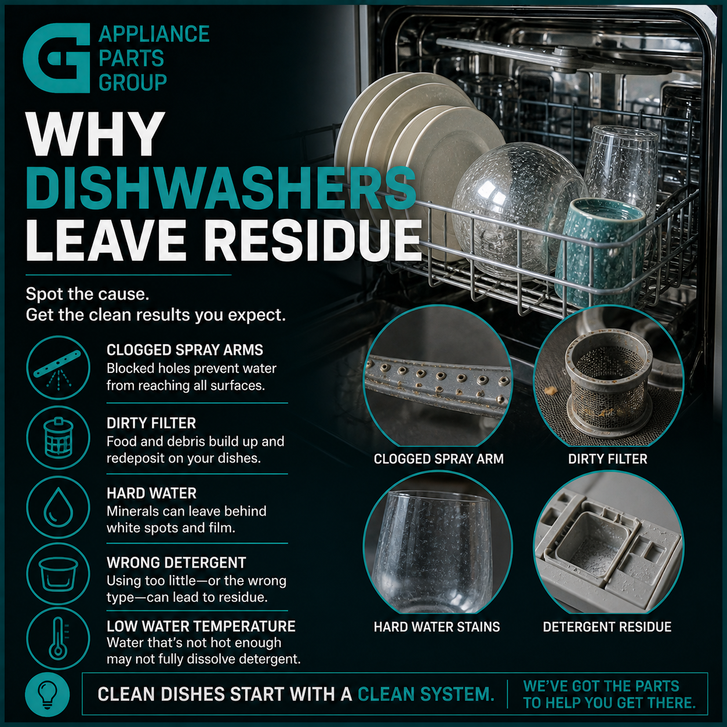
Hard water contains high levels of minerals like calcium and magnesium. These minerals don’t rinse away easily and can leave behind a white, chalky film on dishes, glassware, and the dishwasher interior.
Incorrect Detergent Usage
Using too much detergent can leave soap residue behind, while using too little may result in incomplete cleaning. Additionally, low-quality detergents may not dissolve properly during the wash cycle.
Low Water Temperature
Dishwashers require water temperatures of at least 120°F to properly dissolve detergent and remove grease. If the water is too cool, detergent may remain on dishes as residue.
Clogged Spray Arms
Spray arms distribute water throughout the dishwasher. When their small holes become clogged with food debris or mineral deposits, water flow is reduced, leading to poor rinsing and leftover residue.
Dirty or Blocked Filter
Most modern dishwashers have a filter that traps food particles. If the filter becomes clogged, debris can recirculate during the wash cycle and stick to dishes.
Overloading the Dishwasher
Overloading prevents proper water circulation. When dishes are packed too tightly, water and detergent cannot reach all surfaces effectively.
Symptoms of Residue Problems
- White film on glassware
- Spots or streaks on dishes
- Food particles left behind
- Cloudy or dull-looking glasses
- Gritty or chalky texture on dish surfaces
Step-by-Step Troubleshooting
- Check your water temperature using a thermometer at the kitchen sink.
- Run hot water before starting the dishwasher to ensure proper temperature.
- Inspect and clean the dishwasher filter.
- Remove and rinse spray arms to clear clogs.
- Use the correct amount of high-quality detergent.
- Add rinse aid to improve drying and reduce spotting.
- Avoid overloading and ensure proper dish placement.
- Run an empty cycle with a dishwasher cleaner to remove buildup.
Common Parts That May Need Replacement
Dishwasher Spray Arms
Damaged or clogged spray arms can prevent proper water distribution. Replacing them restores cleaning performance and reduces residue.
Water Inlet Valve
If the dishwasher isn’t filling properly, the water inlet valve may be faulty. Low water levels can lead to poor rinsing.
Dishwasher Filter
A worn or damaged filter may not effectively trap debris, allowing particles to redeposit on dishes.
Detergent Dispenser
If the dispenser fails to open or release detergent correctly, dishes may come out with residue or food particles.
Heating Element
A malfunctioning heating element can prevent water from reaching the proper temperature, affecting detergent performance.
Preventative Maintenance Tips
- Clean the filter weekly to prevent buildup.
- Run a cleaning cycle monthly with a dishwasher cleaner.
- Use rinse aid to minimize spotting and film.
- Check spray arms regularly for clogs.
- Use the correct detergent type and amount.
- Install a water softener if you have hard water.
Frequently Asked Questions
Why do my dishes feel gritty after washing?
This is usually caused by undissolved detergent or hard water minerals left behind during the rinse cycle.
Can too much detergent cause residue?
Yes, excess detergent can leave a soapy film on dishes, especially in soft water conditions.
What temperature should my dishwasher water be?
Ideally, at least 120°F to ensure proper cleaning and detergent activation.
Does rinse aid really help?
Yes, rinse aid improves water sheeting and helps prevent spots and residue.
How often should I clean my dishwasher filter?
At least once a week, or more frequently with heavy use.
Why are my glasses cloudy?
Cloudiness is often caused by hard water deposits or etching from excessive detergent use.
Can hard water damage my dishwasher?
Yes, mineral buildup can reduce efficiency and shorten the lifespan of components.
What is the best detergent type?
High-quality pods or powders designed for your water hardness level typically work best.
Why is food still on my dishes?
This may indicate clogged spray arms, a dirty filter, or improper loading.
Should I rinse dishes before loading?
Light scraping is recommended, but modern dishwashers are designed to handle some food residue.
Can a broken heating element cause residue?
Yes, it can prevent proper detergent dissolution and drying.
How do I remove existing residue?
Run an empty cycle with a dishwasher cleaner or white vinegar to break down buildup.
Entities and Terms
- Spray Arm
- Water Inlet Valve
- Dishwasher Filter
- Heating Element
- Detergent Dispenser
- Rinse Aid Dispenser
- Circulation Pump
- Hard Water Minerals
This article was written by an AI program as part of a beta test by Appliance Parts Group to explore how artificial intelligence can help inform and educate our customers.
Our goal is to use AI tools to provide clear, reliable information so you can make confident, well-informed purchasing decisions.