
Key Takeaways
- A clogged drain hose or filter is the most common reason a washer won’t drain.
- Faulty drain pumps and lid switches can prevent proper water removal.
- Overloading the washer can lead to drainage issues and poor performance.
- Routine maintenance can prevent most drainage problems.
- Replacing worn OEM parts ensures long-term reliability and performance.
Introduction
Few appliance issues are as frustrating as opening your washing machine at the end of a cycle only to find it still full of water. When a washer won’t drain, it not only disrupts your laundry routine but can also lead to unpleasant odors, mold growth, and even water damage if left unresolved.
The good news is that most drainage issues are caused by common, identifiable problems that homeowners can troubleshoot and often fix themselves. In this guide, we’ll break down why washers fail to drain, how to diagnose the issue, and what steps you can take to restore your appliance to full working condition.
Common Reasons Why Washers Won’t Drain
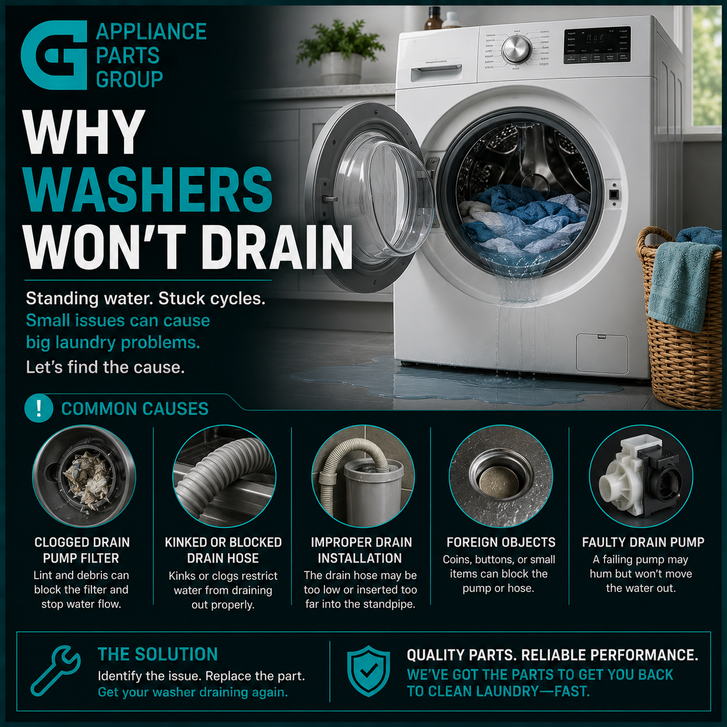
Clogged Drain Hose
The drain hose carries wastewater out of your washer. Over time, lint, detergent residue, and debris can build up inside the hose, restricting water flow. A kinked or improperly installed hose can also block drainage.
Blocked Pump Filter
Many modern washers include a pump filter designed to catch debris like coins, hairpins, and lint. When this filter becomes clogged, water cannot pass through efficiently, causing drainage issues.
Faulty Drain Pump
The drain pump is responsible for pushing water out of the washer. If the pump motor fails or becomes obstructed, the washer will not be able to remove water from the drum.
Lid Switch or Door Lock Failure
Top-load washers often rely on a lid switch to ensure the lid is closed before draining and spinning. If this switch fails, the washer may stop mid-cycle and leave water inside.
Clogged Household Drain
Sometimes the issue isn’t the washer at all. A clogged standpipe or household drain line can prevent water from exiting properly, causing backups.
Control Board or Timer Issues
If the washer’s control board or timer malfunctions, it may not signal the drain cycle to begin. This is less common but still possible, especially in older or heavily used machines.
Signs Your Washer Has a Drainage Problem
- Standing water in the drum after a cycle
- Clothes are soaking wet after washing
- Unusual humming or buzzing noises
- Error codes related to draining
- Slow drainage or repeated cycles
Step-by-Step Troubleshooting
- Unplug the washer to ensure safety before beginning any inspection.
- Check the drain hose for kinks, clogs, or improper positioning.
- Inspect the pump filter and remove any debris buildup.
- Listen to the drain pump during operation. A humming noise may indicate blockage or failure.
- Test the lid switch (for top-load washers) to ensure it is functioning properly.
- Examine the household drain for clogs or slow drainage.
- Run a short cycle to see if the issue is resolved.
Common Parts That May Need Replacement
If troubleshooting doesn’t resolve the issue, replacing worn or faulty components may be necessary. Using OEM replacement parts ensures compatibility and performance.
- Drain Pump: Moves water out of the washer. A failed pump will prevent draining entirely.
- Drain Hose: Cracks, clogs, or kinks can restrict water flow.
- Pump Filter: A damaged or heavily clogged filter may need replacement.
- Lid Switch Assembly: Essential for proper cycle operation in top-load washers.
- Door Lock Assembly: Critical for front-load washer drainage and spin cycles.
- Control Board: Governs the washer’s functions, including draining.
Preventative Maintenance Tips
- Clean the pump filter every 1–3 months.
- Avoid overloading the washer to prevent strain on components.
- Use the correct amount of detergent to reduce residue buildup.
- Inspect the drain hose periodically for clogs or kinks.
- Run a cleaning cycle monthly to remove buildup inside the washer.
Frequently Asked Questions
Why is my washer not draining but still spinning?
This could indicate a partial clog in the drain hose or a failing pump that cannot fully remove water.
Can I manually drain my washer?
Yes, you can drain it using the emergency drain hose or by carefully lowering the drain hose into a bucket.
How do I know if my drain pump is bad?
If you hear a humming sound but no water drains, the pump may be blocked or defective.
Is it safe to use a washer that won’t drain?
No, standing water can damage the machine and lead to mold growth.
How often should I clean the pump filter?
Every 1–3 months, depending on usage.
What causes a washer drain hose to clog?
Lint, detergent residue, and small objects are common causes.
Can too much detergent prevent draining?
Yes, excess suds can interfere with proper drainage.
Do front-load washers drain differently than top-load washers?
They use similar systems but rely more heavily on door locks and sensors.
What tools do I need to fix a drainage issue?
Basic tools like screwdrivers, pliers, and a bucket are usually sufficient.
When should I call a professional?
If electrical components or the control board are involved, professional service is recommended.
Can a clogged household drain affect my washer?
Yes, it can prevent proper water discharge and cause backups.
Entities and Terms
- Drain Pump
- Drain Hose
- Pump Filter
- Lid Switch
- Door Lock Assembly
- Control Board
- Standpipe
- Washer Drum
- Impeller
This article was written by an AI program as part of a beta test by Appliance Parts Group to explore how artificial intelligence can help inform and educate our customers.
Our goal is to use AI tools to provide clear, reliable information so you can make confident, well-informed purchasing decisions.