
Key Takeaways
- A washer that shakes violently is often caused by an unbalanced load, poor leveling, worn suspension parts, or damaged drum supports.
- Top-load and front-load washers use different vibration control systems, so troubleshooting depends on the washer style.
- Ignoring severe washer shaking can damage the tub, motor, cabinet, hoses, and nearby flooring.
- Common replacement parts include suspension rods, shock absorbers, tub dampers, leveling legs, springs, bearings, and drive components.
- Using OEM washer replacement parts helps maintain proper fit, balance, and performance.
Introduction
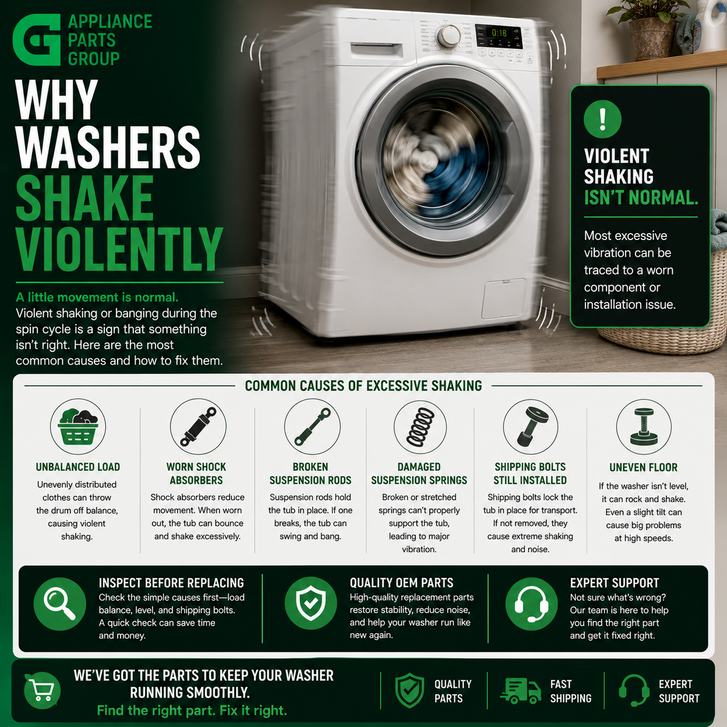
A washing machine should move slightly during a spin cycle, but it should not shake violently, bang against the wall, walk across the laundry room, or sound like it is about to come apart. When a washer vibrates heavily, it usually means the machine is struggling to keep the tub balanced while spinning at high speed.
Some causes are simple, such as an overloaded washer or uneven flooring. Others point to worn suspension parts, failed shock absorbers, damaged bearings, or internal tub problems. The sooner you identify the cause, the better chance you have of preventing more expensive washer damage.
Why Washers Shake During the Spin Cycle
Washers shake most during the spin cycle because the drum rotates quickly to remove water from clothes. If the load is not evenly distributed, the washer tub becomes off balance. Modern washers may slow down, stop, or try to redistribute the load. If the vibration control system cannot correct the imbalance, the washer may shake violently.
Top-load washers commonly rely on suspension rods, springs, balance rings, and dampening straps. Front-load washers usually use shock absorbers, springs, counterweights, and bearings. When one of these systems fails, the washer may no longer control tub movement properly.
Common Causes of a Washer Shaking Violently
1. The Washer Is Not Level
If the washer is tilted forward, backward, or side to side, the tub may become unstable during spin. Even a small leveling issue can create major vibration at high speed. Adjustable leveling legs are designed to keep the washer firmly planted on the floor.
2. The Load Is Unbalanced
Heavy items such as towels, blankets, jeans, rugs, and bedding can collect on one side of the drum. This creates uneven weight distribution. A washer may shake violently when one large item becomes soaked and spins unevenly.
3. The Washer Is Overloaded
Overloading prevents clothes from moving freely. Instead of distributing evenly around the tub, the load clumps together. This puts extra stress on the motor, suspension system, drive belt, and tub components.
4. Suspension Rods Are Worn
Many top-load washers use suspension rods to support the outer tub. These rods help absorb movement during washing and spinning. When they wear out, the tub may bounce excessively, bang against the cabinet, or trigger repeated unbalanced load errors.
5. Shock Absorbers Are Failing
Front-load washers use shock absorbers to control tub movement. If a shock absorber becomes weak, broken, or detached, the tub can slam forward and backward during spin. This is one of the most common reasons a front-load washer shakes violently.
6. Springs or Dampers Are Damaged
Washers may use springs, dampening straps, friction pads, or tub supports to stabilize the drum. If these parts stretch, crack, or break, the tub may move far more than it should.
7. Shipping Bolts Were Not Removed
Front-load washers are shipped with bolts that lock the drum in place during transport. If these bolts are not removed during installation, the washer may vibrate severely and make loud banging sounds.
8. The Floor Is Weak or Uneven
A washer installed on a flexible floor, raised platform, or uneven surface may shake even if the machine itself is working correctly. Laundry rooms on upper floors are especially prone to vibration issues.
9. Tub Bearings Are Worn
Worn bearings can cause roaring, grinding, or excessive drum movement. If the inner basket feels loose or wobbly by hand, the bearing or rear tub assembly may be failing.
10. Counterweights Are Loose or Broken
Some front-load washers use heavy counterweights to stabilize the drum. If a counterweight cracks or comes loose, the washer may shake violently and make a deep knocking sound.
Symptoms to Watch For
A violently shaking washer may show several warning signs before a full failure occurs. These include loud banging during spin, the washer moving across the floor, repeated unbalanced load messages, wet clothes at the end of the cycle, visible tub wobble, grinding noises, or water leaks near the bottom of the machine.
If the washer shakes only with one type of load, the problem may be load balance. If it shakes with every load, the issue is more likely related to leveling, installation, suspension, shocks, bearings, or internal support parts.
Step-by-Step Troubleshooting
- Pause the cycle and redistribute the load. Move heavy items evenly around the basket and restart the spin cycle.
- Remove excess laundry. If the washer is packed tightly, take out several items and run a smaller load.
- Check that the washer is level. Use a level across the top of the washer from front to back and side to side.
- Adjust the leveling legs. Turn the legs until the washer sits firmly and does not rock when pressed at each corner.
- Inspect the floor. Make sure the washer is on a solid, flat surface that does not flex during spin.
- Check for shipping bolts. On front-load washers, confirm that all shipping bolts have been removed.
- Look inside the tub. Spin the basket by hand and listen for grinding, scraping, or rumbling noises.
- Press down on the tub. If the tub bounces repeatedly instead of settling quickly, suspension rods or shocks may be worn.
- Inspect visible springs, shocks, or rods. Look for broken, loose, leaking, or detached components.
- Check for loose counterweights. If safe to access, inspect front-load counterweights for cracks or loose bolts.
- Review error codes. Many washers display balance, spin, or vibration-related fault codes.
- Replace worn parts with model-specific OEM parts. Use the washer model number to match the correct components.
Common Parts That May Need Replacement
Suspension Rods
Suspension rods are common in top-load washers. They support the tub and absorb movement. If the washer bangs during spin or the tub feels loose, replacing the suspension rod kit may restore stability.
Shock Absorbers
Shock absorbers are used in many front-load washers. They reduce tub movement during high-speed spin. A failed shock may cause loud knocking, shaking, or repeated spin interruptions.
Tub Springs
Tub springs help suspend and center the washer tub. If a spring stretches or breaks, the tub may lean to one side or move excessively.
Dampening Straps or Pads
Some washers use dampening straps, snubber rings, or friction pads to control vibration. Worn dampers can allow the tub to slam against the cabinet.
Leveling Legs
Damaged or missing leveling legs can make the washer unstable. Replacing worn legs helps keep the washer balanced and secure on the floor.
Tub Bearings
Bearings allow the basket to spin smoothly. When bearings fail, the washer may become noisy, unstable, and difficult to balance.
Counterweights
Front-load washer counterweights help offset tub movement. A cracked or loose counterweight can cause severe shaking and loud thumping.
Drive Belt or Pulley
If the drive belt or pulley is worn, the washer may spin unevenly or make unusual noises. These parts should be inspected when vibration is paired with spin performance problems.
Top-Load vs. Front-Load Washer Shaking
Top-load washers often shake because of unbalanced loads, worn suspension rods, damaged springs, or snubber problems. Front-load washers are more likely to shake because of failed shock absorbers, shipping bolts, loose counterweights, worn bearings, or poor floor support.
Because the designs are different, it is important to search for replacement parts using the exact washer model number. Even similar-looking parts may not fit or perform correctly across different washer models.
Can You Keep Using a Washer That Shakes Violently?
It is not recommended to keep using a washer that shakes violently. Severe vibration can damage the washer cabinet, tub, motor, drain hoses, water inlet hoses, wiring, and flooring. It can also cause leaks if hoses loosen or internal parts crack.
If the issue is caused by a single unbalanced load, correcting the load may solve the problem. If the washer shakes during most cycles, inspect the machine before continuing normal use.
Preventative Maintenance Tips
- Do not overload the washer.
- Wash bulky items separately when needed.
- Balance heavy laundry around the drum.
- Check washer leveling every few months.
- Keep the washer on a solid, flat surface.
- Inspect hoses and connections after severe vibration.
- Clean the washer regularly to prevent buildup and odor.
- Replace worn suspension or shock parts before they cause larger damage.
When to Replace Parts
If leveling and load adjustments do not solve the problem, the washer may need replacement parts. A tub that bounces excessively, leans to one side, knocks loudly, or triggers repeated balance errors often points to a worn suspension system. A washer that roars or grinds during spin may have bearing damage.
OEM washer parts are designed to match the original specifications of the appliance. Using the model number from the washer’s rating tag helps ensure the correct fit for suspension rods, shock absorbers, springs, belts, pulleys, bearings, and other repair parts.
Frequently Asked Questions
Why does my washer shake violently during spin?
The most common reasons are an unbalanced load, an overloaded drum, an unlevel washer, worn suspension rods, failed shock absorbers, or damaged tub supports.
Is it normal for a washer to shake a little?
Yes. Some movement is normal during high-speed spin. Violent shaking, banging, walking, or repeated balance errors are not normal.
Can an unbalanced load damage my washer?
Yes. Repeated unbalanced loads can stress the suspension system, motor, tub, bearings, hoses, and cabinet.
How do I know if my washer suspension rods are bad?
If the tub bounces several times after being pushed down, bangs against the cabinet, or struggles with balanced loads, the suspension rods may be worn.
How do I know if my washer shock absorbers are bad?
Front-load washer shocks may be bad if the tub slams during spin, the washer shakes with normal loads, or a shock appears broken, loose, or leaking.
Can shipping bolts make a washer shake?
Yes. Front-load washer shipping bolts must be removed after installation. Leaving them installed can cause severe vibration and damage.
Why does my washer walk across the floor?
A washer may walk if it is not level, the floor is slick or flexible, the load is unbalanced, or the suspension system is worn.
Can a weak floor cause washer vibration?
Yes. A flexible or uneven floor can amplify washer movement, especially during high-speed spin cycles.
Should I repair or replace a washer that shakes violently?
If the issue is caused by leveling, suspension rods, shocks, springs, or belts, repair may be practical. If the tub bearing or drum assembly is badly damaged, compare repair cost with replacement cost.
What parts commonly fix washer vibration?
Common parts include suspension rods, shock absorbers, tub springs, dampers, snubber rings, leveling legs, bearings, counterweights, belts, and pulleys.
Do I need my washer model number to order parts?
Yes. Washer parts vary by brand and model. The model number helps match the correct OEM replacement part.
Can I replace washer suspension parts myself?
Many experienced DIY homeowners can replace suspension rods or shocks, but difficulty varies by model. Always unplug the washer and follow proper safety procedures.
Entities and Terms
- Washer suspension rods
- Shock absorbers
- Tub springs
- Snubber ring
- Dampening straps
- Leveling legs
- Washer drum
- Inner basket
- Outer tub
- Tub bearings
- Counterweights
- Drive belt
- Motor pulley
- Shipping bolts
- Unbalanced load
This article was written by an AI program as part of a beta test by Appliance Parts Group to explore how artificial intelligence can help inform and educate our customers.
Our goal is to use AI tools to provide clear, reliable information so you can make confident, well-informed purchasing decisions.