
Key Takeaways
- Loud washer noises often indicate worn, loose, or damaged components.
- Different sounds such as banging, grinding, squealing, or humming can point to specific problems.
- Many washer noise issues can be diagnosed with simple troubleshooting steps.
- Worn suspension, bearings, belts, or drive components are common causes of excessive noise.
- Routine maintenance can help prevent costly repairs and extend appliance life.
Introduction
A washing machine is one of the hardest-working appliances in any home. While some operational sounds are normal, unusually loud noises can signal a developing problem that should not be ignored. Whether your washer is making a loud banging noise during the spin cycle, grinding during agitation, or squealing when starting up, identifying the source early can help prevent further damage and expensive repairs.
Modern washers contain numerous moving components that work together to clean clothes efficiently. Over time, normal wear and tear can affect these parts, causing vibrations, friction, and unusual sounds. Understanding what these noises mean can help homeowners determine whether the issue requires simple maintenance or replacement of an OEM component.
Understanding Different Washer Noises
The type of noise your washer makes often provides valuable clues about the underlying issue.
Banging or Thumping
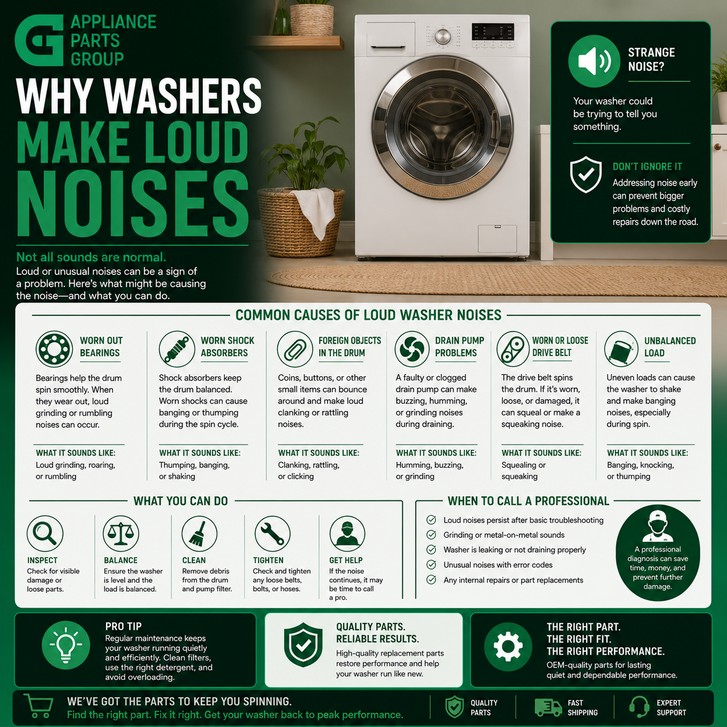
Banging sounds are commonly heard during the spin cycle and often indicate an unbalanced load. Heavy items such as blankets, comforters, or towels can shift to one side of the drum, causing excessive movement.
Persistent banging may also indicate worn suspension rods, damaged shock absorbers, or weakened suspension springs.
Grinding Noises
Grinding sounds frequently point to mechanical wear. Components such as drum bearings, transmission assemblies, drive pulleys, or motor couplings may begin producing grinding sounds as they deteriorate.
If the grinding becomes louder over time, inspection should be performed promptly to prevent secondary damage.
Squealing or Screeching
A high-pitched squeal often indicates belt wear, pulley issues, or motor problems. Friction between moving parts can create screeching noises during startup or high-speed spin cycles.
Humming Sounds
Humming can occur when the motor is receiving power but struggling to operate. Potential causes include a seized pump, failed capacitor, motor issues, or obstructions within the drive system.
Clicking or Ticking
Foreign objects such as coins, buttons, zippers, or small hardware items can become trapped between the inner and outer tubs, creating repetitive clicking sounds during operation.
Common Causes of Loud Washer Noises
Unbalanced Loads
The simplest cause of washer noise is an unevenly distributed load. Front-load and top-load washers both rely on balanced loads to maintain smooth operation during high-speed spins.
When clothes gather on one side of the basket, the machine may vibrate excessively and produce loud banging noises.
Worn Drum Bearings
Drum bearings support the washer tub as it rotates. Over time, exposure to moisture and repeated use can cause bearings to wear out.
Failing bearings often create a roaring, rumbling, or grinding sound that becomes louder during the spin cycle.
Damaged Shock Absorbers
Many modern front-load washers use shock absorbers to stabilize the tub during operation. Worn shocks allow excessive movement, causing vibrations and loud impacts during spinning.
Faulty Suspension Rods
Top-load washers frequently rely on suspension rods to support the wash basket. When these rods weaken or fail, the basket can become unstable and produce significant noise.
Drive Belt Problems
Washers equipped with belt-driven systems may develop noise when belts become stretched, cracked, or worn. Slipping belts often generate squealing sounds during startup and acceleration.
Worn Drive Pulley
A damaged drive pulley can create grinding, squeaking, or rattling noises. Pulley wear may also affect overall washer performance.
Drain Pump Obstructions
Small objects can become lodged inside the drain pump. As the pump operates, these objects may create grinding or rattling sounds.
Motor Coupling Failure
Certain washer models use a motor coupling to transfer power from the motor to the transmission. A damaged coupling can produce unusual noises while reducing washing performance.
Loose Components
Loose mounting bolts, panels, counterweights, or internal fasteners may vibrate during operation and create rattling sounds.
How Noise Changes During Different Wash Cycles
During Fill Cycle
Noises during filling may indicate water inlet valve issues or plumbing vibrations.
During Agitation
Grinding, clicking, or knocking during agitation often points to drive system components such as couplings, transmissions, or agitator assemblies.
During Drain Cycle
Drain pump obstructions frequently become noticeable during water removal.
During Spin Cycle
Spin cycle noise commonly relates to suspension components, bearings, pulleys, or load balance issues.
Step-by-Step Troubleshooting
- Pause the washer and redistribute the load. Ensure clothing is evenly distributed inside the drum.
- Verify the washer is level. Check all four leveling feet and adjust if necessary.
- Inspect pockets for loose items. Coins, keys, and small objects can create noise and damage components.
- Listen carefully during each cycle. Determine whether the noise occurs during filling, washing, draining, or spinning.
- Check for visible damage. Inspect belts, pulleys, and suspension components if accessible.
- Examine the drain pump filter. Remove debris that may be causing rattling or grinding.
- Spin the drum by hand. Roughness or resistance may indicate bearing wear.
- Inspect suspension rods and shocks. Look for broken or weakened components.
- Tighten loose external panels. Vibrating panels can amplify normal operating sounds.
- Consult the owner's manual. Model-specific troubleshooting guidance may identify known issues.
Common Parts That May Need Replacement
Depending on the source of the noise, several OEM replacement parts may restore proper operation.
Drum Bearings
Worn bearings can create some of the loudest washer noises and often require replacement to restore smooth operation.
Shock Absorbers
Faulty shocks can allow excessive tub movement and vibration.
Suspension Rods
Replacing worn suspension rods helps stabilize top-load washers during spin cycles.
Drive Belt
A new OEM drive belt can eliminate squealing caused by wear or stretching.
Drive Pulley
Damaged pulleys should be replaced to prevent further drive system wear.
Motor Coupling
A worn motor coupling can cause both noise and reduced washing performance.
Drain Pump
If the pump has internal damage or persistent obstructions, replacement may be necessary.
Tub Seal
Leaking tub seals can allow moisture to reach bearings, accelerating wear and causing noise.
When to Call a Professional
Some washer repairs involve extensive disassembly and specialized tools. Professional service may be appropriate when:
- Drum bearings require replacement.
- Transmission components have failed.
- Electrical diagnostics are necessary.
- The source of the noise remains unclear after troubleshooting.
- The washer exhibits multiple symptoms simultaneously.
Preventative Maintenance Tips
- Avoid consistently overloading the washer.
- Distribute heavy items evenly throughout the load.
- Inspect pockets before washing clothes.
- Clean the drain pump filter regularly.
- Check leveling feet periodically.
- Inspect hoses and seals for leaks.
- Address unusual noises immediately before additional damage occurs.
- Use the proper cycle settings for large or bulky items.
Frequently Asked Questions
Why is my washer suddenly making a loud banging noise?
An unbalanced load, worn suspension components, or damaged shock absorbers are common causes.
Is it safe to use a noisy washing machine?
Minor noise may not be serious, but continued operation with mechanical issues can cause further damage.
Why does my washer make a grinding sound during spin?
Grinding often indicates worn drum bearings, pulleys, or drive components.
Can a loose coin cause washer noise?
Yes. Coins and other small objects can become trapped and create clicking or rattling sounds.
How do I know if my washer bearings are bad?
Bad bearings typically produce a roaring or grinding sound that becomes louder during spinning.
Can an uneven floor make my washer noisy?
Yes. An improperly leveled washer can vibrate excessively and generate loud noises.
What causes a squealing washer?
Worn belts, pulleys, or motor-related issues commonly create squealing sounds.
Do front-load washers make more noise than top-load washers?
Not necessarily. Both designs can become noisy when components wear or loads become unbalanced.
How often should suspension rods be replaced?
Replacement intervals vary, but worn rods should be replaced when excessive movement develops.
Can a clogged drain pump make noise?
Yes. Debris inside the pump can create grinding, rattling, or humming sounds.
Should I replace noisy washer parts with OEM components?
OEM replacement parts are designed to match original specifications and fit properly.
Can preventative maintenance reduce washer noise?
Regular cleaning, inspections, and proper loading habits can significantly reduce noise-related issues.
Entities and Terms
- Drum Bearings
- Shock Absorbers
- Suspension Rods
- Suspension Springs
- Drive Belt
- Drive Pulley
- Motor Coupling
- Drain Pump
- Tub Seal
- Agitator Assembly
- Wash Basket
- Transmission Assembly
- Water Inlet Valve
- Leveling Feet
- Pump Filter
This article was written by an AI program as part of a beta test by Appliance Parts Group to explore how artificial intelligence can help inform and educate our customers.
Our goal is to use AI tools to provide clear, reliable information so you can make confident, well-informed purchasing decisions.