
Key Takeaways
- A dirty condenser coil is one of the most common reasons a refrigerator stops cooling properly.
- Faulty evaporator fans, condenser fans, and compressors can prevent cold air circulation.
- Defective thermostats, temperature sensors, and control boards may cause cooling failures.
- Many cooling problems can be diagnosed through basic troubleshooting before replacing parts.
- Regular maintenance helps prevent costly repairs and extends refrigerator lifespan.
Introduction
Few appliance problems are as frustrating as opening your refrigerator and discovering that the food inside is no longer cold. Whether the refrigerator section feels warm, the freezer is no longer freezing, or both compartments have stopped cooling altogether, the problem can quickly become expensive if food spoils.
Modern refrigerators rely on several components working together to remove heat and maintain safe food storage temperatures. When even one of these components fails, cooling performance can decline dramatically. Understanding the most common causes can help homeowners identify problems early, determine whether a repair is possible, and locate the correct OEM replacement parts when needed.
In this guide, we'll explain why refrigerators stop cooling, how to troubleshoot common failures, and which refrigerator parts may need replacement.
How a Refrigerator Cooling System Works
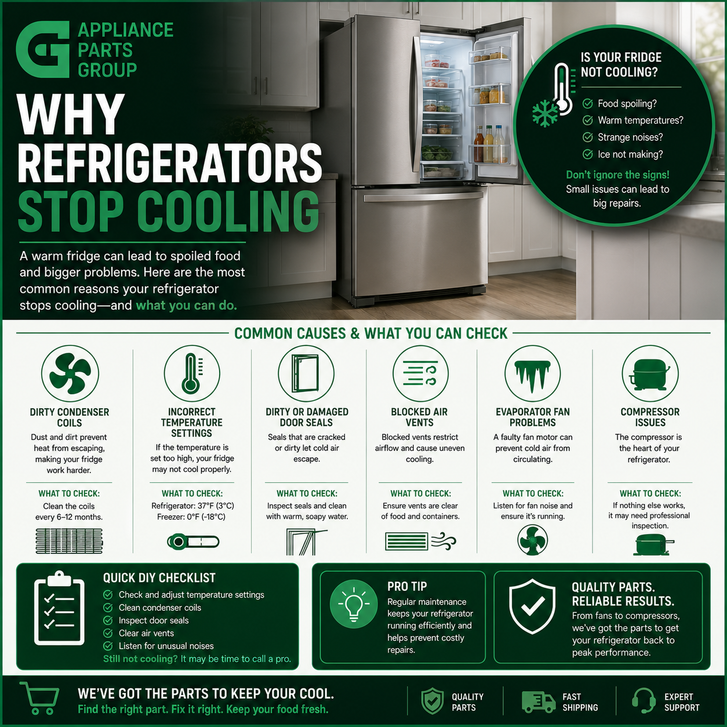
A refrigerator removes heat from inside the cabinet and releases it into the surrounding air. The primary components involved include the compressor, condenser coils, condenser fan motor, evaporator coils, evaporator fan motor, defrost system, thermostat or temperature sensor, and electronic control board.
Dirty Condenser Coils
Dirty condenser coils are among the most common causes of poor refrigerator cooling. Condenser coils release heat that has been removed from the refrigerator interior. Over time, dust, pet hair, and debris accumulate on the coils, reducing their ability to transfer heat efficiently.
Symptoms
- Refrigerator feels warm
- Compressor runs constantly
- Higher energy bills
- Freezer temperatures fluctuate
Solution
Clean condenser coils using a coil brush and vacuum. Most manufacturers recommend cleaning the coils at least twice per year.
Faulty Evaporator Fan Motor
The evaporator fan circulates cold air throughout the refrigerator and freezer compartments. If the fan motor fails, the evaporator coil may still become cold, but the chilled air cannot move throughout the appliance.
Symptoms
- Freezer is cold but refrigerator section is warm
- Little or no airflow from vents
- Unusual grinding or squealing noises
Solution
Inspect the evaporator fan motor for proper operation. If the motor is not running or is noisy, replacement is often necessary.
Defective Condenser Fan Motor
The condenser fan motor cools the compressor and condenser coils. Without adequate airflow, the refrigeration system can overheat, reducing cooling efficiency and potentially damaging the compressor.
Symptoms
- Warm refrigerator temperatures
- Compressor becomes extremely hot
- Fan not spinning near the compressor
Solution
Check for obstructions and verify that the fan motor operates correctly. Replace the motor if it has failed.
Frost Buildup on Evaporator Coils
Automatic defrost systems prevent excessive frost accumulation on evaporator coils. If the defrost system fails, thick ice can cover the coils and restrict airflow, causing cooling problems.
Common Defrost Components
- Defrost heater
- Defrost thermostat
- Defrost sensor
- Defrost control board
Symptoms
- Freezer back wall covered in frost
- Reduced airflow
- Fresh food section warming up
Solution
Inspect the defrost system and replace any failed components with compatible OEM replacement parts.
Malfunctioning Temperature Control Thermostat
The thermostat monitors cabinet temperature and signals cooling components when additional refrigeration is needed. A failed thermostat may not properly activate the compressor or fans.
Symptoms
- Compressor never starts
- Inconsistent temperatures
- Refrigerator runs too warm or too cold
Solution
Test the thermostat for continuity according to manufacturer specifications.
Failed Start Relay
The start relay helps the compressor start each cooling cycle. If the relay fails, the compressor may attempt to start but shut down immediately.
Symptoms
- Clicking sounds from the rear of the refrigerator
- Compressor does not run
- Warm refrigerator and freezer compartments
Solution
Inspect and test the start relay. Replacement is often straightforward and significantly less expensive than compressor replacement.
Compressor Problems
The compressor serves as the heart of the refrigeration system. It compresses refrigerant and circulates it through the cooling system.
Symptoms
- No cooling at all
- Compressor humming but not cooling
- Repeated clicking noises
- Overheating compressor housing
Solution
Compressor diagnosis typically requires specialized tools and professional service. In some cases, replacing the refrigerator may be more economical depending on appliance age and repair cost.
Electronic Control Board Failure
Many modern refrigerators use electronic control boards to manage cooling functions. If the control board malfunctions, it may fail to power critical components such as fans, dampers, or the compressor.
Symptoms
- Intermittent cooling
- Error codes on display panel
- Fans or compressor not receiving power
Solution
Inspect wiring connections and test board outputs. Replace the control board if diagnostic testing confirms failure.
Damaged Door Gaskets
Door gaskets create an airtight seal around refrigerator and freezer doors. Cracked, torn, or loose gaskets allow warm air to enter the appliance continuously.
Symptoms
- Condensation around doors
- Excessive frost buildup
- Compressor runs frequently
- Temperature fluctuations
Solution
Inspect the gasket for damage and replace it if necessary.
Blocked Air Vents
Cold air must move freely between compartments in many refrigerator designs. Food containers placed against vents can restrict airflow and create uneven temperatures.
Symptoms
- Warm spots inside refrigerator
- Frozen items near vents
- Poor temperature consistency
Solution
Reorganize food storage and ensure all air passages remain unobstructed.
Step-by-Step Troubleshooting
- Verify power supply and ensure the refrigerator is plugged in.
- Check temperature settings.
- Inspect condenser coils for dirt buildup.
- Listen for evaporator and condenser fan operation.
- Check door gaskets for leaks.
- Look for frost accumulation on the freezer rear wall.
- Inspect air vents for blockages.
- Test the start relay.
- Evaluate thermostat operation.
- Inspect electronic control boards and wiring connections.
- Determine whether the compressor is operating properly.
Common Parts That May Need Replacement
Depending on the diagnosis, the following OEM replacement parts may restore cooling performance:
- Evaporator fan motor
- Condenser fan motor
- Compressor start relay
- Temperature control thermostat
- Thermistor
- Defrost heater
- Defrost thermostat
- Defrost sensor
- Electronic control board
- Door gasket
- Air damper assembly
- Evaporator cover assembly
Using OEM replacement parts helps ensure compatibility and performance consistent with manufacturer specifications.
Preventative Maintenance Tips
- Clean condenser coils every six months.
- Inspect door seals regularly.
- Avoid overloading shelves and vents.
- Maintain proper temperature settings.
- Replace damaged gaskets promptly.
- Keep fan areas free of debris.
- Schedule maintenance if cooling performance declines.
Frequently Asked Questions
Why is my refrigerator running but not cooling?
Dirty condenser coils, failed fans, frost buildup, or compressor issues may prevent proper cooling.
Why is my freezer cold but refrigerator warm?
A failed evaporator fan or blocked air passage is often responsible.
Can dirty coils stop a refrigerator from cooling?
Yes. Excessive dirt prevents efficient heat transfer and can significantly reduce cooling performance.
How often should condenser coils be cleaned?
Most manufacturers recommend cleaning every six months.
What does a bad evaporator fan sound like?
Grinding, squealing, or intermittent noises may indicate a failing fan motor.
Can a refrigerator cool with a bad condenser fan?
Cooling performance may decline substantially, and compressor overheating can occur.
What causes frost buildup inside a freezer?
Defrost system failures and air leaks are common causes.
How long does a refrigerator compressor last?
Many compressors last 10 to 20 years under normal operating conditions.
Can a bad thermostat stop cooling?
Yes. A defective thermostat may fail to activate the refrigeration system.
Should I repair or replace a refrigerator with compressor problems?
The answer depends on appliance age, repair cost, and overall condition.
What temperature should a refrigerator be set to?
Most manufacturers recommend approximately 37°F for the refrigerator compartment and 0°F for the freezer.
Are OEM replacement parts important?
OEM parts are designed to match original specifications and compatibility requirements.
Entities and Terms
- Compressor
- Condenser Coil
- Evaporator Coil
- Evaporator Fan Motor
- Condenser Fan Motor
- Start Relay
- Thermistor
- Temperature Control Thermostat
- Defrost Heater
- Defrost Thermostat
- Defrost Sensor
- Control Board
- Air Damper
- Door Gasket
- Refrigerant System
This article was written by an AI program as part of a beta test by Appliance Parts Group to explore how artificial intelligence can help inform and educate our customers.
Our goal is to use AI tools to provide clear, reliable information so you can make confident, well-informed purchasing decisions.