
Key Takeaways
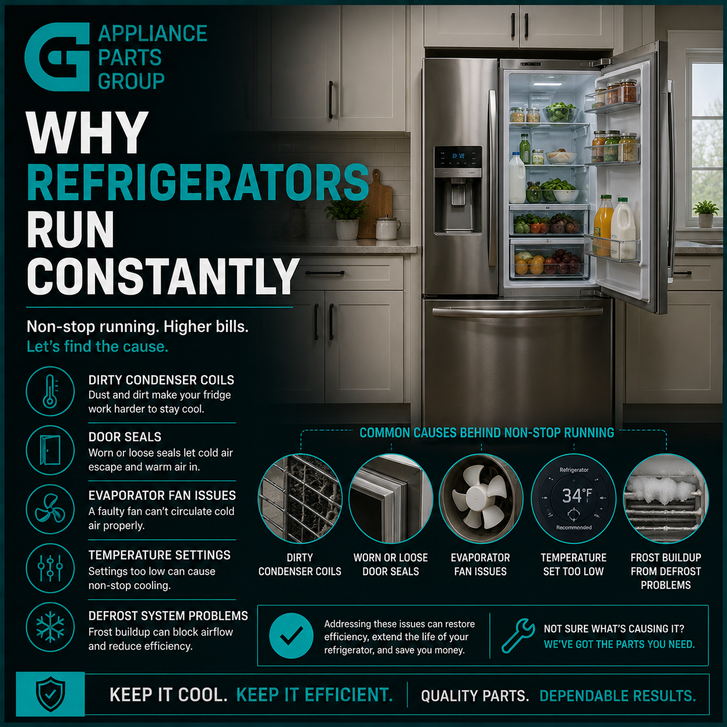
- Refrigerators may run constantly due to dirty condenser coils, worn door seals, or airflow problems.
- Hot weather, frequent door openings, and overloading the refrigerator can increase compressor run time.
- A faulty thermostat, evaporator fan motor, or defrost system can prevent the refrigerator from cycling properly.
- Modern energy-efficient refrigerators normally run longer than older models to maintain stable temperatures.
- Replacing worn OEM refrigerator parts can help restore efficiency and reduce energy consumption.
Introduction
It can be concerning when your refrigerator seems to run nonstop throughout the day and night. Many homeowners expect the refrigerator compressor to cycle on and off regularly, so hearing a constant humming sound may feel like a warning sign that something is wrong.
In some cases, a refrigerator running constantly is completely normal. Newer refrigerators are designed to operate for longer periods using energy-efficient compressors and variable-speed cooling systems. However, nonstop operation can also indicate airflow restrictions, dirty coils, temperature control issues, or failing components.
Understanding why your refrigerator runs continuously can help you determine whether the issue is normal operation or a problem that requires maintenance or replacement parts. This guide explains the most common causes, troubleshooting steps, and refrigerator components that may need attention.
How Refrigerators Normally Operate
Before diagnosing a problem, it helps to understand how refrigerators are designed to work. Refrigerators use a sealed cooling system that circulates refrigerant through the compressor, condenser coils, evaporator coils, and expansion device.
The compressor pressurizes refrigerant and moves heat away from the refrigerator interior. Fans circulate air across the evaporator coils to maintain consistent temperatures in both the refrigerator and freezer sections.
Most refrigerators cycle on and off throughout the day based on temperature demands. However, modern refrigerators often run longer than older units because:
- Variable-speed compressors operate continuously at lower speeds
- Energy-efficient systems maintain more stable temperatures
- Electronic controls reduce dramatic temperature swings
- Improved insulation allows lower-energy operation
If your refrigerator is maintaining proper temperatures and the compressor occasionally cycles off, longer run times may be normal.
Dirty Condenser Coils
One of the most common reasons a refrigerator runs constantly is dirty condenser coils. These coils release heat from the refrigeration system and are typically located underneath or behind the appliance.
Dust, pet hair, grease, and debris can coat the coils over time, making it difficult for heat to dissipate properly. When this happens, the compressor must work harder and run longer to maintain cooling temperatures.
Symptoms of Dirty Condenser Coils
- Refrigerator runs almost nonstop
- Cabinet sides feel hot
- Higher energy bills
- Reduced cooling performance
- Compressor feels excessively warm
Cleaning condenser coils every 6 to 12 months can significantly improve refrigerator efficiency.
Damaged Door Gaskets
The refrigerator door gasket creates an airtight seal that prevents warm air from entering the appliance. If the gasket becomes cracked, loose, warped, or dirty, warm air can continuously leak into the refrigerator compartment.
When warm air enters the refrigerator, the temperature rises and forces the compressor to run longer to maintain cooling.
Signs of a Bad Refrigerator Door Seal
- Condensation around the door
- Warm air entering near the gasket
- Visible cracks or tears
- Doors not closing tightly
- Frost buildup in the freezer
A simple dollar bill test can help identify weak seals. Close the refrigerator door on a dollar bill and gently pull. If the bill slides out easily, the gasket may not be sealing properly.
Frequent Door Openings
Households with large families or frequent kitchen activity may notice longer refrigerator run times simply due to repeated door openings.
Each time the refrigerator door opens, warm humid air enters the appliance. The cooling system must remove this heat and humidity before temperatures stabilize again.
Frequent door openings can become especially noticeable during:
- Holiday gatherings
- Summer months
- Meal preparation periods
- Large grocery loading sessions
Keeping doors closed whenever possible helps reduce compressor workload.
Warm Room Temperatures
Kitchen temperatures play a major role in refrigerator performance. Refrigerators installed in hot environments must work harder to remove heat.
High ambient temperatures commonly affect refrigerators located in:
- Garages
- Sunrooms
- Poorly ventilated kitchens
- Homes without air conditioning
During summer heat waves, refrigerators may run nearly continuously while still operating normally.
Blocked Air Vents
Refrigerators rely on proper airflow between compartments. Interior vents allow cold air to circulate from the freezer to the fresh food section.
Overpacked shelves or improperly stored food containers can block vents and restrict airflow. When airflow becomes limited, the refrigerator may struggle to maintain proper temperatures, causing the compressor to run constantly.
Airflow Problems Can Cause
- Uneven cooling
- Frozen food in the refrigerator section
- Warm spots
- Excessive compressor run time
Maintaining proper spacing around vents improves airflow and cooling efficiency.
Faulty Temperature Control Thermostat
The temperature control thermostat monitors internal temperatures and signals the compressor when cooling is needed.
If the thermostat fails or becomes inaccurate, it may incorrectly sense warm temperatures and keep the compressor running continuously.
Common Thermostat Symptoms
- Refrigerator runs nonstop
- Food freezing unexpectedly
- Inconsistent temperatures
- Compressor never cycles off
Replacing a faulty OEM thermostat can restore proper cycling behavior.
Defrost System Problems
Modern refrigerators use automatic defrost systems to prevent frost buildup on the evaporator coils. If the defrost heater, defrost thermostat, or defrost control board fails, frost can accumulate excessively.
Heavy frost buildup restricts airflow and reduces cooling efficiency, forcing the compressor to operate continuously.
Signs of Defrost Failure
- Thick frost on freezer walls
- Weak airflow from vents
- Warm refrigerator section
- Freezer still cold but refrigerator warm
Defrost system repairs often require replacing failed OEM components.
Evaporator Fan Motor Issues
The evaporator fan circulates cold air throughout the refrigerator. If the fan motor weakens or stops operating correctly, airflow becomes restricted.
Poor airflow can prevent proper cooling and force the compressor to run longer than normal.
Symptoms of a Failing Evaporator Fan
- Weak airflow from vents
- Warm refrigerator compartment
- Noisy fan operation
- Freezer cold but refrigerator warm
A failing fan motor should be replaced promptly to prevent additional strain on the compressor.
Low Refrigerant or Sealed System Problems
Although less common, sealed system issues can also cause constant refrigerator operation.
If refrigerant levels become low due to a leak or if the compressor weakens internally, the refrigerator may struggle to reach target temperatures. As a result, the compressor may run almost continuously.
Signs of Sealed System Problems
- Refrigerator not cooling properly
- Compressor extremely hot
- Partial frost patterns on evaporator coils
- Clicking noises from the compressor
Sealed system repairs typically require professional refrigeration service.
Step-by-Step Troubleshooting
-
Check Temperature Settings
Verify the refrigerator is set between 37°F and 40°F and the freezer is near 0°F. -
Inspect Door Seals
Look for cracks, gaps, or loose gaskets that may allow warm air inside. -
Clean Condenser Coils
Use a refrigerator coil brush and vacuum to remove dust and debris. -
Check Airflow Vents
Ensure food containers are not blocking interior vents. -
Monitor Room Temperature
Consider whether hot kitchen temperatures may be affecting performance. -
Listen for Fan Operation
Confirm evaporator and condenser fans are operating properly. -
Inspect for Frost Buildup
Heavy frost may indicate a defrost system failure. -
Observe Compressor Cycling
If the compressor never shuts off despite proper temperatures, thermostat or control issues may exist.
Common Parts That May Need Replacement
Several refrigerator components can contribute to nonstop operation when they begin to fail.
Condenser Fan Motor
The condenser fan cools the compressor and condenser coils. A failed fan can increase heat buildup and force longer run times.
Evaporator Fan Motor
This fan circulates cold air throughout the appliance. Weak airflow can reduce cooling efficiency.
Temperature Control Thermostat
A defective thermostat may incorrectly keep the compressor running continuously.
Door Gaskets
Worn gaskets allow warm air infiltration and increase compressor workload.
Defrost Heater
A failed defrost heater can cause excessive frost accumulation and airflow problems.
Defrost Thermostat
This component regulates defrost operation and prevents overheating.
Main Control Board
Electronic control boards manage cooling cycles and fan operation in modern refrigerators.
Using OEM replacement parts helps ensure compatibility and reliable appliance performance.
Preventative Maintenance Tips
- Clean condenser coils every 6 to 12 months
- Keep refrigerator vents unobstructed
- Avoid leaving doors open for extended periods
- Inspect door gaskets regularly for wear
- Maintain proper temperature settings
- Allow hot food to cool before placing it inside
- Ensure proper clearance around the refrigerator for ventilation
- Schedule repairs promptly when unusual noises or cooling problems appear
When Constant Running Is Normal
Not every constantly running refrigerator has a problem. Some situations where extended run times are considered normal include:
- Recently installed refrigerators
- After loading large amounts of groceries
- During very hot weather
- High-efficiency inverter compressor models
- Frequent household use
If temperatures remain stable and the refrigerator cools properly, longer run cycles may simply reflect modern energy-efficient operation.
Frequently Asked Questions
Is it normal for a refrigerator to run all the time?
Modern refrigerators often run longer than older models, especially energy-efficient units with variable-speed compressors.
Can dirty condenser coils cause constant running?
Yes. Dirty coils reduce heat transfer efficiency and force the compressor to work harder.
How often should refrigerator coils be cleaned?
Most refrigerators benefit from coil cleaning every 6 to 12 months.
Why does my refrigerator run more in summer?
Higher room temperatures increase cooling demands and compressor run time.
Can a bad door seal make a refrigerator run nonstop?
Yes. Warm air leaks force the refrigerator to cool continuously.
What temperature should my refrigerator be set to?
The refrigerator section should typically be set between 37°F and 40°F.
Can overloading the refrigerator affect cooling?
Yes. Blocking vents restricts airflow and can increase compressor operation.
What does a failing evaporator fan sound like?
You may hear squealing, grinding, or inconsistent airflow noises.
Can frost buildup cause constant running?
Yes. Frost restricts airflow and reduces cooling efficiency.
Should I replace a refrigerator that runs constantly?
Not necessarily. Many issues can be resolved with maintenance or replacement parts.
How long should a refrigerator compressor run?
Most refrigerators run between 30% and 80% of the day depending on conditions and design.
Can thermostat problems cause nonstop operation?
Yes. A faulty thermostat may continuously signal the compressor to run.
Entities and Terms
- Compressor
- Condenser coils
- Evaporator coils
- Evaporator fan motor
- Condenser fan motor
- Defrost heater
- Defrost thermostat
- Main control board
- Temperature control thermostat
- Door gasket
- Refrigerant
- Air vents
- Sealed system
- Freezer compartment
- Fresh food compartment
This article was written by an AI program as part of a beta test by Appliance Parts Group to explore how artificial intelligence can help inform and educate our customers.
Our goal is to use AI tools to provide clear, reliable information so you can make confident, well-informed purchasing decisions.