
Key Takeaways
- A refrigerator normally cycles on and off throughout the day, but unusually long or continuous run times can indicate a problem.
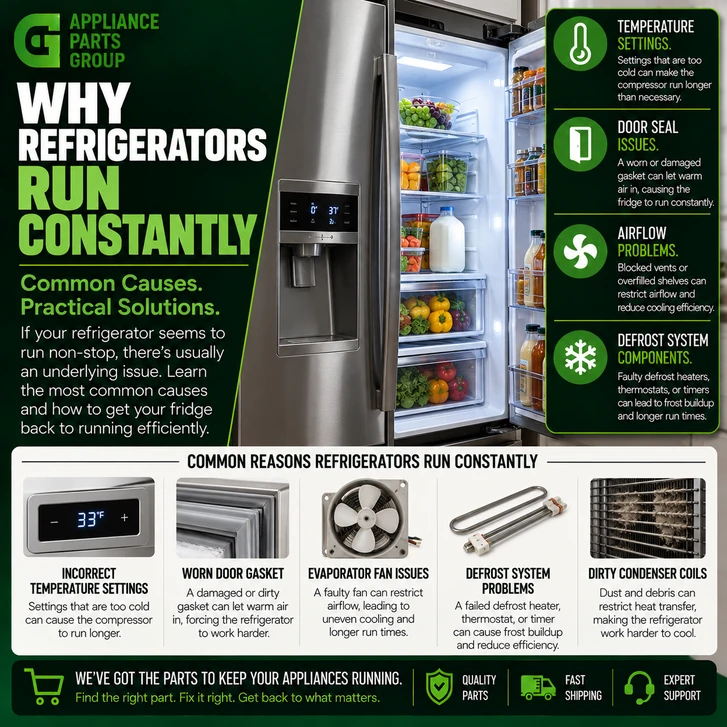
- Dirty condenser coils, damaged door gaskets, incorrect temperature settings, and restricted airflow are some of the most common reasons a refrigerator runs constantly.
- Heavy use, warm room temperatures, and recently adding a large amount of food can temporarily increase refrigerator run time without indicating a failure.
- Components such as condenser fans, evaporator fans, thermistors, defrost parts, and temperature controls can cause excessive operation when they fail.
- Identifying why the refrigerator is running continuously can help prevent unnecessary energy use and potentially avoid more serious cooling problems.
Introduction
Refrigerators are designed to run regularly. Unlike an appliance that operates only when you turn it on, a refrigerator continuously monitors its internal temperature and starts the cooling system whenever additional cooling is needed. Depending on the refrigerator, room temperature, usage, and other conditions, it may run for surprisingly long periods.
However, there is a difference between a refrigerator that runs frequently and one that seems to never shut off. If you suddenly notice the compressor running almost constantly, the refrigerator may be working harder than necessary to maintain its temperature.
Sometimes the explanation is simple. A dirty condenser, a door that is not completely closed, or a temperature setting that is too cold can dramatically increase run time. In other cases, constant operation may point to a failed refrigerator component that needs to be diagnosed and replaced.
Understanding how the refrigerator's cooling system works can help you narrow down the cause and determine whether you are dealing with normal operation, a maintenance issue, or a part failure.
Is It Normal for a Refrigerator to Run for a Long Time?
Yes. Modern refrigerators can have long operating cycles, particularly energy-efficient models that use variable-speed compressors or sophisticated electronic controls. A refrigerator does not necessarily have a problem simply because you hear it running frequently.
Several normal conditions can cause longer cooling cycles, including:
- Recently installing or plugging in the refrigerator
- Adding a large amount of room-temperature or warm food
- Frequently opening the refrigerator or freezer doors
- Hot summer temperatures or a warm kitchen
- Setting the refrigerator or freezer temperature colder than necessary
- Using features such as rapid cooling or fast freeze
- Operating an ice maker that is producing a large amount of ice
If the refrigerator maintains the correct temperatures and eventually cycles off, longer operating periods may be completely normal. A sudden change in behavior, however, deserves attention.
Dirty Condenser Coils Can Make the Refrigerator Work Harder
The condenser is responsible for releasing heat removed from inside the refrigerator. Depending on the model, the condenser coils may be located underneath the cabinet, behind the refrigerator, or incorporated into another part of the cabinet design.
On refrigerators with accessible condenser coils, dust, pet hair, lint, and other debris can accumulate around them. This buildup reduces the condenser's ability to release heat efficiently.
When that happens, the refrigerator may need to operate longer to reach its target temperature.
Check your owner's manual for the location of the condenser and the manufacturer's recommended cleaning procedure. Not every modern refrigerator has condenser coils that are intended to be cleaned by the homeowner.
A Damaged Refrigerator Door Gasket Can Let Warm Air In
The flexible gasket around the refrigerator and freezer doors creates a seal between the door and cabinet. When the door closes, this seal helps keep cold air inside while preventing warm, humid room air from entering.
A refrigerator door gasket can become:
- Torn or cracked
- Loose
- Deformed
- Dirty
- Folded over
- Damaged around a corner
If the gasket cannot create a proper seal, warm air continually enters the compartment. The refrigerator then has to remove the additional heat, potentially causing much longer cooling cycles.
You may also notice condensation, moisture, frost, or unusually warm areas inside the refrigerator when a door is not sealing properly.
Before replacing a gasket, inspect it carefully and clean both the gasket and the surface where it contacts the cabinet. Also make sure food containers, shelves, or drawers are not preventing the door from closing completely.
Incorrect Temperature Settings
Setting a refrigerator colder does not necessarily make food better protected. If the temperature setting is unnecessarily low, the refrigerator may operate for much longer periods while attempting to reach that setting.
A refrigerator compartment is generally intended to maintain food-safe refrigeration temperatures without freezing fresh food, while the freezer should keep frozen foods properly frozen. Always follow the temperature recommendations provided by the appliance manufacturer.
If someone recently changed the controls, return them to the manufacturer's recommended setting and allow sufficient time for the refrigerator temperature to stabilize.
Blocked Airflow Inside the Refrigerator
Most refrigerators depend on controlled airflow to distribute cold air. If vents are blocked by food packages, containers, or ice, the refrigerator may have difficulty maintaining consistent temperatures.
A heavily packed refrigerator can also interfere with circulation.
Look for air vents in both the refrigerator and freezer compartments and make sure food is not pressed directly against them. Rearranging items to provide better airflow may improve cooling performance and reduce excessive operation.
Condenser Fan Problems
Many refrigerators use a condenser fan motor to move air across the condenser and compressor area. If the fan cannot move enough air, heat may not be released efficiently.
Possible problems include:
- A failed condenser fan motor
- A damaged fan blade
- Debris obstructing the blade
- Heavy dust buildup around the fan and condenser
A condenser fan problem can result in poor cooling, unusually long compressor operation, or excessive heat around the refrigerator's machine compartment.
Always disconnect power before accessing internal or mechanical refrigerator components.
Evaporator Fan Problems
The evaporator fan circulates cold air from the evaporator throughout the refrigerator's compartments. Depending on the refrigerator design, one or more evaporator fans may be used.
If an evaporator fan stops working or operates intermittently, the refrigerator may struggle to distribute cold air even though the refrigeration system is operating.
Symptoms can include:
- The freezer is cold but the refrigerator section is warm
- Uneven temperatures
- Little or no airflow from interior vents
- Unusual fan noises
- Excessively long cooling cycles
A defective evaporator fan motor or damaged fan blade may require replacement.
Defrost System Problems
Many refrigerators use an automatic defrost system to periodically remove frost from the evaporator. Depending on the model, this system may include a defrost heater, temperature sensor or thermostat, wiring, and an electronic control.
If the refrigerator stops defrosting correctly, frost can accumulate on the evaporator. Eventually, that frost may restrict airflow through the evaporator area.
The result can seem confusing: the refrigerator may run almost continuously while temperatures inside the fresh-food compartment become warmer.
Heavy frost or ice buildup around the evaporator area can therefore be an important clue when diagnosing a refrigerator that runs constantly.
A Faulty Thermistor or Temperature Sensor
Electronic refrigerators commonly use thermistors or other temperature sensors to report compartment temperatures to the control board.
The electronic control uses this information to determine when cooling is required. If a sensor provides inaccurate information, the refrigerator may operate longer than necessary because the control incorrectly believes the compartment is too warm.
Temperature sensors should be diagnosed according to the service information for the specific refrigerator model. Resistance specifications and testing procedures can vary between manufacturers and models.
Temperature Control or Electronic Control Problems
Older refrigerators may use mechanical temperature controls, while newer models typically rely heavily on electronic control boards.
If the control system incorrectly calls for cooling continuously, the compressor and fans may operate far longer than they should.
Control boards are usually not the first component that should be replaced when a refrigerator runs constantly. More common issues such as dirty condenser coils, door sealing problems, airflow restrictions, sensors, and fan problems should normally be investigated first.
Refrigerator Compressor or Sealed System Problems
Sometimes a refrigerator runs constantly because the refrigeration system is operating but cannot produce enough cooling.
Possible sealed-system issues can involve the compressor, refrigerant circuit, evaporator, condenser, or other refrigeration components. These problems typically require specialized diagnostic equipment and professional service.
A refrigerator that runs continuously while both the refrigerator and freezer remain too warm may have a more significant cooling-system problem, particularly if the fans are operating normally and the evaporator is not blocked by excessive frost.
Sealed-system diagnosis and refrigerant work should be performed by a qualified appliance service professional.
Step-by-Step Troubleshooting
- Check the temperatures. Determine whether the refrigerator and freezer are actually maintaining their intended temperatures. A refrigerator that runs constantly but remains warm requires different troubleshooting from one that is simply set too cold.
- Check the temperature settings. Make sure the controls have not accidentally been changed to unusually cold settings.
- Inspect the doors. Confirm that both refrigerator and freezer doors close completely and are not being obstructed by food, shelves, bins, or drawers.
- Inspect the door gaskets. Look for tears, gaps, deformation, dirt, or areas where the gasket is not contacting the cabinet correctly.
- Check interior airflow. Make sure packages and containers are not blocking air vents.
- Inspect accessible condenser areas. If your refrigerator has condenser coils that require periodic cleaning, check for heavy dust, lint, or pet hair and clean them according to the manufacturer's instructions.
- Check the fans. Listen for unusual noises and verify that the appropriate fans are operating when the refrigerator is calling for cooling.
- Look for unusual frost buildup. Heavy frost around the evaporator area may indicate a defrost-system problem.
- Consider recent operating conditions. A large grocery load, frequent door openings, warm weather, or a recently installed refrigerator may temporarily explain long run times.
- Proceed to component testing if necessary. If basic maintenance does not identify the cause, model-specific testing of thermistors, fans, defrost components, controls, or other parts may be necessary.
Common Parts That May Need Replacement
The correct replacement part depends on the refrigerator model and the results of proper diagnosis. Components commonly associated with excessive refrigerator run time include:
- Refrigerator door gasket: Helps create an airtight seal between the door and cabinet.
- Freezer door gasket: Prevents warm, humid air from entering the freezer compartment.
- Condenser fan motor: Helps move air across the condenser and compressor area on models equipped with a condenser fan.
- Evaporator fan motor: Circulates cold air through the refrigerator's compartments.
- Thermistor or temperature sensor: Provides temperature information to the electronic control.
- Defrost heater: Heats the evaporator during automatic defrost cycles on applicable models.
- Defrost thermostat or sensor: Helps regulate the defrost process.
- Electronic control board: Manages cooling and other refrigerator functions on many modern appliances.
- Temperature control: Regulates cooling operation on refrigerators using a mechanical control system.
Always identify parts using the refrigerator's complete model number. Components that appear identical may have different electrical characteristics, mounting arrangements, connectors, or operating specifications.
Appliance Parts Group supplies genuine OEM refrigerator replacement parts for major appliance brands. Using the model number when searching for a replacement part is one of the best ways to identify the component designed for your specific refrigerator.
Preventative Maintenance Tips
A few basic maintenance habits can help your refrigerator cool efficiently and reduce unnecessary operating time:
- Keep accessible condenser coils clean according to the manufacturer's recommendations.
- Clean door gaskets and the cabinet surfaces they contact.
- Replace damaged or badly deformed door gaskets.
- Avoid blocking interior air vents with food.
- Make sure doors close completely after each use.
- Do not leave refrigerator or freezer doors open longer than necessary.
- Use manufacturer-recommended temperature settings.
- Periodically check for unusual frost, condensation, noises, or temperature changes.
- Keep the refrigerator properly positioned with the ventilation clearance specified by the manufacturer.
Changes in refrigerator operation are often easier to address when caught early. A fan that begins making noise, a gasket that starts pulling away from the door, or a gradual increase in frost may provide an early warning before cooling performance becomes significantly worse.
Frequently Asked Questions
Should my refrigerator run all the time?
A refrigerator normally runs for significant portions of the day, and some modern models use long cooling cycles. However, a sudden change to nearly continuous operation can indicate an airflow, maintenance, temperature-control, or component problem.
Why is my refrigerator running constantly but still cold?
Possible causes include unusually cold temperature settings, dirty condenser coils, a leaking door gasket, warm room conditions, frequent door openings, or a temperature sensor that is not reading correctly.
Why is my refrigerator running constantly but not getting cold?
This can indicate a more significant problem such as poor airflow, an evaporator or condenser fan failure, excessive evaporator frost, a defrost-system failure, or a refrigeration-system problem.
Can dirty condenser coils make a refrigerator run constantly?
Yes. On models with accessible condenser coils, heavy dirt and debris can reduce heat transfer and make the refrigerator operate longer to maintain the desired temperature.
Can a bad door gasket cause a refrigerator to keep running?
Yes. A damaged or poorly sealing gasket can allow warm room air into the refrigerator, increasing the amount of cooling required.
Can putting too much food in a refrigerator make it run longer?
Yes. Adding a large quantity of room-temperature food can temporarily increase run time. Overpacking can also restrict airflow if food blocks interior vents.
Can hot weather make my refrigerator run constantly?
High room temperatures can substantially increase the amount of heat the refrigerator must remove. Longer operating cycles during hot weather may therefore be normal, especially in kitchens, garages, or other warm spaces.
How can I tell if my refrigerator evaporator fan is bad?
Symptoms may include weak airflow, uneven temperatures, unusual noises, or a freezer that remains colder than the fresh-food compartment. Proper diagnosis depends on the refrigerator model.
Can a bad thermistor make a refrigerator run continuously?
Yes. If a thermistor reports an incorrect temperature, the electronic control may continue calling for cooling even when the compartment is already cold enough.
Does frost buildup make a refrigerator run longer?
It can. Excessive frost on the evaporator can restrict airflow and reduce the refrigerator's ability to transfer cold air throughout the appliance.
Should I replace the control board if my refrigerator keeps running?
Not automatically. Control-board failures are possible, but door sealing, condenser condition, airflow, fans, temperature sensors, and defrost components should be properly evaluated before replacing an electronic control.
How do I find the correct replacement part for my refrigerator?
Locate the refrigerator's complete model number and use it to identify compatible parts. Searching by model number is more reliable than selecting a replacement component based only on its appearance.
Entities and Terms
- Refrigerator compressor
- Condenser coils
- Condenser fan motor
- Evaporator
- Evaporator fan motor
- Refrigerator door gasket
- Freezer door gasket
- Thermistor
- Temperature sensor
- Defrost heater
- Defrost thermostat
- Electronic control board
- Temperature control
- Refrigerator airflow
- Refrigerator sealed system
This article was written by an AI program as part of a beta test by Appliance Parts Group to explore how artificial intelligence can help inform and educate our customers.
Our goal is to use AI tools to provide clear, reliable information so you can make confident, well-informed purchasing decisions.