
Key Takeaways
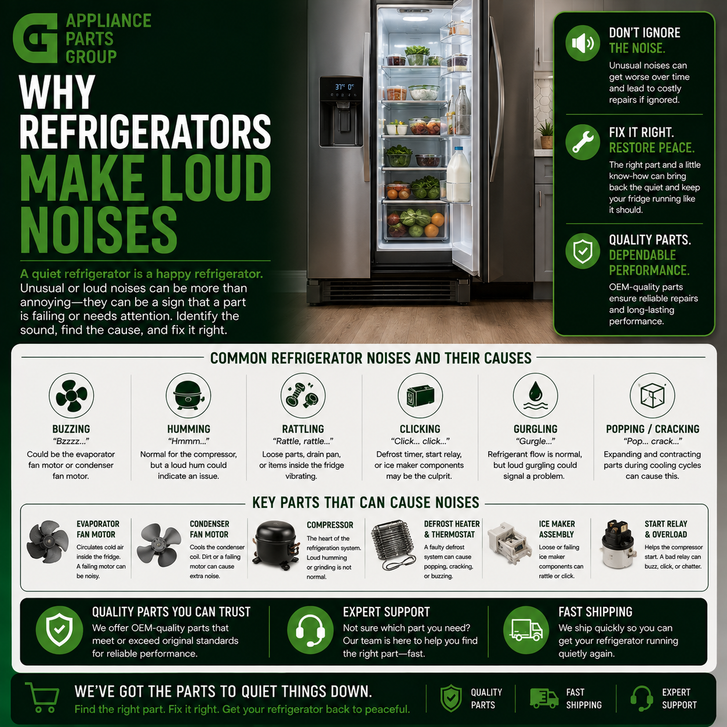
- Many refrigerator sounds are normal, including light humming, occasional clicking, water flow, and brief popping sounds.
- Loud grinding, squealing, rattling, buzzing, or knocking can point to fan motors, fan blades, ice buildup, loose components, or compressor-related problems.
- The location and timing of the noise can help narrow down which refrigerator component may be responsible.
- Common replacement parts include evaporator fan motors, condenser fan motors, fan blades, water inlet valves, compressor start devices, and ice maker components.
- Regular cleaning, proper leveling, airflow, and early attention to unusual noises can help prevent larger refrigerator problems.
Introduction
Refrigerators are not silent appliances. During normal operation, a refrigerator may hum, click, gurgle, pop, buzz, or make brief mechanical sounds as different components turn on and off. Most of these noises are harmless. However, when a refrigerator suddenly becomes much louder than usual or begins making grinding, squealing, rattling, knocking, or repeated clicking sounds, there may be a mechanical or electrical problem that needs attention.
The type of sound you hear can provide useful clues. A grinding noise from the freezer may indicate that an evaporator fan blade is contacting ice. A rattling sound near the bottom of the refrigerator may come from the condenser fan, drain pan, tubing, or loose mounting hardware. A loud buzz followed by a click may point to a compressor start problem.
Before replacing any refrigerator part, locate the appliance model number and verify the exact part used in that model. Refrigerators that look similar may use different motors, fan blades, start devices, valves, controls, and mounting hardware.
Are Refrigerator Noises Normal?
Some refrigerator noises are completely normal and are simply part of the cooling process. Understanding these sounds can help homeowners avoid replacing parts unnecessarily.
Humming
A low humming sound is often produced by the compressor, evaporator fan, or condenser fan. The sound may become more noticeable when the refrigerator begins a cooling cycle.
Clicking
Occasional clicking can come from a relay, control board, thermostat, damper, defrost system, or ice maker. A single click when the refrigerator starts or stops cooling is often normal. Repeated clicking every few seconds may indicate a problem.
Gurgling or Water Flow Sounds
Refrigerant moving through the sealed system can create gurgling or flowing sounds. Water entering the ice maker or moving through the defrost drain may produce similar noises.
Popping or Cracking
Plastic liners and internal refrigerator components expand and contract as temperatures change. This can sometimes create popping or cracking sounds.
Ice Maker Sounds
Ice makers may click, hum, rotate, fill with water, and release ice into the storage bin. Ice falling into the bin can sound surprisingly loud, particularly in a quiet kitchen.
Common Reasons Refrigerators Make Loud Noises
1. Evaporator Fan Motor Problems
The evaporator fan circulates cold air through the freezer and refrigerator compartments. On many refrigerators, the motor is located behind a panel inside the freezer.
As an evaporator fan motor wears, the motor bearings may begin producing squealing, chirping, grinding, or rumbling sounds. The sound may become louder over time.
If the refrigerator noise changes or stops when the freezer door is opened, the evaporator fan area should be inspected. Many refrigerators automatically stop the evaporator fan when the freezer door opens.
2. Ice Hitting the Evaporator Fan Blade
One of the most common reasons for a loud grinding or scraping noise from a freezer is ice buildup around the evaporator fan.
If frost accumulates around the evaporator coil or fan housing, the rotating blade may begin striking the ice. This can produce a rapid tapping, scraping, grinding, or buzzing sound.
Heavy frost buildup may also indicate a defrost system problem. Possible causes can include a failed defrost heater, defrost sensor, thermostat, control board, or airflow problem depending on the refrigerator design.
3. Damaged Evaporator Fan Blade
The evaporator fan blade can crack, warp, loosen, or become damaged. A blade that is no longer properly balanced may vibrate or strike the fan housing while rotating.
Before replacing the fan motor, inspect the blade carefully. A damaged blade can create symptoms that sound very similar to a failing motor.
4. Condenser Fan Motor Problems
Many refrigerators use a condenser fan near the compressor at the bottom rear of the appliance. The fan moves air across the condenser and compressor area to help remove heat.
A worn condenser fan motor can produce grinding, squealing, humming, or rattling sounds. Dust, pet hair, paper, or debris can also contact the fan blade and create repetitive tapping or scraping noises.
Always disconnect power before inspecting the condenser fan or removing access panels.
5. Dirty Condenser Area
Dust buildup around the condenser can contribute to refrigerator noise. Restricted airflow may cause the cooling system to run longer than normal, which increases compressor and fan operating time.
Loose debris can also come into contact with the condenser fan blade and create rattling or tapping sounds.
6. Compressor Noise
The compressor is responsible for circulating refrigerant through the refrigerator's sealed cooling system. A normal compressor usually creates a steady hum or light vibration while operating.
As compressors age, their operating sound may change. Loud knocking, clunking, buzzing, or unusually strong vibration may indicate a compressor-related problem.
However, sounds that appear to come from the compressor may actually originate from nearby tubing, mounting hardware, the condenser fan, or compressor start components.
Refrigerant and sealed-system repairs generally require specialized tools and should be handled by a qualified refrigeration technician.
7. Compressor Start Relay or Start Device
If a refrigerator produces a loud buzzing sound followed by a click, the compressor may be having difficulty starting.
Depending on the refrigerator design, the starting circuit may use a start relay, overload protector, start device, inverter, capacitor, or combination of components.
A defective start component may cause repeated clicking, but a failing compressor can create similar symptoms. Proper diagnosis is important before replacing parts.
8. Loose Drain Pan
A rattling sound underneath the refrigerator may come from the drain pan. The drain pan collects water produced during the automatic defrost cycle.
If the pan becomes loose, bent, or incorrectly positioned, compressor vibration can cause it to rattle against the refrigerator cabinet or frame.
9. Refrigerator Is Not Properly Leveled
A refrigerator that rocks or sits unevenly can transfer normal compressor vibration into the floor, cabinet, or surrounding surfaces.
Check that the refrigerator is stable and does not wobble. Follow the manufacturer's leveling instructions, because some models are designed to sit with a slight rearward tilt so the doors close correctly.
10. Water Inlet Valve Noise
The water inlet valve supplies water to the refrigerator's dispenser and ice maker. When the valve opens, it may make a brief humming or buzzing sound.
If the valve becomes unusually loud, chatters, or vibrates, the valve itself may be worn. Low household water pressure, a partially closed supply valve, or a restricted water filter can also affect the way the valve sounds.
11. Ice Maker Problems
Ice makers contain small motors, gears, ejector mechanisms, heaters, and switches. Some clicking and movement during an ice harvest cycle is normal.
Repeated grinding, loud clicking, or prolonged humming may indicate a jammed ice maker, damaged gear assembly, frozen component, or failing ice maker motor.
12. Air Damper Problems
Many refrigerators use a motorized air damper to control airflow between the freezer and refrigerator compartments.
As the damper opens and closes, it may create a quiet mechanical sound. A worn damper motor or damaged internal gear can create repeated clicking or tapping noises.
13. Refrigerant Tubing Vibration
Refrigerant tubing can occasionally vibrate against another component, cabinet panel, or mounting surface while the compressor is running.
This can create a rattling or buzzing sound that appears to come from the compressor area.
Refrigerant tubing should not be sharply bent or repositioned because damaging the tubing can create a sealed-system leak.
What Different Refrigerator Noises May Mean
Buzzing
A light buzzing sound can be normal during compressor, fan, or water valve operation. Repeated loud buzzing followed by clicking may indicate that the compressor is having difficulty starting.
Rattling
Rattling can come from a loose drain pan, condenser fan debris, cabinet panels, tubing, mounting hardware, shelves, bottles, or the refrigerator touching a nearby wall or cabinet.
Grinding
Grinding sounds commonly involve a fan blade contacting ice or debris, worn fan motor bearings, or a damaged ice maker mechanism.
Squealing
Squealing or chirping often points to a fan motor bearing problem. Listen carefully to determine whether the sound is coming from the freezer or the lower rear machine compartment.
Clicking
Occasional clicking may be normal. Repeated clicking accompanied by poor cooling may indicate a compressor start issue, control problem, air damper problem, or ice maker malfunction.
Knocking or Clunking
Knocking sounds can be associated with compressor movement, mounting components, tubing vibration, or ice maker operation.
Step-by-Step Troubleshooting
- Identify when the noise occurs. Determine whether it happens constantly, only during cooling cycles, when dispensing water, while making ice, or when opening and closing the doors.
- Locate the sound. Listen near the freezer, refrigerator compartment, ice maker, bottom of the cabinet, and rear machine compartment.
- Check the refrigerator position. Make sure the appliance is stable and is not vibrating against a wall, countertop, cabinet, or nearby object.
- Remove loose items. Bottles, containers, shelves, magnets, or objects stored on top of the refrigerator can amplify vibration.
- Disconnect electrical power. Unplug the refrigerator before removing access panels or inspecting internal components.
- Inspect the condenser fan area. Check for dust, pet hair, debris, damaged blades, or anything contacting the fan.
- Inspect the evaporator fan area. If the noise comes from the freezer, look for excessive frost, ice buildup, or a damaged fan blade.
- Check the water system. If the noise occurs while dispensing water or filling the ice maker, verify that the water supply valve is fully open and the filter is correctly installed.
- Inspect accessible mounting components. Check the drain pan, covers, brackets, and panels for looseness.
- Record the model number. Use the full refrigerator model number before ordering any replacement part.
- Seek professional service when needed. Compressor, inverter, refrigerant, sealed-system, and advanced electrical problems may require professional diagnosis.
Common Parts That May Need Replacement
Evaporator Fan Motor
A worn evaporator fan motor may squeal, grind, chirp, or rumble. Before replacing the motor, make sure the fan blade is not simply hitting ice or another obstruction.
Evaporator Fan Blade
A cracked, loose, or warped evaporator fan blade can create tapping, scraping, or vibration. The replacement blade should match the refrigerator model and motor shaft.
Condenser Fan Motor
A failing condenser fan motor may produce grinding, humming, or squealing from the lower rear portion of the refrigerator.
Condenser Fan Blade
A damaged or unbalanced condenser fan blade may wobble, contact the shroud, or create excessive vibration.
Compressor Start Relay or Start Device
A compressor that repeatedly buzzes and clicks may have a problem with the start relay, overload, inverter, or another starting component. The compressor itself can cause similar symptoms, so testing should be completed before replacing the start device.
Water Inlet Valve
An inlet valve that buzzes loudly, chatters, or vibrates during water dispensing or ice maker filling may need replacement after water pressure and filter condition have been checked.
Ice Maker Assembly
A jammed or damaged ice maker may produce loud grinding, clicking, or mechanical sounds. Depending on the refrigerator design, individual components or the complete ice maker assembly may be replaceable.
Air Damper Assembly
A motorized air damper with worn gears may click repeatedly while trying to open or close. Temperature-control problems may also occur.
Preventative Maintenance Tips
- Keep the condenser area clean. Follow the refrigerator manufacturer's recommendations for removing dust, pet hair, and debris.
- Maintain proper ventilation. Leave the required clearance around the refrigerator so heat can escape properly.
- Keep the refrigerator level. A stable appliance is less likely to transfer vibration into the floor or surrounding cabinetry.
- Replace water filters as recommended. Restricted water flow can affect dispenser and ice maker performance.
- Watch for unusual frost buildup. Heavy ice around the evaporator can interfere with the fan and may indicate a defrost system problem.
- Do not block interior air vents. Proper airflow helps maintain temperature and reduces unnecessary cooling-system run time.
- Investigate new noises early. A minor scraping or rattling sound may be easier to correct before it damages a motor, fan blade, or nearby component.
Frequently Asked Questions
Why is my refrigerator suddenly making a loud noise?
A sudden loud noise may come from an evaporator fan, condenser fan, fan blade contacting ice, loose drain pan, water inlet valve, ice maker, compressor, or another vibrating component. Identifying when and where the sound occurs can help narrow down the cause.
Is it normal for a refrigerator to hum?
Yes. A low humming sound is usually normal and may come from the compressor or a fan motor. A noticeably louder hum combined with clicking or poor cooling should be investigated.
Why is my refrigerator making a grinding noise?
Grinding often occurs when a fan blade contacts ice or debris, a fan motor bearing begins failing, or an ice maker mechanism becomes jammed or damaged.
Why does the noise stop when I open the freezer door?
Many refrigerators stop the evaporator fan when the freezer door is opened. If the noise immediately stops, inspect the evaporator fan motor, blade, housing, and surrounding area for frost or ice buildup.
Why is my refrigerator buzzing and clicking?
A loud buzz followed by a click may occur when the compressor attempts to start but cannot remain running. The start relay, overload protector, inverter, wiring, or compressor may require testing.
Can a dirty refrigerator cause loud noises?
Yes. Dust and debris can reduce condenser airflow, make the cooling system operate longer, or contact a condenser fan blade and create rattling or scraping sounds.
Why does my refrigerator rattle?
Rattling can come from the drain pan, tubing, condenser fan area, exterior panels, shelving, loose containers, or the refrigerator touching a nearby cabinet or wall.
Can a refrigerator compressor make loud noises?
Yes. Compressors normally hum, but excessive knocking, clunking, buzzing, or vibration can indicate a compressor or mounting problem. Professional diagnosis may be required.
How can I tell if my evaporator fan motor is failing?
Common signs include squealing, chirping, rumbling, grinding, intermittent operation, or reduced airflow. Ice contacting the fan blade can create similar symptoms, so inspect the fan area first.
Can a refrigerator water filter cause noise?
A restricted, incorrectly installed, or incompatible filter may affect water flow and contribute to unusual noises when the dispenser or ice maker requests water. Water pressure and inlet valve condition should also be checked.
Should I unplug a refrigerator that is making a loud noise?
If you hear severe grinding, electrical buzzing, smell burning, or see a damaged moving component, disconnecting power can help prevent further damage. Normal humming and occasional clicking usually do not require immediate shutdown.
How do I find the correct replacement part for my refrigerator?
Locate the refrigerator model number and use it to identify the correct OEM replacement part. Do not order based only on appearance because similar refrigerator models can use different motors, blades, valves, relays, and controls.
Entities and Terms
- Evaporator fan motor
- Evaporator fan blade
- Condenser fan motor
- Condenser fan blade
- Compressor
- Compressor start relay
- Overload protector
- Compressor inverter
- Water inlet valve
- Ice maker assembly
- Air damper assembly
- Defrost heater
- Defrost sensor
- Condenser
- Drain pan
- Refrigerant tubing
- Water filter
Final Thoughts
A refrigerator making a loud noise does not always indicate a major failure. Many noises can be traced to fan motors, fan blades, ice buildup, loose components, water-system operation, or ordinary cooling cycles.
The best first step is to identify the type of noise, determine where it is coming from, and note when it occurs. That information can help narrow the problem before parts are replaced.
If a replacement component is needed, always use the refrigerator's complete model number to identify the correct OEM part. Appliance Parts Group supplies OEM appliance replacement parts for refrigerators and other major appliances.
This article was written by an AI program as part of a beta test by Appliance Parts Group to explore how artificial intelligence can help inform and educate our customers.
Our goal is to use AI tools to provide clear, reliable information so you can make confident, well-informed purchasing decisions.