
Key Takeaways
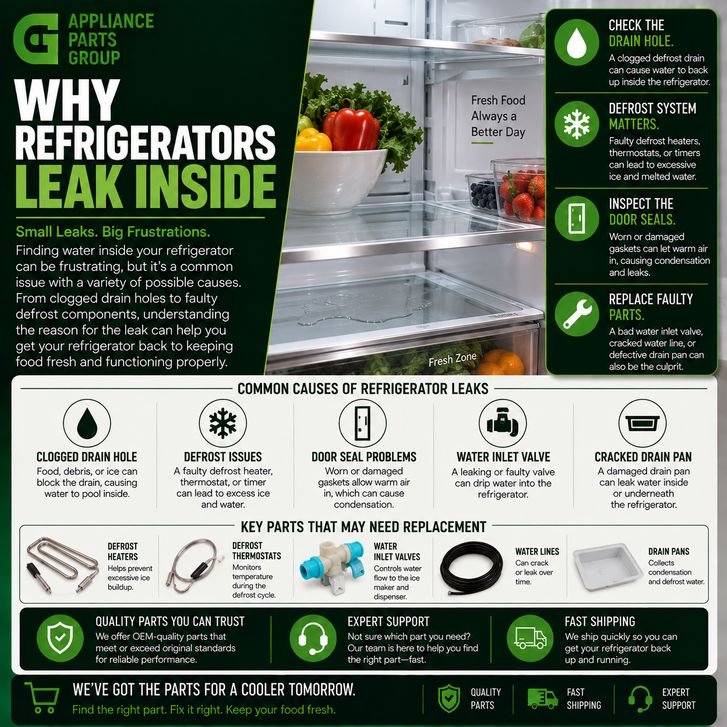
- Water inside a refrigerator is commonly caused by a clogged or frozen defrost drain, excess condensation, a damaged drain component, or an issue with the ice maker or water system.
- Where the water appears can provide an important clue. Water under the crisper drawers often points to a drainage problem, while moisture on shelves or walls may indicate condensation or airflow issues.
- Before replacing parts, check the refrigerator temperature, door seals, food placement, defrost drain, and visible water connections.
- Depending on the cause, refrigerator parts that may require replacement include drain tubes, drain troughs, door gaskets, water inlet valves, water lines, and defrost-system components.
- Regular cleaning, proper food storage, good airflow, and periodic inspection of the refrigerator's water and drainage systems can help prevent future leaks.
Introduction
Finding a puddle of water inside your refrigerator can be confusing. The refrigerator may still be cold, the freezer may appear to work normally, and there may be no water on the kitchen floor. Yet water continues collecting underneath the crisper drawers, dripping from the ceiling of the fresh-food compartment, or appearing on shelves.
Fortunately, an internal refrigerator leak does not automatically mean the appliance has reached the end of its life. Refrigerators routinely create moisture as part of normal operation. During an automatic defrost cycle, for example, frost on the evaporator melts and must travel through a drainage system to a pan underneath the appliance. If that drainage path becomes blocked, the water can end up where it does not belong.
Other internal leaks may come from condensation, a door that is not sealing properly, an ice maker, a water dispenser system, or damaged refrigerator components.
The best way to diagnose the problem is to determine where the water is appearing, when it appears, and whether the refrigerator has any other symptoms. This guide explains the most common reasons refrigerators leak inside, troubleshooting steps homeowners can perform, and the refrigerator parts that may need attention.
Why Is My Refrigerator Leaking Water Inside?
A refrigerator can leak internally whenever water is produced or supplied faster than the appliance can properly contain, drain, or evaporate it.
For refrigerators with automatic defrost systems, a small amount of water is normal. Frost periodically melts from the evaporator and drains away. Under normal conditions, you never see this water because it travels through the defrost drain into a drain pan beneath the refrigerator, where it eventually evaporates.
If the drain freezes or becomes clogged with debris, however, the defrost water can back up. Depending on the refrigerator design, it may collect beneath the crisper drawers, run down the back wall of the fresh-food compartment, or freeze into a sheet of ice on the freezer floor.
Refrigerators equipped with ice makers and water dispensers have additional potential leak points because they contain water tubing, connectors, valves, filters, and other water-handling components.
1. Clogged or Frozen Defrost Drain
One of the first components to investigate when water repeatedly collects inside a refrigerator is the defrost drain.
During the automatic defrost cycle, ice on the evaporator melts. The resulting water enters a drain trough and passes through a small drain opening and tube. Food particles, dust, ice, or other debris can restrict this path.
When the drain is blocked, water backs up instead of reaching the drain pan.
Common symptoms include:
- Water underneath the refrigerator's crisper drawers
- A recurring puddle at the bottom of the fresh-food compartment
- Ice on the bottom of the freezer compartment
- Water that returns after being wiped away
- Water appearing after a defrost cycle
Some drain clogs can be cleared with warm water, but access varies considerably by refrigerator model. Never use a sharp object to chip ice from a drain or evaporator area because nearby plastic components, tubing, and the evaporator can be damaged.
2. Refrigerator Door Is Not Sealing Correctly
A refrigerator door gasket does more than keep cold air inside. It also helps prevent warm, humid room air from continuously entering the refrigerator.
If the gasket is dirty, damaged, loose, or deformed, humid air can enter the compartment. As that air cools, its moisture can condense on interior surfaces.
You may notice:
- Water droplets on interior walls
- Moisture on shelves or food containers
- Excess frost in the freezer
- A refrigerator that runs frequently
- A door that does not appear to close firmly
Inspect the gasket around the entire door. Look for tears, hardened areas, deformation, or sections pulling away from the door. Clean residue from the gasket and the surface it contacts.
A damaged gasket may need to be replaced with the correct part for the refrigerator model.
3. The Refrigerator Door Is Being Left Open
Sometimes the appliance itself is working correctly, but the refrigerator is receiving too much warm, humid air.
Frequently opening the doors, leaving a door slightly open, or having a food container prevent the door from closing can create substantial condensation.
Check that bottles, containers, drawers, and shelves are not interfering with the door. Also inspect the refrigerator's leveling. Depending on the manufacturer's design requirements, improper leveling can contribute to door-closing or drainage problems.
4. Food Is Blocking Interior Airflow
Cold air needs to circulate through the refrigerator compartment. Packing food tightly against air vents or the rear interior wall can interfere with normal airflow and create unusually cold or warm areas.
Food containers touching a cold rear surface may also collect condensation.
Locate the refrigerator's interior vents and make sure they are not covered. Avoid overpacking the refrigerator, particularly around air passages.
5. Refrigerator Temperature Is Incorrect
Temperature problems can contribute to abnormal condensation or freezing.
As a general food-safety guideline, the refrigerator compartment should be maintained at or below 40°F (4°C). Many refrigerators are designed to operate around 37°F in the fresh-food compartment, although the manufacturer's recommended setting should be followed for your particular appliance.
If food is freezing in the refrigerator while water is also appearing, the problem may involve airflow, temperature sensing, controls, or another cooling-system component rather than a simple leak.
6. Ice Maker or Ice Maker Fill Tube Is Leaking
If the refrigerator has an automatic ice maker, inspect the area around it when the source of the leak is unclear.
Water must travel through a supply system before entering the ice maker mold. A loose connection, cracked tube, displaced fill tube, or ice obstruction can cause water to spill into the freezer instead.
Signs of an ice-maker-related leak may include:
- Ice buildup around or below the ice maker
- Frozen water trails on the freezer wall
- Water appearing after the ice maker fills
- Irregular or oversized ice cubes
- Water leaking into an ice bin
If the leak appears to occur specifically when the ice maker calls for water, the fill system and water inlet components deserve closer inspection.
7. Water Inlet Valve or Water Line Problem
Refrigerators with ice makers or water dispensers typically use a water inlet valve to control incoming household water.
The system may also contain multiple sections of plastic tubing and several connectors. A damaged tube, loose fitting, or malfunctioning valve can create a leak.
Because some of these components are located behind or underneath the refrigerator, water can occasionally travel along a surface before becoming visible inside or around the appliance.
If you suspect a pressurized water connection is leaking, shut off the refrigerator's water supply before disassembling water-system components.
8. Water Filter or Filter Housing Problem
On refrigerators equipped with a water filtration system, the filter and filter housing are additional potential sources of leaks.
Problems can occur when a filter is incorrectly installed, not fully seated, damaged, or incompatible with the refrigerator. Seals in the filter housing can also deteriorate.
If the refrigerator began leaking shortly after a filter replacement, recheck the filter installation according to the manufacturer's instructions.
Inspect the filter area for dripping, moisture, cracks, or damaged seals. The exact design varies widely among refrigerator models, so model-specific service information is especially useful in this area.
9. Cracked or Damaged Drain Trough
The defrost drain itself may be clear while another part of the drainage system is damaged.
Many refrigerators use a trough or channel beneath the evaporator to direct defrost water toward the drain opening. If this component becomes cracked, warped, or displaced, water may miss the drain and enter another section of the appliance.
This problem can be harder to identify because accessing the evaporator area may require removing interior panels.
10. Defrost System Problems
Water inside the refrigerator can occasionally be a symptom of a larger defrost problem.
If the evaporator develops excessive frost or ice, airflow may become restricted. When that ice eventually melts, the drainage system may have more water to handle.
Heavy frost accumulation may involve components such as the defrost heater, temperature sensor or thermistor, defrost thermostat on applicable models, wiring, or electronic controls.
A refrigerator with significant frost buildup, abnormal temperatures, and recurring water problems may therefore require diagnosis beyond simply clearing the drain.
What Does the Location of the Water Tell You?
The location of the leak can help narrow down the possible cause.
Water underneath crisper drawers: Check the defrost drainage system first.
Water or ice on the freezer floor: A frozen or obstructed defrost drain is a common possibility.
Droplets on refrigerator walls or shelves: Check for excessive humidity, blocked airflow, frequent door openings, and door-seal problems.
Water near the filter: Inspect the filter installation, housing, and seals.
Ice or water near the ice maker: Inspect the fill tube, ice maker area, water tubing, and inlet system.
Water coming from an interior ceiling or rear panel: The source may be a water line, filter component, ice maker connection, or drainage path depending on the refrigerator design.
Step-by-Step Troubleshooting
- Disconnect electrical power. Unplug the refrigerator before removing panels or accessing internal components. If you will be working on the water system, shut off the refrigerator's water supply as appropriate.
- Remove the standing water. Dry the shelves, drawers, and bottom of the refrigerator. Starting with a dry compartment makes it easier to identify where new water originates.
- Determine where the water first appears. Check underneath the crisper drawers, around the filter, near the ice maker, along the back wall, and on the freezer floor.
- Inspect the door gasket. Clean the gasket and look for tears, gaps, distortion, or areas that do not contact the cabinet correctly.
- Check for door obstructions. Make sure food containers, shelves, and drawers allow the doors to close completely.
- Check airflow. Move food away from vents and avoid packing containers tightly against the rear wall.
- Inspect the defrost drain if accessible. Look for visible ice or debris. Follow model-specific instructions for safely accessing and clearing the drain. Avoid sharp tools.
- Inspect the water filter. If applicable, verify that the filter is properly installed and inspect the surrounding housing for moisture.
- Inspect visible water lines. Look for cracks, loose connections, or signs of water traveling along the tubing.
- Observe the ice maker. If the leak occurs during an ice maker fill cycle, investigate the fill tube, water valve, tubing, and ice maker system.
- Check for abnormal frost. Heavy frost behind a freezer panel or across the evaporator area can indicate a defrost-system or airflow problem.
- Use the refrigerator model number before ordering parts. Similar-looking refrigerators can use different components. Confirm part compatibility using the complete model number from the appliance identification label.
Common Parts That May Need Replacement
The correct repair depends on the cause of the leak. Always identify the refrigerator model and diagnose the failure before ordering a replacement component.
Refrigerator Door Gasket
A torn, hardened, or badly deformed door gasket can allow humid air into the refrigerator. Replacing the gasket may restore the proper seal and reduce condensation.
Defrost Drain Tube
A damaged, restricted, or deteriorated drain tube can interfere with defrost-water drainage. Some refrigerators use model-specific drain tubes, fittings, or drain assemblies.
Drain Trough or Drain Pan Components
Cracked or damaged drainage components can allow water to travel into unintended areas. Replacement may be necessary when cleaning alone cannot correct the problem.
Water Inlet Valve
The water inlet valve controls water supplied to components such as the ice maker and dispenser. A leaking or malfunctioning valve may need replacement after proper diagnosis.
Refrigerator Water Tubing
Cracked, kinked, or damaged tubing may allow water to escape. Tubing size, fittings, routing, and compatibility should be verified for the specific model.
Water Filter Housing
If the filter housing is cracked or its sealing surfaces have failed, replacement may be required to stop the leak.
Ice Maker Components
Depending on the refrigerator design and diagnosis, a leaking ice maker problem may involve the fill tube, ice maker assembly, water valve, or associated tubing rather than the ice maker itself.
Defrost System Components
When excessive frost contributes to the problem, components such as a defrost heater, thermostat, sensor, thermistor, or control may need testing. Do not replace defrost components solely because water is present; verify the failed component first.
When replacing refrigerator components, using the appliance's complete model number is one of the most important steps in identifying the correct OEM replacement part. Appliance designs can change during a production run, and visually similar components are not necessarily interchangeable.
When Should You Call an Appliance Repair Technician?
Many basic refrigerator leak checks can be performed without extensive disassembly. However, professional diagnosis may be appropriate when the source cannot be located or when accessing the suspected component requires significant disassembly.
Consider professional service if:
- Water is near electrical wiring or electrical components.
- The refrigerator is not maintaining safe temperatures.
- The evaporator repeatedly develops heavy frost.
- A water leak continues after the supply has been inspected.
- The drain repeatedly freezes after being cleared.
- Internal panels or major components must be removed for diagnosis.
- You suspect a sealed refrigeration system problem.
If water is reaching an electrical connection or creating a hazard around the appliance, disconnect power when it is safe to do so and address the source before continuing to use the refrigerator.
Preventative Maintenance Tips
A few routine habits can reduce the likelihood of water accumulating inside your refrigerator.
- Keep door gaskets clean. Wipe away sticky food residue and inspect the seals periodically for damage.
- Make sure doors close completely. Containers and overloaded door bins can prevent proper closing.
- Maintain proper airflow. Do not block interior vents with food or containers.
- Monitor refrigerator temperature. Follow the manufacturer's recommended temperature settings and investigate unexpected temperature changes.
- Replace water filters correctly. Use the proper filter and follow the manufacturer's installation procedure.
- Inspect accessible water tubing. Periodically look for discoloration, cracking, moisture, or loose connections.
- Address ice buildup early. Repeated frost or ice accumulation can indicate a drainage, airflow, or defrost problem.
- Keep the refrigerator clean. Spills and food debris can migrate into drainage areas on some designs.
- Do not chip ice with sharp objects. Puncturing an evaporator or damaging a liner can turn a relatively simple problem into a major repair.
- Keep your model number available. The complete model number helps identify the correct service information and replacement parts.
Frequently Asked Questions
Why is water collecting under my refrigerator crisper drawers?
A clogged or frozen defrost drain is one common cause. Defrost water can back up and travel into the fresh-food compartment instead of draining underneath the refrigerator. The exact drainage path depends on the refrigerator model.
Why does my refrigerator leak inside but not onto the floor?
The source may be entirely within the refrigerator compartment. A blocked defrost drain, condensation, filter leak, or ice maker problem can allow water to collect internally without immediately reaching the kitchen floor.
Can a clogged defrost drain cause water inside a refrigerator?
Yes. During automatic defrosting, melted frost must drain away. If the drain opening or tube is obstructed or frozen, water can back up into the freezer or refrigerator compartment.
Why is there a sheet of ice on the bottom of my freezer?
A drainage problem is one possible cause. Defrost water that cannot enter the drain may collect on the freezer floor and refreeze. The drain and surrounding components should be inspected for ice or obstruction.
Can a bad refrigerator door seal cause water inside the fridge?
Yes. A damaged or poorly sealing door gasket can allow warm, humid air to enter. Moisture from that air can condense on cold interior surfaces and contribute to excess water or frost.
Why is my refrigerator sweating inside?
Interior condensation can result from humid room air entering the refrigerator, frequent door openings, a door that is not fully closed, a damaged gasket, blocked airflow, or temperature conditions inside the appliance.
Can a refrigerator water filter cause a leak?
Yes. Depending on the design, leaks can occur around an improperly installed filter, damaged filter, filter seals, or filter housing. If leaking begins soon after filter replacement, verify the installation first.
Can an ice maker cause water to leak inside the freezer?
Yes. Water can escape if the fill tube is displaced, frozen, damaged, or obstructed, or if another part of the ice maker water-supply system malfunctions. Ice buildup around the ice maker can help identify the source.
How do I know if my refrigerator defrost drain is clogged?
Possible signs include water beneath crisper drawers, recurring water at the bottom of the refrigerator, or ice forming on the freezer floor. The drain may need to be inspected to confirm the diagnosis.
Should I replace a part if my refrigerator is leaking inside?
Not necessarily. Some leaks are caused by a temporary obstruction, incorrect filter installation, blocked airflow, or a door that is not closing properly. Diagnose the source before purchasing replacement parts.
How do I find the correct refrigerator replacement part?
Locate the complete model number on the refrigerator's identification label and use it to verify part compatibility. Do not rely only on appearance because similar refrigerator models may use different components.
Is a refrigerator leaking inside dangerous?
Standing water can damage food, drawers, interior components, and surrounding materials. Water near electrical components requires particular caution. If the leak involves electrical areas or cannot be safely diagnosed, disconnect the appliance when safe and consider professional service.
Entities and Terms
- Refrigerator
- Defrost drain
- Defrost drain tube
- Drain trough
- Drain pan
- Evaporator
- Evaporator fan
- Door gasket
- Water inlet valve
- Refrigerator water line
- Water filter
- Water filter housing
- Ice maker
- Ice maker fill tube
- Defrost heater
- Defrost thermostat
- Temperature sensor
- Thermistor
- Electronic control
- OEM refrigerator parts
Final Thoughts
When a refrigerator leaks inside, the location of the water is often the best place to begin troubleshooting. Water beneath the crisper drawers or ice on the freezer floor can point toward the defrost drainage system, while moisture throughout the compartment may be related to condensation, airflow, or a door-sealing problem. Refrigerators with water dispensers and ice makers also have filters, valves, tubing, and connections that should be considered.
Start with simple inspections before replacing components. Check the door, gasket, airflow, temperature, drainage path, water filter, and visible water connections. If a replacement part is necessary, use the refrigerator's complete model number to identify the correct OEM component for the appliance.
Taking the time to diagnose the source of the water can help prevent unnecessary part replacement and get your refrigerator back to normal operation.
This article was written by an AI program as part of a beta test by Appliance Parts Group to explore how artificial intelligence can help inform and educate our customers. Our goal is to use AI tools to provide clear, reliable information so you can make confident, well-informed purchasing decisions.