
Key Takeaways
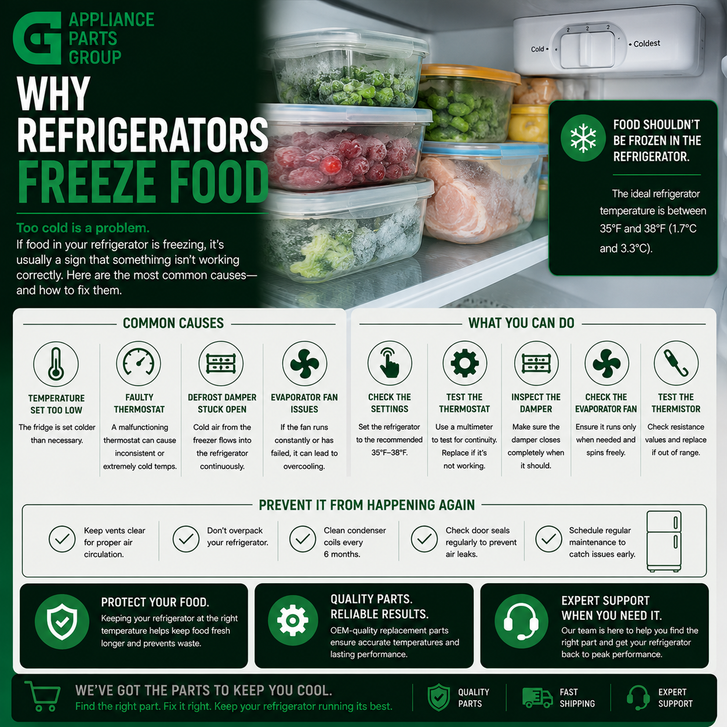
- Refrigerators commonly freeze food because of temperature setting issues, blocked air vents, faulty sensors, or airflow problems.
- Food freezing in the fresh food section often points to too much cold air entering from the freezer compartment.
- Simple fixes include adjusting the temperature, moving food away from vents, checking door seals, and cleaning condenser coils.
- Parts such as the damper control, thermistor, temperature control thermostat, air diffuser, or control board may need replacement.
- Using OEM refrigerator parts helps restore proper fit, airflow, and temperature control.
Introduction
Finding frozen lettuce, icy milk, cracked eggs, or rock-hard leftovers inside the refrigerator section can be frustrating. A refrigerator is supposed to keep fresh food cold, not frozen. When the fresh food compartment drops below the proper temperature range, it can damage produce, change food texture, and waste groceries.
Most refrigerators are designed to keep the fresh food section around 37 degrees Fahrenheit, while the freezer stays near 0 degrees Fahrenheit. If cold freezer air enters the refrigerator section too aggressively, or if the refrigerator cannot accurately sense and regulate temperature, food can begin freezing even when the appliance appears to be running normally.
The good news is that many causes of refrigerator food freezing are easy to check before replacing parts. Sometimes the issue is as simple as a temperature setting, blocked air vent, or food placed too close to the cold air outlet. Other times, a failed refrigerator component may be preventing the appliance from balancing airflow and temperature correctly.
Common Reasons Refrigerators Freeze Food
1. The Temperature Is Set Too Low
The first thing to check is the refrigerator temperature setting. If the fresh food section is set too cold, the refrigerator may run longer than necessary and freeze items near the vents, back wall, or lower drawers.
Many refrigerators use numbered controls instead of exact temperatures. On some models, a higher number means colder. On others, the setting may be controlled digitally. If you recently adjusted the control, loaded a large amount of food, or changed settings after a power outage, the refrigerator may simply be set too cold.
2. Food Is Blocking the Air Vents
Most modern refrigerators move cold air from the freezer into the fresh food section through air vents or an air diffuser. If food containers, bags, or tall items block these vents, cold air may concentrate in one area instead of circulating evenly.
This can cause food near the vent to freeze while other areas of the refrigerator feel normal. Leafy greens, eggs, yogurt, and drinks placed directly in front of cold air vents are especially likely to freeze.
3. The Air Damper Is Stuck Open
The air damper, sometimes called the air diffuser or damper control, regulates how much cold air enters the refrigerator compartment from the freezer. When the refrigerator needs cooling, the damper opens. When the correct temperature is reached, it should close or reduce airflow.
If the damper sticks open, too much cold freezer air can enter the fresh food section. This is one of the most common part-related reasons a refrigerator freezes food.
4. A Faulty Thermistor Is Sending Incorrect Temperature Readings
A thermistor is a temperature sensor that reports compartment temperature to the electronic control board. If the thermistor is defective, damaged, or reading inaccurately, the control board may think the refrigerator is warmer than it really is.
As a result, the refrigerator may continue cooling even after the fresh food section has reached the correct temperature. This can lead to frozen food, especially near the back wall or air outlet.
5. The Temperature Control Thermostat Is Failing
Some refrigerators use a mechanical temperature control thermostat instead of electronic sensors. The thermostat monitors temperature and helps turn cooling on and off.
If the thermostat fails or sticks closed, the compressor and fans may run too long. Continuous cooling can drop the fresh food section below freezing.
6. The Door Gasket Is Leaking
A damaged or loose refrigerator door gasket can let warm air enter the compartment. While this may sound like it would make the refrigerator warmer, it can actually cause the appliance to run longer in an attempt to maintain temperature.
Extended run time can create freezing conditions in certain areas, especially near vents or along the back wall. A leaking gasket may also cause frost, condensation, or uneven temperatures.
7. The Condenser Coils Are Dirty
Dirty condenser coils can make the refrigerator work harder to remove heat. When airflow around the coils is restricted by dust, pet hair, or debris, the cooling system may run longer and less efficiently.
This can contribute to uneven temperatures, overcooling in some areas, and poor overall performance. Cleaning the coils is an important maintenance step before assuming a part has failed.
8. The Control Board Is Not Regulating Cooling Properly
Electronic control boards manage temperature sensors, fans, dampers, defrost cycles, and compressor operation on many modern refrigerators. If the board receives correct sensor information but does not respond properly, it may allow too much cooling.
Control board problems are less common than airflow or sensor issues, but they can cause freezing when other parts test correctly.
Where Food Freezes Can Help Identify the Cause
The location of frozen food often gives clues about the problem.
- Food freezing near air vents: Often caused by blocked vents, a stuck air damper, or food placed too close to cold airflow.
- Food freezing in crisper drawers: May be caused by airflow issues, incorrect humidity settings, or cold air settling at the bottom.
- Food freezing throughout the refrigerator: May point to a thermostat, thermistor, control board, or temperature setting problem.
- Food freezing near the back wall: Often related to airflow, sensor placement, or excessive cooling cycles.
- Only drinks or produce freezing: May simply mean delicate items are stored in the coldest area of the compartment.
Step-by-Step Troubleshooting
- Check the refrigerator temperature. Set the fresh food section to about 37 degrees Fahrenheit and allow 24 hours for the temperature to stabilize.
- Use a refrigerator thermometer. Place a thermometer in the center of the fresh food section to confirm the actual temperature.
- Move food away from air vents. Leave space around vents so cold air can circulate evenly.
- Inspect the air damper. Check whether the damper opens and closes properly. If it appears stuck open, it may need replacement.
- Check the door gasket. Look for cracks, gaps, loose sections, or areas where the gasket does not seal tightly.
- Clean the condenser coils. Unplug the refrigerator and carefully remove dust from the coils using a coil brush or vacuum attachment.
- Listen for constant running. If the refrigerator rarely shuts off, a thermostat, thermistor, gasket, or control issue may be involved.
- Check for frost buildup. Heavy frost may indicate a defrost system or airflow problem.
- Inspect temperature sensors. If your model uses a thermistor, test it according to the service information for your refrigerator.
- Consider electronic control issues. If other parts test correctly, the control board may not be regulating temperature properly.
Common Parts That May Need Replacement
Air Damper or Air Diffuser
The air damper controls the amount of cold air entering the refrigerator section. If it sticks open, too much freezer air can enter and freeze fresh food. Replacing the damper can restore proper airflow balance.
Thermistor
The thermistor monitors refrigerator temperature and sends readings to the control board. A faulty thermistor can cause the refrigerator to cool too long because the control system receives inaccurate temperature information.
Temperature Control Thermostat
On models with mechanical controls, the temperature control thermostat helps cycle cooling on and off. If it fails, the refrigerator may run continuously or cool below the selected setting.
Electronic Control Board
The control board manages cooling operation on many newer refrigerators. If the board does not respond correctly to sensor readings, it may cause overcooling or uneven compartment temperatures.
Door Gasket
A worn or damaged door gasket can cause air leaks, longer run times, condensation, and temperature instability. Replacing a damaged gasket helps the refrigerator maintain a more consistent temperature.
Evaporator Fan Motor
The evaporator fan moves cold air through the freezer and refrigerator compartments. If airflow becomes irregular, temperatures may become uneven. Depending on the design, a fan issue can contribute to freezing in some areas and warmer temperatures in others.
Control Knob or Cold Control Assembly
If the refrigerator has a manual control knob or cold control assembly, damage or wear can prevent accurate temperature adjustment. This may cause the appliance to operate colder than intended.
Why OEM Refrigerator Parts Matter
Refrigerators depend on precise airflow, temperature sensing, and electrical communication between components. OEM refrigerator parts are designed to match the original specifications of the appliance, including fit, connector style, sensor range, mounting points, and airflow design.
When replacing parts such as a damper control, thermistor, thermostat, gasket, or control board, using the correct part for your model helps ensure the repair matches the way the refrigerator was originally engineered to operate.
Preventative Maintenance Tips
- Keep the fresh food section set near 37 degrees Fahrenheit.
- Avoid placing produce, eggs, or drinks directly in front of cold air vents.
- Leave space between food items so air can circulate.
- Clean condenser coils at least once or twice per year.
- Inspect door gaskets regularly for cracks, tears, or loose areas.
- Do not overload the refrigerator, especially near the back wall.
- Allow hot foods to cool before placing them in the refrigerator.
- Check crisper drawer settings if produce is freezing.
- Replace damaged bins, shelves, or air covers that affect airflow.
- Use your model number when ordering replacement refrigerator parts.
Frequently Asked Questions
Why is my refrigerator freezing food?
A refrigerator may freeze food because the temperature is set too low, air vents are blocked, the damper is stuck open, or a temperature sensor is faulty.
What temperature should my refrigerator be set to?
Most refrigerators should be set around 37 degrees Fahrenheit in the fresh food section and 0 degrees Fahrenheit in the freezer.
Why does food freeze near the back of the refrigerator?
Food near the back wall is often closest to cold airflow. If vents are blocked or the damper allows too much cold air in, items in this area may freeze first.
Can a bad door gasket cause food to freeze?
Yes. A leaking gasket can make the refrigerator run longer than normal, which may cause freezing in colder areas of the compartment.
Can dirty condenser coils make a refrigerator freeze food?
Dirty condenser coils can reduce efficiency and cause longer run times. This may contribute to uneven temperatures or overcooling in certain areas.
What is an air damper in a refrigerator?
The air damper controls how much cold freezer air enters the refrigerator section. If it sticks open, the refrigerator compartment can become too cold.
What does a refrigerator thermistor do?
A thermistor senses temperature and sends that information to the control board. If it reads incorrectly, the refrigerator may cool too much.
Why are my vegetables freezing in the crisper drawer?
Vegetables may freeze if the drawer is too close to cold airflow, the refrigerator is set too low, or airflow is not circulating correctly.
Should I replace the thermostat if my refrigerator freezes food?
If your refrigerator uses a mechanical thermostat and it fails testing, replacement may be needed. Always confirm the part matches your model.
Can overloading a refrigerator cause freezing?
Yes. Overloading can block vents and prevent even airflow, causing some areas to become too cold while others stay warmer.
Is it safe to keep using a refrigerator that freezes food?
It may still keep food cold, but freezing can damage fresh food and may indicate a failing component. Troubleshooting the issue early can help prevent larger problems.
How do I know which refrigerator part to order?
Use the refrigerator model number to identify the correct OEM replacement part. Model numbers are usually found inside the refrigerator compartment, near the wall, ceiling, or door frame.
Entities and Terms
- Refrigerator temperature control
- Fresh food compartment
- Freezer compartment
- Air damper
- Air diffuser
- Thermistor
- Temperature control thermostat
- Electronic control board
- Door gasket
- Evaporator fan motor
- Condenser coils
- Cold air vents
- Crisper drawer
- OEM refrigerator parts
This article was written by an AI program as part of a beta test by Appliance Parts Group to explore how artificial intelligence can help inform and educate our customers.
Our goal is to use AI tools to provide clear, reliable information so you can make confident, well-informed purchasing decisions.