
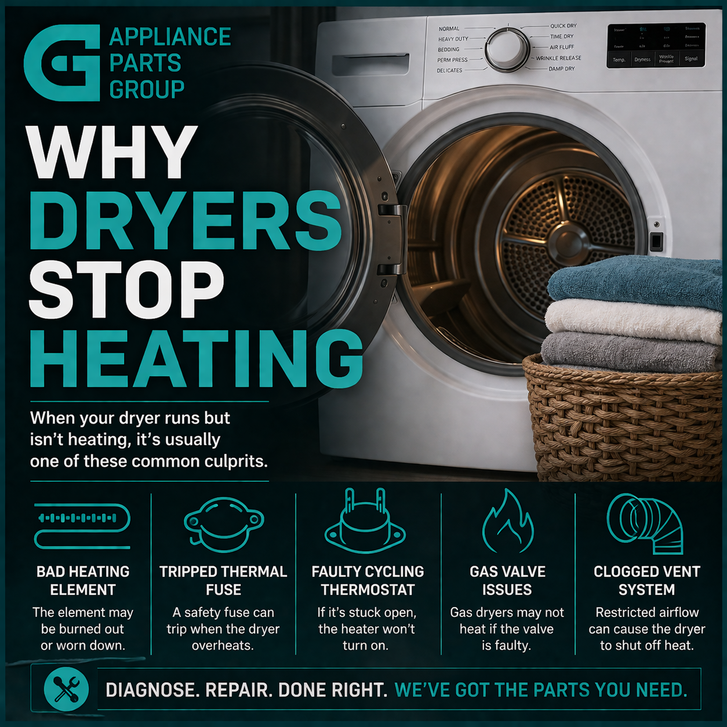
Key Takeaways
- Dryers stop heating most often due to airflow restrictions, faulty heating elements, or failed thermostats.
- A clogged vent system is one of the leading causes of overheating and heating failure.
- Electrical issues like blown thermal fuses or faulty wiring can completely stop heat production.
- Routine maintenance can prevent most heating problems and extend appliance lifespan.
- Replacing OEM parts ensures proper fit, safety, and long-term reliability.
Introduction
Few appliance issues are as frustrating as a dryer that runs but doesn’t produce heat. Your clothes tumble normally, the timer advances, but everything comes out damp and cold. This problem is extremely common and can affect both gas and electric dryers.
Understanding why dryers stop heating is the first step toward fixing the issue quickly and safely. In this guide, we’ll break down the most common causes, how to troubleshoot them, and which parts may need replacement.
Common Reasons Why Dryers Stop Heating
1. Clogged Vent or Exhaust System
Restricted airflow is the number one cause of dryer heating problems. When lint builds up in the vent hose or exhaust duct, it prevents proper air circulation. This can cause overheating, which may trip safety components like the thermal fuse.
Symptoms include:
- Dryer runs but clothes take too long to dry
- Exterior of dryer feels excessively hot
- Burning smell during operation
2. Blown Thermal Fuse
The thermal fuse is a safety device designed to shut off the dryer if it overheats. Once blown, it cannot be reset and must be replaced.
Common causes include:
- Blocked vents
- Overheating
- Airflow restrictions
3. Faulty Heating Element (Electric Dryers)
In electric dryers, the heating element generates heat. Over time, the element can burn out or break, preventing the dryer from heating.
Signs include:
- Dryer runs but produces no heat
- Visible break in the heating coil
4. Defective Gas Igniter (Gas Dryers)
Gas dryers rely on an igniter to light the burner. If the igniter fails, the dryer will not produce heat.
- No flame ignition
- Clicking sounds without heat
5. Malfunctioning Thermostat
Dryers use multiple thermostats to regulate temperature. A faulty thermostat may prevent the heating element or gas valve from activating.
6. Broken Timer or Control Board
Modern dryers rely on electronic control boards. If these fail, they may not send the proper signals to initiate heating cycles.
7. Power Supply Issues
Electric dryers require 240 volts. If one leg of power is lost, the dryer may still run but won’t heat.
Step-by-Step Troubleshooting
- Unplug the dryer and ensure safety before starting.
- Check the power supply and circuit breaker.
- Inspect and clean the lint filter and vent system.
- Test the thermal fuse with a multimeter.
- Examine the heating element for visible damage.
- Check thermostats for continuity.
- Inspect wiring connections for burns or looseness.
- Test the igniter (for gas dryers).
- Evaluate the control board or timer functionality.
Common Parts That May Need Replacement
When troubleshooting a dryer that isn’t heating, several components are commonly replaced. Using OEM replacement parts ensures compatibility and performance.
- Heating Element
- Thermal Fuse
- High-Limit Thermostat
- Cycling Thermostat
- Gas Igniter
- Flame Sensor
- Timer or Control Board
- Thermistor
Preventative Maintenance Tips
- Clean the lint filter after every load.
- Inspect and clean the vent system every 6–12 months.
- Avoid overloading the dryer.
- Use proper dryer settings for different fabrics.
- Check for kinks or blockages in the exhaust hose.
- Schedule periodic appliance inspections.
Frequently Asked Questions
Why is my dryer running but not heating?
This is usually caused by a faulty heating element, blown thermal fuse, or power issue.
Can a clogged vent stop a dryer from heating?
Yes, restricted airflow can cause overheating and shut down the heating system.
How do I know if my heating element is bad?
Check for visible damage or test for continuity with a multimeter.
What does a thermal fuse do?
It prevents overheating by shutting off the dryer when temperatures get too high.
Can I reset a thermal fuse?
No, thermal fuses must be replaced once they blow.
Why does my dryer take so long to dry clothes?
This is often due to airflow restrictions or partial heating failure.
Is it safe to run a dryer without heat?
It won’t damage the dryer, but it won’t effectively dry clothes.
How often should I clean my dryer vent?
At least once a year, or more often with heavy use.
Do gas and electric dryers fail differently?
Yes, gas dryers rely on igniters and valves, while electric dryers use heating elements.
Can a bad thermostat cause no heat?
Yes, thermostats regulate heat and can prevent heating if faulty.
What voltage does a dryer need?
Electric dryers typically require 240 volts to operate properly.
Should I repair or replace my dryer?
If the repair cost is reasonable and the unit is relatively new, repair is usually the best option.
Entities and Terms
- Heating Element
- Thermal Fuse
- High-Limit Thermostat
- Cycling Thermostat
- Gas Igniter
- Flame Sensor
- Control Board
- Dryer Vent
- Thermistor
This article was written by an AI program as part of a beta test by Appliance Parts Group to explore how artificial intelligence can help inform and educate our customers.
Our goal is to use AI tools to provide clear, reliable information so you can make confident, well-informed purchasing decisions.