
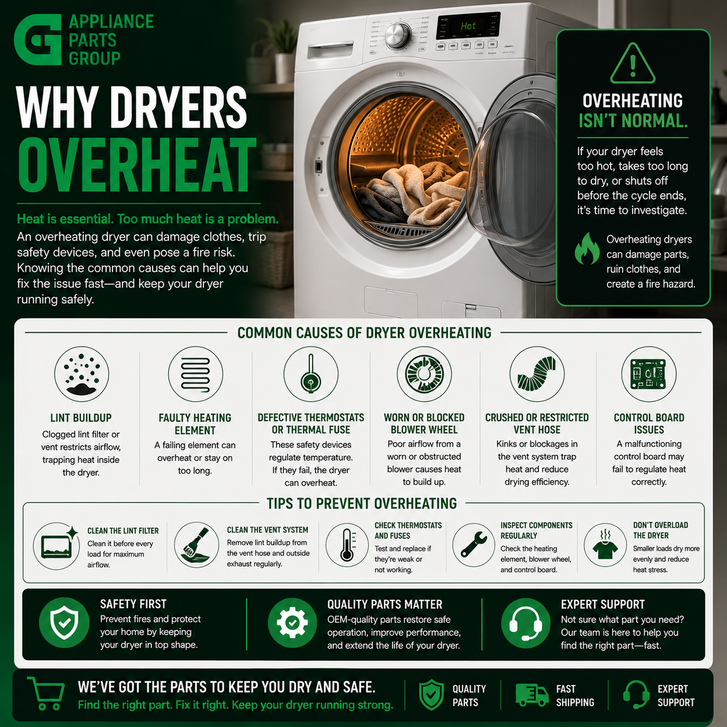
Key Takeaways
- Restricted airflow from lint buildup or a blocked dryer vent is the most common cause of dryer overheating.
- A dryer that feels unusually hot, produces a burning smell, or shuts off mid-cycle should be inspected promptly.
- Faulty thermostats, heating elements, blower wheels, moisture sensors, and control components can cause excessive heat.
- Cleaning the lint screen, exhaust duct, and internal dryer cabinet can prevent many overheating problems.
- Replacing failed components with the correct OEM dryer parts helps restore safe temperature control and reliable performance.
Introduction
A clothes dryer needs heat to remove moisture from laundry, but it should not become dangerously hot. When a dryer overheats, the cabinet may feel unusually warm, clothing may be too hot to handle, or the appliance may stop before the cycle finishes. In some cases, homeowners may also notice a burning smell, scorched fabric, or unusually long drying times.
Dryer overheating is often caused by restricted airflow. The dryer pulls air across a heating element or gas burner, moves that heated air through the drum, and then pushes the moisture-filled air through the exhaust vent. When lint, a damaged vent hose, or another obstruction limits that airflow, heat remains trapped inside the appliance.
Overheating can also result from electrical or mechanical failures. A thermostat may fail to shut the heater off, a heating element may short against its metal housing, or a damaged blower wheel may stop moving enough air through the drum.
Because dryers combine high temperatures, electricity or gas, and combustible lint, overheating should never be ignored. Understanding the symptoms and common causes can help you identify the problem early and prevent damage to the appliance, clothing, and surrounding property.
How a Dryer Controls Temperature
Most dryers use several components to regulate temperature. Electric dryers generate heat with a resistance heating element, while gas dryers use an igniter, gas valve, and burner assembly. Heated air is pulled through the drum by a blower wheel and released through the exhaust duct.
A cycling thermostat or temperature sensor monitors operating temperature. When the dryer reaches the correct temperature, the thermostat or control board turns the heating system off. When the temperature drops, the heat turns on again.
Dryers also contain safety devices, such as a high-limit thermostat and thermal fuse. These components are designed to interrupt the heating circuit if temperatures rise beyond a safe limit. If the dryer repeatedly overheats, the thermal fuse may open and stop the dryer from heating or operating.
An overheating problem usually means that airflow is restricted, the heating system is not cycling correctly, or the dryer is running longer than necessary.
Signs That a Dryer Is Overheating
Clothes Are Extremely Hot
Laundry should feel warm when a drying cycle ends, but it should not be painful or uncomfortable to touch. Clothing that remains extremely hot after the cycle may indicate that the heating system is operating too long or the cool-down portion of the cycle is not working correctly.
The Dryer Cabinet Feels Too Hot
The top and sides of a dryer normally become warm during operation. However, a cabinet that becomes excessively hot may indicate poor airflow, trapped heat, or a heater that is not shutting off when it should.
A Burning Smell Comes From the Dryer
A burning smell can come from lint contacting a hot component, an overheated drive belt, failing motor windings, damaged wiring, or fabric trapped near the drum seal. Stop using the dryer until the source of the odor has been identified.
The Dryer Shuts Off Mid-Cycle
Some dryers shut down when the motor or heating system becomes too hot. The appliance may start again after it cools. Repeated shutdowns may point to a clogged vent, restricted blower housing, failing motor, or defective temperature-control component.
Drying Cycles Take Too Long
A dryer can overheat even while taking longer than normal to dry clothes. Restricted airflow traps heat inside the cabinet but prevents moisture from leaving the drum. The result is hot clothing that remains damp.
Clothes Smell Burned or Appear Scorched
Brown marks, melted synthetic fibers, or a scorched odor may indicate excessive drum temperature. These symptoms can also occur when clothing becomes trapped between the drum and the dryer frame.
Why Dryers Overheat
1. Clogged Lint Filter
The lint filter collects fibers released from clothing during each cycle. If the screen becomes covered with lint, air cannot move through the dryer efficiently. Heat builds inside the drum and heater housing, causing the dryer to operate at a higher temperature.
The lint filter should be cleaned before or after every load. It should also be washed periodically with warm water and mild detergent, especially when dryer sheets or liquid fabric softener are used. These products can leave an invisible residue that restricts airflow even when the screen appears clean.
2. Blocked Dryer Vent
A blocked exhaust vent is one of the most common causes of dryer overheating. Lint can accumulate inside the duct, exterior vent hood, elbows, and connections behind the dryer. Long vent runs and ducts with several turns are especially likely to collect lint.
Other vent obstructions may include bird nests, leaves, snow, damaged vent flaps, crushed ductwork, and screws protruding into the airflow path.
When the dryer is running, the exterior vent flap should open fully and a strong flow of warm air should be noticeable. Weak airflow may indicate a restriction.
3. Crushed or Kinked Exhaust Hose
The exhaust hose can become crushed when the dryer is pushed too close to the wall. Flexible foil or plastic-style ducts may also sag, kink, or collapse over time. A restricted hose traps hot air and moisture inside the dryer.
Whenever possible, use a rigid or semi-rigid metal vent duct that meets the dryer manufacturer's installation requirements. Avoid routing the duct through unnecessary bends.
4. Lint Inside the Dryer Cabinet
Some lint bypasses the lint screen and collects inside the dryer. It may accumulate around the blower housing, motor, heater enclosure, wiring, gas burner, or cabinet floor.
Internal lint can restrict airflow and act as insulation around heat-producing components. It can also create a fire hazard if it contacts the heating element or burner flame.
The internal cabinet should be inspected and cleaned periodically. Disconnect electrical power and shut off the gas supply, when applicable, before opening the appliance.
5. Faulty Cycling Thermostat
The cycling thermostat controls normal dryer temperature by switching the heating system on and off. If the contacts remain closed, the dryer may continue heating beyond the intended temperature.
A thermostat can also become inaccurate and allow the dryer to run hotter than the selected cycle requires. Testing procedures vary by model, so the dryer's wiring diagram and service information should be consulted before replacing the component.
6. Failed High-Limit Thermostat
The high-limit thermostat is a safety component located near the heater housing or burner assembly. It is designed to interrupt the heating circuit when temperatures become excessive.
If the high-limit thermostat fails in the closed position, it may not stop the heater during an overheating event. If it repeatedly opens, the underlying airflow or temperature-control problem should be corrected instead of replacing the thermostat alone.
7. Heating Element Shorted to Ground
Electric dryer heating elements contain resistance coils mounted inside a metal housing. Over time, a coil may stretch, break, or sag until it touches the heater enclosure.
When a heating element shorts against the housing, part of the element may remain energized even when the dryer controls are attempting to turn the heat off. This can cause continuous heating and dangerously high temperatures.
A grounded heating element should be replaced. The heater housing and wiring should also be checked for heat damage.
8. Damaged or Loose Blower Wheel
The blower wheel moves air through the dryer drum and exhaust system. It is usually attached directly to the motor shaft. If the wheel cracks, loosens, or becomes clogged with lint, airflow may decrease significantly.
A failing blower wheel may produce rattling, scraping, or vibrating noises. Other symptoms include long drying times, excessive heat, lint accumulation inside the cabinet, and weak airflow at the exterior vent.
9. Overloaded Dryer Drum
Overloading prevents clothing from tumbling freely and blocks air circulation inside the drum. Heavy items may remain bunched together, causing the dryer to run longer and retain more heat.
Large comforters, blankets, rugs, and bulky loads may need to be dried separately or taken to a commercial laundry facility with equipment designed for oversized items.
10. Dirty or Faulty Moisture Sensors
Many automatic dryer cycles use moisture sensor bars to determine when clothing is dry. Residue from fabric softeners and dryer sheets can coat the sensor bars and prevent accurate readings.
If the controls incorrectly detect moisture, the dryer may continue running after the load is dry. Extended operation exposes clothing and dryer components to unnecessary heat.
Moisture sensor bars can usually be cleaned with a soft cloth and a small amount of rubbing alcohol. Follow the manufacturer's cleaning instructions for the specific model.
11. Defective Electronic Control Board
Modern dryers may use an electronic control board to operate the heater relay, monitor thermistors, and manage cycle timing. A stuck relay or faulty control can keep the heating system energized longer than intended.
Control board failures are less common than vent restrictions and thermostat problems. Airflow, wiring, sensors, and heating components should generally be checked before replacing the main control.
12. Failing Drive Motor
A motor that is worn, obstructed, or overloaded can become excessively hot. Many dryer motors contain an internal overload protector that shuts the motor off until it cools.
If the dryer stops during a cycle and restarts later, inspect the vent system, blower wheel, drum rollers, belt, idler pulley, and motor. Mechanical resistance can force the motor to work harder and generate additional heat.
Step-by-Step Troubleshooting
- Stop the dryer if you smell burning.
Turn the dryer off, unplug it, and allow it to cool. Gas dryer owners should also shut off the gas supply if a gas leak or burner problem is suspected.
- Clean the lint filter.
Remove all visible lint. Wash the screen with warm water and mild detergent if airflow appears restricted by residue. Allow it to dry completely before reinstalling it.
- Check the exhaust hose.
Pull the dryer away from the wall and inspect the duct for crushing, kinks, holes, and loose connections. Replace damaged vent material with an approved metal duct.
- Inspect the exterior vent hood.
Run the dryer and confirm that the exterior flap opens fully. Remove visible lint, leaves, nests, or other obstructions. Do not operate the dryer without a properly installed exterior vent cover.
- Clean the full vent path.
Disconnect the dryer and remove lint from the entire exhaust duct. A vent brush, dryer vent cleaning kit, or professional cleaning service may be needed for long or concealed ducts.
- Test the dryer with the vent disconnected.
For a brief diagnostic test only, disconnect the exhaust duct and run the dryer in a well-ventilated area. If the dryer operates normally, the household vent system is likely restricted. Never operate a gas dryer indoors without proper venting.
- Inspect the blower wheel.
Disconnect power before opening the cabinet. Check the blower wheel for lint buildup, damage, looseness, or obstructions. Confirm that it turns with the motor shaft.
- Inspect the heating element.
On an electric dryer, look for broken, sagging, or grounded heating coils. Test the element for continuity and check for continuity between the element terminals and metal housing.
- Test the thermostats and temperature sensors.
Use the dryer's wiring diagram and a multimeter to test the cycling thermostat, high-limit thermostat, thermistor, and thermal fuse. Component specifications vary by model.
- Check the moisture sensors.
Clean the sensor bars and inspect their wiring. A sensor problem may cause automatic cycles to run longer than necessary.
- Inspect wiring and terminals.
Look for discolored connectors, melted insulation, burned terminals, or loose wiring near the heater, thermostats, motor, and control board.
- Replace the confirmed failed component.
Use the dryer model number to identify the correct OEM replacement part. Avoid replacing multiple parts without first confirming the cause of the overheating condition.
Common Parts That May Need Replacement
Cycling Thermostat
The cycling thermostat regulates normal operating temperature. A thermostat that does not open at the correct temperature may allow the heating element or gas burner to remain on too long.
High-Limit Thermostat
The high-limit thermostat protects the dryer when temperatures exceed the normal operating range. It may need replacement if testing confirms that it does not open or close according to specifications.
Thermal Fuse
The thermal fuse is a one-time safety device. Once it opens, it must be replaced. A blown thermal fuse is often a symptom of restricted airflow, so the vent system and blower assembly should be checked before installing the new fuse.
Heating Element
An electric dryer heating element may break, short against its housing, or remain partially energized. Replace the element if the coil is damaged or grounded.
Blower Wheel
A cracked, loose, or obstructed blower wheel cannot move enough air through the dryer. The correct replacement wheel must fit the motor shaft and blower housing for the specific model.
Thermistor
A thermistor changes resistance as temperature changes. The electronic control board uses that information to regulate heat. A thermistor with an incorrect resistance reading may cause temperature-control problems.
Moisture Sensor Bars
Moisture sensor bars rarely fail mechanically, but they can become coated, damaged, or disconnected. Replace them if cleaning and wiring repairs do not restore proper automatic-cycle operation.
Electronic Control Board
The control board may need replacement if a heater relay remains stuck or the board does not respond correctly to temperature-sensor input. Verify power, wiring, airflow, and sensor operation before replacing the board.
Drive Motor
A motor that overheats, binds, or repeatedly activates its internal overload protector may need replacement. Drum rollers, the blower wheel, belt, and idler pulley should be inspected for resistance before condemning the motor.
Drum Belt and Idler Pulley
A worn belt or binding idler pulley can increase motor load. These parts may not directly control temperature, but excessive mechanical resistance can contribute to motor overheating and mid-cycle shutdowns.
Why Using the Correct OEM Dryer Part Matters
Dryer components are designed for specific temperature ranges, electrical ratings, mounting positions, and airflow requirements. Parts that look similar may have different operating specifications.
Using the appliance model number is the most reliable way to identify a compatible replacement. The model number is commonly found inside the dryer door opening, on the cabinet frame, behind the door, or on the rear identification label.
Correct OEM parts help restore the dryer's original safety controls, fit, and performance. When ordering thermostats, heating elements, thermal fuses, sensors, motors, or blower components, compare the model number and manufacturer part number before installation.
Preventative Maintenance Tips
- Clean the lint screen before or after every load.
- Wash the lint filter periodically to remove fabric softener residue.
- Inspect the exhaust hose for crushing, kinks, and loose connections.
- Clean the complete dryer vent at least once a year.
- Check the exterior vent hood regularly for lint, nests, leaves, and snow.
- Keep the area behind and around the dryer clean and well ventilated.
- Avoid overloading the drum with heavy or bulky items.
- Use the correct cycle and temperature setting for each fabric type.
- Clean moisture sensor bars according to the manufacturer's instructions.
- Vacuum lint from inside the dryer cabinet periodically.
- Investigate repeated thermal fuse failures instead of replacing the fuse alone.
- Have gas burner, wiring, or control problems inspected by a qualified service professional.
Frequently Asked Questions
Is it normal for a dryer to get hot?
Yes. Dryers normally become warm because they use heat to remove moisture. However, the cabinet should not be painfully hot, clothing should not smell scorched, and the appliance should not produce a burning odor.
What is the most common cause of dryer overheating?
Restricted airflow is the most common cause. A clogged lint screen, blocked exhaust vent, crushed duct, or obstructed blower housing can trap heat inside the dryer.
Can a clogged dryer vent cause a fire?
Yes. Lint is combustible, and a clogged vent can increase dryer temperatures. Regularly cleaning the lint screen and exhaust system helps reduce the risk.
Why does my dryer get hot but clothes stay damp?
This usually indicates poor airflow. Heat remains inside the dryer, but moisture cannot escape through the exhaust vent. Check the lint screen, duct, exterior hood, and blower wheel.
Why does my dryer shut off before the cycle ends?
The motor or a safety component may be shutting the dryer down because of excessive heat. Vent restrictions, a failing motor, a blocked blower wheel, or a defective thermostat may be responsible.
Can a bad thermostat cause a dryer to overheat?
Yes. A cycling thermostat that stays closed can keep the heater operating too long. A failed high-limit thermostat may also be unable to interrupt the heating circuit during an overheating condition.
Will a blown thermal fuse make a dryer overheat?
A blown thermal fuse does not usually cause overheating. It typically opens because overheating has already occurred. Depending on the dryer design, the appliance may stop heating or stop running completely.
Can a heating element stay on continuously?
Yes. An electric dryer heating element can short against its metal housing and remain partially energized. A stuck heater relay or control failure can also cause continuous heating.
How often should a dryer vent be cleaned?
Most household dryer vents should be inspected and cleaned at least once a year. Homes with heavy dryer use, long vent runs, or several duct bends may need more frequent service.
Can dryer sheets cause overheating?
Dryer sheets do not normally cause overheating by themselves, but residue can coat the lint screen and moisture sensors. That residue can reduce airflow or cause cycles to run longer than necessary.
Can I keep using a dryer that smells like it is burning?
No. Stop the dryer, unplug it, and identify the source of the odor before using it again. Burning smells may indicate lint buildup, damaged wiring, a failing belt, motor overheating, or fabric contacting a hot component.
When should I call a professional?
Contact a qualified appliance technician when troubleshooting involves gas components, damaged wiring, repeated overheating, control-board testing, or a repair that requires extensive disassembly.
Entities and Terms
- Dryer overheating
- Lint filter
- Dryer vent
- Exhaust duct
- Airflow restriction
- Cycling thermostat
- High-limit thermostat
- Thermal fuse
- Heating element
- Gas burner
- Blower wheel
- Thermistor
- Moisture sensor
- Electronic control board
- Drive motor
- Drum belt
- Idler pulley
- OEM dryer parts
- Dryer maintenance
- Dryer fire prevention
This article was written by an AI program as part of a beta test by Appliance Parts Group to explore how artificial intelligence can help inform and educate our customers.
Our goal is to use AI tools to provide clear, reliable information so you can make confident, well-informed purchasing decisions.