
Key Takeaways
- A dryer that leaves clothes damp may have an airflow, heating, moisture-sensing, loading, or mechanical problem.
- A clogged lint screen or restricted dryer vent can dramatically increase drying time and may also create a safety concern.
- Heating components such as heating elements, gas valve coils, igniters, thermostats, and thermal components can affect dryer performance.
- Automatic cycles depend on moisture sensors and proper airflow, so a dryer can stop too early even when it appears to heat normally.
- Identifying the dryer model number before ordering replacement parts helps ensure you purchase the correct genuine OEM part for your appliance.
Introduction
You open the dryer expecting a load of warm, dry laundry, only to discover that shirts, towels, or jeans are still damp. Sometimes running another cycle solves the immediate problem, but a dryer that regularly leaves clothes damp is often telling you that something is not working as efficiently as it should.
The good news is that poor drying performance does not automatically mean the dryer needs to be replaced. The problem may be as simple as an overloaded drum, a clogged lint screen, an incorrect cycle setting, or restricted airflow. In other cases, the dryer may have a failing heating, sensing, or mechanical component that requires replacement.
Understanding how a dryer removes moisture can make troubleshooting much easier. The dryer needs to generate heat, circulate that heated air through the clothing, and then move the moisture-laden air out of the machine. If any part of that process is disrupted, clothes can remain damp at the end of the cycle.
How a Dryer Actually Dries Clothes
Drying clothes requires more than simply producing heat. A properly operating dryer combines several functions at the same time.
The drum tumbles clothing so that different areas of the fabric are exposed to moving air. The dryer heats incoming air using an electric heating element or a gas burner assembly, depending on the model. A blower wheel moves air through the drum and toward the exhaust system. Moisture from the clothing evaporates into that moving air and is carried through the vent to the outside of the home.
Many modern dryers also use moisture sensors, temperature sensors, thermostats, and electronic controls to determine how long the cycle should continue.
When one part of this system is not operating correctly, drying performance can suffer even if the dryer still runs and produces some heat.
1. The Dryer Is Overloaded
Before assuming that a component has failed, consider how much laundry is being placed in the dryer.
Clothes need room to tumble. If the drum is packed tightly, heated air cannot circulate effectively through the load. Clothing may remain bunched together, causing some pieces to dry while others stay damp.
Heavy items such as towels, blankets, jeans, and sweatshirts can make overloading especially noticeable. These materials retain considerably more moisture than lightweight fabrics.
Try drying a smaller load. If drying performance improves dramatically, the dryer itself may be operating normally.
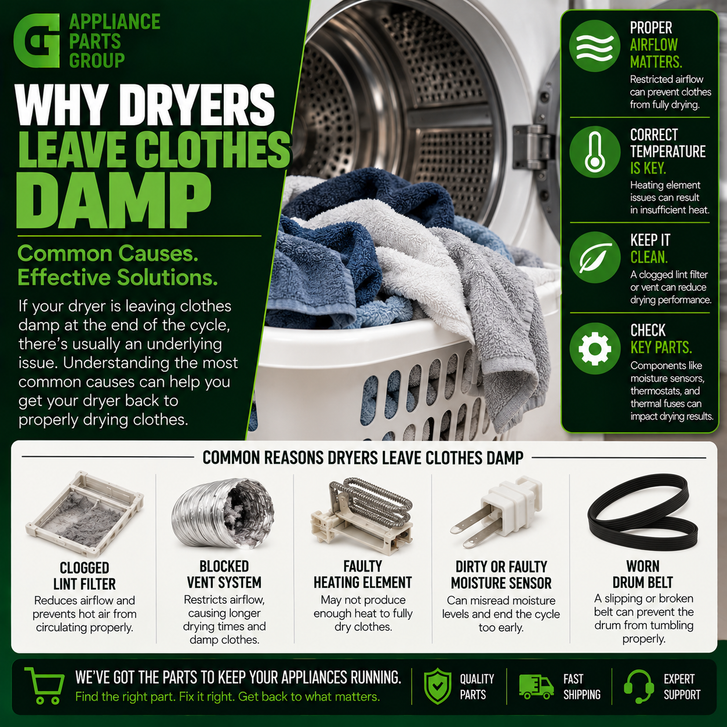
2. The Lint Screen Is Clogged
The lint screen is one of the simplest dryer components, but it has an important role in maintaining airflow.
A lint-covered screen restricts the amount of air moving through the dryer. Reduced airflow can increase drying times and cause heat to build up inside the appliance.
The lint screen should generally be cleaned after every load. However, a screen can sometimes appear clean while still being partially restricted. Fabric softener sheets and laundry products may leave a residue on the mesh.
If necessary, wash the lint screen according to the dryer manufacturer's recommendations and make sure it is completely dry before reinstalling it.
3. The Dryer Vent Is Restricted
One of the most common causes of a dryer taking too long to dry clothes is restricted exhaust airflow.
Lint can accumulate inside the exhaust duct or exterior vent hood. Flexible venting can become crushed behind the dryer. Long vent runs, excessive bends, or damaged ductwork can also reduce airflow.
A dryer may still produce plenty of heat when the vent is restricted. The problem is that the moist air cannot leave the machine efficiently. Instead, the clothing continues tumbling in warm, humid air.
Warning signs of a vent restriction may include:
- Clothes taking multiple cycles to dry
- The dryer or laundry feeling unusually hot
- Weak airflow at the exterior vent
- Lint accumulating around the vent opening
- The dryer shutting down unexpectedly
- A noticeable decline in drying performance over time
Dryer vent restrictions should not be ignored. In addition to hurting performance, lint accumulation in dryer exhaust systems can create a fire hazard.
4. The Wrong Cycle or Setting Is Being Used
Modern dryers may offer dozens of combinations of temperature levels, automatic cycles, timed cycles, eco modes, wrinkle-control options, and specialty settings.
Some energy-saving cycles intentionally use lower temperatures or different cycle logic. Delicate settings may also reduce heat to protect fabrics.
If clothing suddenly seems wetter than expected, verify that the selected cycle is appropriate for the load. As a test, try a normal or timed drying cycle using the temperature recommended for the clothing.
If timed drying works correctly but automatic cycles consistently stop too soon, the moisture-sensing system deserves closer attention.
5. Dirty or Failing Moisture Sensors
Many dryers use moisture sensor bars inside the drum to determine whether clothing is still wet. Damp clothing contacts the sensor bars as it tumbles. The control uses this information to estimate when the load is dry.
Residue from fabric softeners and laundry products can coat the sensors and interfere with accurate readings. Cleaning the sensor bars according to the manufacturer's instructions may restore normal operation.
A sensor circuit problem can also cause automatic cycles to end prematurely. If timed drying performs normally but sensor-based cycles repeatedly leave clothes damp, the moisture sensor system may need to be inspected.
6. The Dryer Is Not Producing Enough Heat
A dryer does not always lose heat completely when a heating component begins to fail. Some problems result in intermittent or insufficient heating instead.
For an electric dryer, a damaged heating element may prevent the machine from reaching or maintaining the expected temperature. Depending on the design and type of failure, the dryer may still produce some heat.
Gas dryers use a burner system that may include an igniter, flame sensor, gas valve, and gas valve coils. A dryer can sometimes ignite normally when first started but fail to reignite consistently later in the cycle.
If airflow is good but the dryer does not seem to maintain adequate heat, the heating system may require diagnosis.
7. A Thermostat or Temperature Sensor Is Not Working Correctly
Dryers use temperature-control components to regulate heat and protect the appliance from unsafe operating temperatures.
Depending on the model, these may include cycling thermostats, thermistors, high-limit thermostats, thermal cutoffs, or other temperature-sensing components.
A component that provides inaccurate temperature information can affect how the dryer cycles its heat. Because dryer designs vary considerably, electrical components should be tested according to the manufacturer's service information rather than replaced based only on symptoms.
8. The Blower Wheel Is Damaged or Obstructed
The blower wheel creates the airflow that carries heated air through the dryer and pushes moist air into the exhaust system.
If the blower wheel is damaged, loose, obstructed, or unable to move enough air, the dryer may heat but dry poorly.
Possible symptoms can include unusually long drying times, abnormal noises, weak exhaust airflow, or excessive heat inside the dryer.
Because poor airflow can also be caused by a clogged vent, the external vent system should usually be checked before assuming that the blower wheel has failed.
9. Clothes Are Entering the Dryer Too Wet
Sometimes the dryer is not the source of the problem.
A washing machine should remove a substantial amount of water during its final spin cycle. If the washer does not reach the proper spin speed, clothing may enter the dryer much wetter than normal.
If clothes feel unusually heavy or waterlogged when removed from the washer, investigate the washer's spin performance before diagnosing the dryer.
Possible washer-related causes can include an unbalanced load, drain problem, drive-system issue, or another condition preventing proper extraction of water.
10. The Drum Is Not Tumbling Properly
Even with adequate heat and airflow, clothing must tumble properly to dry evenly.
A worn drive belt, idler pulley, drum roller, motor, or related drive component can affect drum movement. Some failures prevent the drum from turning altogether, while others may produce slipping, unusual noises, or inconsistent operation.
If clothing is not being lifted and redistributed effectively inside the drum, drying performance can suffer.
Step-by-Step Troubleshooting
- Clean the lint screen. Remove all visible lint and inspect the screen for residue or damage.
- Reduce the load size. Test the dryer with a normal-sized or smaller load to make sure clothes have enough room to tumble.
- Check the cycle settings. Make sure the temperature and cycle are appropriate for the fabrics being dried.
- Inspect the exhaust vent. Look for crushed, kinked, disconnected, or visibly clogged venting.
- Check exterior airflow. With the dryer operating, verify that air is moving freely from the exterior vent. Keep hands and clothing away from moving or hot components.
- Compare timed and automatic cycles. If timed drying works but an automatic cycle stops early, investigate the moisture-sensing system.
- Check dryer heat. Determine whether the dryer is producing and maintaining heat during operation.
- Check the washer. Make sure clothes are not entering the dryer excessively wet because of a washer spin or drainage problem.
- Listen for unusual noises. Scraping, rattling, squealing, or other abnormal sounds may point toward blower or drum-drive problems.
- Identify the model number. Before ordering a replacement component, use the dryer's complete model number to locate the correct OEM part.
Always disconnect electrical power before servicing a dryer. Gas dryer repairs may also require shutting off the gas supply. If a repair involves electrical testing, gas components, or significant disassembly and you are not comfortable performing it safely, contact a qualified appliance service technician.
Common Parts That May Need Replacement
If basic maintenance and airflow checks do not solve the problem, one or more dryer components may need to be tested or replaced. The correct part depends on the dryer's model and the results of proper diagnosis.
Heating Element
Electric dryers commonly use a resistance heating element to warm the air. A damaged or failed element can cause no-heat or inadequate-heating conditions.
Gas Valve Coils
Gas dryer valve coils help control the flow of gas to the burner. Weak or failing coils can sometimes allow the burner to ignite initially but prevent reliable ignition as the dryer continues operating.
Igniter
The igniter is part of the gas dryer's burner system. If it fails, the burner may not ignite.
Thermostat
Depending on the dryer design, thermostats help regulate operating temperature and provide protection against overheating.
Thermistor
A thermistor changes electrical resistance with temperature and allows the dryer's electronic control to monitor operating conditions. An inaccurate thermistor can affect temperature regulation on models that use one.
Moisture Sensor
The moisture-sensing system helps automatic cycles determine when clothing is dry. Dirty sensors, damaged wiring, or component problems can cause incorrect cycle behavior.
Blower Wheel
The blower wheel is essential for moving air through the dryer. Damage or obstruction can reduce airflow and significantly increase drying time.
Drive Belt, Rollers, and Idler Pulley
These components help rotate and support the drum. Worn dryer drive components can cause noise, poor drum movement, or complete loss of tumbling.
Dryer parts can look very similar while having important differences in electrical ratings, dimensions, mounting points, connectors, or compatibility. Always use the complete model number when identifying replacement parts.
Appliance Parts Group supplies genuine OEM appliance parts for major appliance brands. Using the model number to identify the correct replacement part helps ensure that the component matches the manufacturer's specifications for the dryer.
Why Airflow Should Be Checked Before Replacing Parts
When a dryer leaves clothes damp, it can be tempting to immediately suspect the heating element or another internal component. However, airflow problems can create symptoms that closely resemble component failures.
A restricted vent can make a functioning dryer appear weak because moisture remains trapped inside the system. It can also cause internal temperatures to rise, potentially affecting thermal protection components.
Checking the lint screen, vent hose, exhaust duct, and exterior vent before replacing parts can prevent unnecessary repairs and may reveal the actual cause of the problem.
Preventative Maintenance Tips
- Clean the lint screen after each load.
- Periodically inspect and clean the dryer exhaust system.
- Make sure the vent behind the dryer is not crushed or kinked.
- Avoid routinely overloading the dryer.
- Use cycles and temperatures appropriate for the fabrics being dried.
- Keep moisture sensor surfaces clean according to the manufacturer's instructions.
- Pay attention to sudden increases in drying time.
- Investigate unusual noises rather than allowing them to continue indefinitely.
- Make sure the washer is properly extracting water before clothes enter the dryer.
- Use the appliance model number when purchasing replacement parts.
Frequently Asked Questions
Why are my clothes still damp after a full dryer cycle?
Common causes include an overloaded drum, clogged lint screen, restricted exhaust vent, incorrect cycle setting, insufficient heat, or a moisture sensor problem.
Why does my dryer get hot but leave clothes damp?
The dryer may have an airflow problem. If moist air cannot escape through the exhaust system, clothes can remain damp even though the drum feels hot.
Can a clogged dryer vent cause clothes to stay wet?
Yes. A restricted dryer vent can reduce airflow and prevent moisture from leaving the dryer efficiently, resulting in significantly longer drying times.
Why does my dryer need two cycles to dry clothes?
Needing multiple cycles can indicate restricted airflow, oversized loads, inadequate heat, excessively wet laundry from the washer, or a sensing problem.
Can a heating element partially fail?
Heating-element failures vary by dryer design and failure mode. If an electric dryer is producing inadequate heat, the element and related electrical components should be properly tested before replacement.
Why does my automatic dryer cycle stop before the clothes are dry?
A dirty or malfunctioning moisture-sensing system may cause the control to incorrectly determine that the load is dry. Cycle selection and load composition can also affect automatic-cycle performance.
How can I tell whether my dryer vent is clogged?
Possible signs include long drying times, excessive heat, weak airflow at the exterior vent, lint accumulation, or a noticeable decline in dryer performance.
Can the washing machine cause clothes to take longer to dry?
Yes. If the washer does not remove enough water during the final spin, clothing enters the dryer excessively wet and requires much more time to dry.
Why do towels take much longer to dry than other clothes?
Towels are thick and absorbent, so they retain more water than many lightweight fabrics. Large towel loads also reduce the space available for proper tumbling and airflow.
Should I replace the heating element if my dryer takes too long to dry?
Not automatically. Check load size, lint buildup, exhaust airflow, cycle settings, and other possible causes first. The heating system should be diagnosed before parts are replaced.
How do I find the correct replacement part for my dryer?
Locate the complete model number on the dryer's model and serial tag. Use that model number to identify compatible OEM replacement parts rather than relying only on the appearance of the original component.
When should I call an appliance repair technician?
Consider professional service if troubleshooting requires electrical testing, gas-system work, substantial disassembly, or procedures you are not comfortable performing safely.
Entities and Terms
- Dryer heating element
- Gas valve coils
- Dryer igniter
- Cycling thermostat
- High-limit thermostat
- Thermistor
- Moisture sensor
- Blower wheel
- Lint screen
- Dryer exhaust vent
- Drive belt
- Drum rollers
- Idler pulley
- Dryer motor
- OEM dryer parts
This article was written by an AI program as part of a beta test by Appliance Parts Group to explore how artificial intelligence can help inform and educate our customers.
Our goal is to use AI tools to provide clear, reliable information so you can make confident, well-informed purchasing decisions.