
Key Takeaways
- A dishwasher that will not start is often caused by a power issue, door latch problem, control lock setting, or failed electronic component.
- The door latch and door switch are two of the most common parts involved in dishwasher startup failures.
- A dishwasher may have lights on the control panel but still refuse to start if the control board does not detect the door as closed.
- Thermal fuses, user interface panels, wiring harnesses, and control boards can all prevent a dishwasher from beginning a cycle.
- Basic troubleshooting can help homeowners identify the likely cause before ordering OEM replacement parts.
Introduction
You load the dishwasher, add detergent, close the door, press Start, and nothing happens. Sometimes the control panel is completely dark. Other times, the lights turn on, but the dishwasher will not fill, wash, drain, or make any sound at all.
A dishwasher that will not start can be frustrating, but the problem is usually connected to a specific system. The dishwasher needs electrical power, a closed door signal, working controls, and intact safety circuits before it will begin a wash cycle. If one of those requirements is missing, the appliance may stop before it ever starts.
This guide explains why dishwashers will not start, how to troubleshoot the issue safely, and which OEM replacement parts may be needed to restore normal operation.
How a Dishwasher Starts a Cycle
When you press the Start button, the dishwasher does more than simply turn on the wash motor. The control system checks several conditions first.
The dishwasher must confirm that power is present, the door is latched, the selected cycle is valid, the control panel is communicating properly, and safety components such as the door switch and thermal fuse are working. If any of these checks fail, the dishwasher may not start.
This is why a startup problem can come from several different areas of the appliance. A dishwasher that appears completely dead may have a power or fuse issue. A dishwasher with lights but no cycle activity may have a door switch, control lock, touchpad, or control board problem.
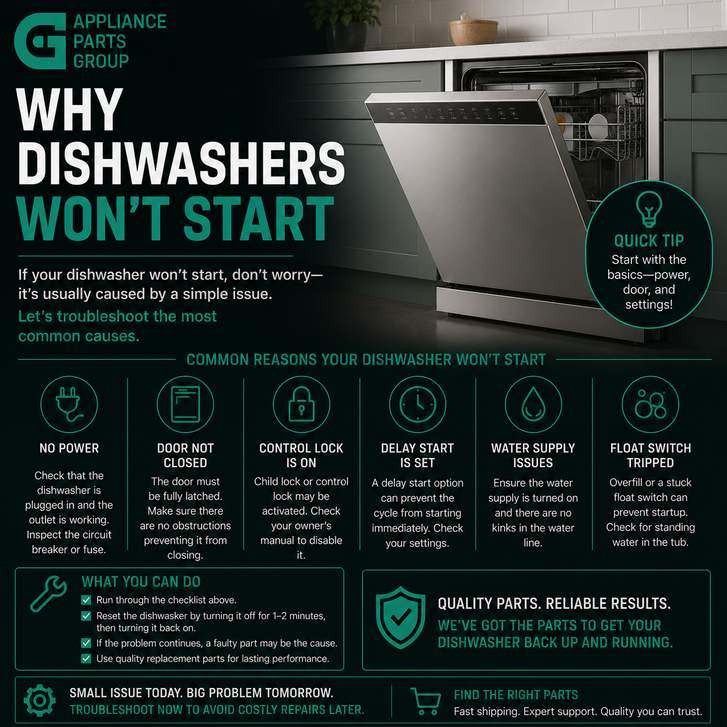
Common Reasons a Dishwasher Won't Start
No Power to the Dishwasher
The first thing to check is the power supply. If the dishwasher has no lights, no display, no sound, and no response from the buttons, the appliance may not be receiving power.
Common power-related causes include a tripped circuit breaker, blown household fuse, loose electrical connection, faulty outlet, damaged power cord, or a hardwired connection problem.
Many dishwashers are connected under the sink or hardwired behind the lower access panel. Before inspecting wiring or removing panels, always disconnect power at the breaker.
The Door Is Not Fully Closed
Dishwashers are designed not to run with the door open. If the door is not fully closed, the dishwasher will not start. Even a small obstruction can prevent the latch from engaging.
Check for racks, utensils, large dishes, or silverware blocking the door. Also inspect the door gasket to make sure it is seated correctly and not folded out of position.
Faulty Door Latch Assembly
The door latch assembly secures the dishwasher door and helps activate the door switch. If the latch is broken, worn, loose, or misaligned, the dishwasher may think the door is still open.
Signs of a bad dishwasher door latch include a door that will not click shut, a loose-feeling handle, intermittent starting, or a dishwasher that starts only when pressure is applied to the door.
Defective Door Switch
The door switch tells the control board that the door is closed. If the switch fails, the dishwasher will not begin the cycle even if the door appears to latch correctly.
A failed door switch can cause symptoms that look like a bad latch or bad control board. Testing the switch for continuity can help confirm whether it is working.
Control Lock or Child Lock Is Turned On
Many modern dishwashers include a control lock feature. When this feature is active, the buttons may not respond, or the Start button may appear to do nothing.
Look for a lock icon or control lock indicator on the display. On many models, holding a specific button for several seconds will unlock the controls. The exact button combination depends on the brand and model.
Start Button or Touchpad Failure
If the Start button or touchpad is damaged, the dishwasher may not receive the command to begin a cycle. In some cases, certain buttons work while others do not.
Common symptoms include an unresponsive Start button, intermittent controls, a display that lights up but does not respond, or cycle selections that cannot be changed.
Blown Thermal Fuse
Some dishwashers use a thermal fuse to protect the control system from overheating. If the thermal fuse blows, the dishwasher may appear completely dead or may lose power to the control board.
A blown thermal fuse should not simply be replaced without considering why it failed. Loose wiring, overheating, or electrical issues may need to be addressed as well.
Failed Electronic Control Board
The electronic control board manages the dishwasher’s major functions. If the board fails, the dishwasher may not start, may shut off unexpectedly, or may display error codes.
Control board problems can be harder to diagnose because they can mimic other failures. Before replacing a control board, it is wise to check simpler causes such as power supply, door latch, door switch, thermal fuse, and wiring connections.
Loose or Damaged Wiring
Dishwashers rely on wiring harnesses to connect the control board, latch assembly, motor, pump, user interface, and other components. A loose connector or damaged wire can interrupt power or communication.
Wiring problems may be caused by vibration, moisture, corrosion, installation issues, or previous repairs. Always disconnect power before inspecting wiring.
Step-by-Step Troubleshooting
- Check the circuit breaker. Reset any tripped breaker connected to the dishwasher.
- Confirm the dishwasher has power. Look for display lights, sounds, or indicator lights.
- Close the door firmly. Make sure dishes, racks, or utensils are not blocking the door.
- Inspect the latch. Look for broken plastic, loose parts, or a door that does not click shut.
- Check for control lock. Disable the lock feature if the control panel is locked.
- Reset the dishwasher. Turn power off at the breaker for several minutes, then restore power.
- Look for error codes. Use the owner’s manual to interpret any displayed code.
- Test the door switch. If you are comfortable using a multimeter, check the switch for continuity.
- Inspect the thermal fuse. A blown fuse can stop power from reaching the controls.
- Check wiring connections. Look for loose, burned, corroded, or damaged wires.
- Evaluate the user interface. If some buttons work and others do not, the touchpad may be failing.
- Consider the control board last. Replace the control board only after simpler causes have been ruled out.
Common Parts That May Need Replacement
Dishwasher Door Latch Assembly
The door latch assembly is one of the most common replacement parts for a dishwasher that will not start. It keeps the door closed and helps engage the safety switch.
Dishwasher Door Switch
The door switch confirms that the door is closed. A defective switch can prevent the dishwasher from starting even when the latch appears normal.
Thermal Fuse
The thermal fuse protects the dishwasher’s electronic controls. If it fails, the dishwasher may lose power to the control panel or control board.
User Interface Control Panel
The user interface includes the buttons, touchpad, or display used to select and start cycles. If the Start button fails, the dishwasher may not receive the command to run.
Electronic Control Board
The control board coordinates the dishwasher’s functions. A failed board can prevent startup, stop cycles, or cause erratic operation.
Wiring Harness
The wiring harness connects major dishwasher components. Damaged or loose wiring can interrupt power and communication inside the appliance.
Using OEM replacement parts helps ensure proper fit, compatibility, and performance for your specific dishwasher model.
Preventative Maintenance Tips
- Do not slam the dishwasher door.
- Keep the control panel clean and dry.
- Load dishes so they do not block the door or racks.
- Inspect the door gasket for folds, damage, or debris.
- Address leaks quickly to protect electrical components.
- Avoid forcing buttons or handles.
- Clean the filter and spray arms regularly.
- Use the dishwasher according to the manufacturer’s instructions.
When to Call a Professional
Basic checks such as resetting the breaker, checking the door, and disabling control lock are usually safe for homeowners. However, electrical testing and internal repairs may require a qualified appliance technician.
Call a professional if the dishwasher repeatedly trips the breaker, smells like burning, has visible wiring damage, shows signs of overheating, or requires control board diagnosis.
Frequently Asked Questions
Why won't my dishwasher start but it has power?
If the dishwasher has power but will not start, the issue may be a faulty door latch, bad door switch, activated control lock, failed Start button, or defective control board.
Why is my dishwasher completely dead?
A completely dead dishwasher may have no incoming power, a tripped breaker, loose wiring, blown thermal fuse, or failed electronic control board.
Can a door latch stop a dishwasher from starting?
Yes. If the latch does not engage properly, the dishwasher may detect the door as open and prevent the cycle from starting.
How do I reset a dishwasher that won't start?
Turn off power to the dishwasher at the circuit breaker for several minutes, then restore power and try selecting a cycle again.
What does the dishwasher door switch do?
The door switch confirms that the dishwasher door is closed. If the switch fails, the dishwasher may not start for safety reasons.
Can a blown thermal fuse make a dishwasher stop working?
Yes. A blown thermal fuse can interrupt power to the dishwasher’s controls and make the appliance appear dead.
Why does my dishwasher beep but not start?
Beeping may indicate that the door is not latched, the control lock is active, a cycle selection is invalid, or the dishwasher has detected an error.
Can the Start button fail on a dishwasher?
Yes. If the Start button or touchpad fails, the dishwasher may not receive the signal to begin the cycle.
Should I replace the control board first?
No. The control board should usually be checked after simpler causes such as power, latch, door switch, thermal fuse, and wiring have been ruled out.
Are OEM dishwasher parts important?
OEM dishwasher parts are designed for specific models and can help ensure proper fit, function, and compatibility.
Can a dishwasher fail to start because of wiring?
Yes. Loose, damaged, burned, or corroded wiring can interrupt electrical signals and prevent the dishwasher from starting.
Is it safe to troubleshoot a dishwasher myself?
Basic checks are usually safe, but always disconnect power before removing panels or inspecting internal parts. Electrical repairs should be handled carefully.
Entities and Terms
- Dishwasher door latch
- Door switch
- Thermal fuse
- Electronic control board
- User interface control panel
- Touchpad
- Start button
- Control lock
- Child lock
- Wiring harness
- Circuit breaker
- Power cord
- Door gasket
- OEM replacement parts
This article was written by an AI program as part of a beta test by Appliance Parts Group to explore how artificial intelligence can help inform and educate our customers.
Our goal is to use AI tools to provide clear, reliable information so you can make confident, well-informed purchasing decisions.