
Key Takeaways
- Appliance pumps are essential for moving water in washers, dishwashers, and refrigerators.
- Drain pumps and circulation pumps serve different but equally important roles.
- Common pump failures can lead to leaks, standing water, and poor cleaning performance.
- Routine maintenance can extend pump lifespan and prevent costly repairs.
- OEM replacement pumps ensure proper fit, efficiency, and durability.
Introduction
Many homeowners don’t think about appliance pumps—until something goes wrong. Whether it’s a washing machine that won’t drain, a dishwasher leaving dirty water behind, or a refrigerator with water dispenser issues, pumps are often at the center of the problem.
Appliance pumps are responsible for moving water where it needs to go. Without them, modern appliances simply wouldn’t function. Understanding how these components work—and how to maintain them—can help you diagnose issues early and avoid unexpected breakdowns.
What Is an Appliance Pump?
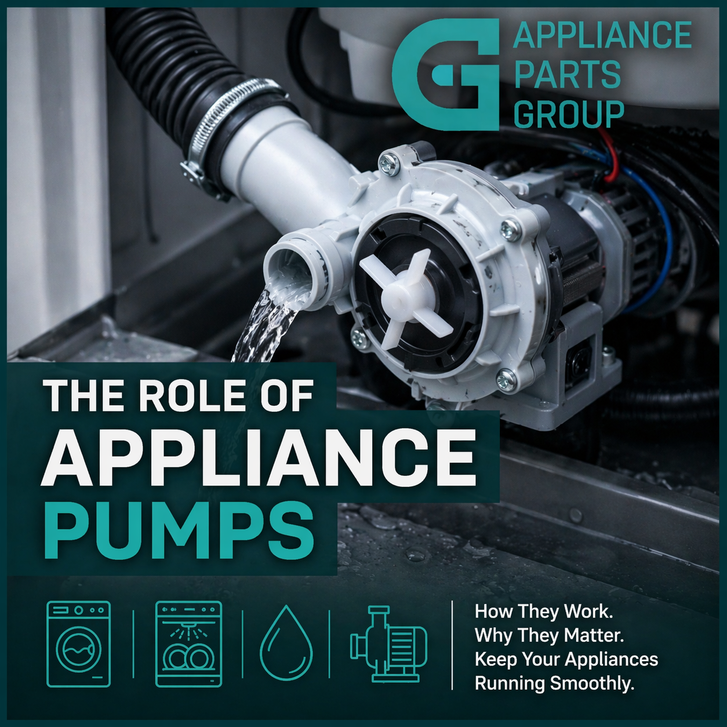
An appliance pump is a mechanical component designed to move water through an appliance system. Depending on the appliance, pumps may:
- Circulate water during cleaning cycles
- Drain water after use
- Supply water to dispensers or ice makers
These pumps are typically powered by electric motors and controlled by the appliance’s main control board.
Types of Appliance Pumps
Drain Pumps
Drain pumps are commonly found in washing machines and dishwashers. Their primary role is to remove wastewater from the appliance after each cycle.
- Activated during drain cycles
- Push water through the drain hose
- Prevent standing water buildup
Circulation Pumps
Circulation pumps are most common in dishwashers. They move water throughout the appliance to ensure proper cleaning.
- Spray water through spray arms
- Maintain consistent water pressure
- Improve cleaning efficiency
Water Supply Pumps
Some appliances, such as refrigerators, use pumps to deliver water to dispensers or ice makers.
Common Symptoms of Pump Failure
When a pump begins to fail, your appliance will usually show clear warning signs:
- Water not draining from washer or dishwasher
- Loud grinding or humming noises
- Leaks or water pooling under the appliance
- Poor cleaning performance in dishwashers
- Slow or no water flow in dispensers
What Causes Pump Failure?
Clogs and Debris
Foreign objects like lint, food particles, or small items can block the pump.
Wear and Tear
Over time, pump motors and impellers wear out due to constant use.
Electrical Issues
Faulty wiring or control board problems can prevent pumps from operating.
Overuse or Improper Use
Running appliances too frequently or overloading them can strain pump components.
Step-by-Step Troubleshooting
- Unplug the appliance and turn off the water supply.
- Check for visible clogs in filters and hoses.
- Listen for pump operation during cycles.
- Inspect the drain hose for kinks or blockages.
- Access the pump and check for debris or damage.
- Test the pump motor with a multimeter if necessary.
- Replace the pump if it shows signs of failure.
Common Parts That May Need Replacement
If troubleshooting reveals a faulty pump, several components may need replacement:
- Drain pump assembly
- Circulation pump motor
- Impeller
- Pump housing
- Seals and gaskets
Using OEM replacement parts ensures compatibility with your appliance and helps maintain performance and longevity.
Preventative Maintenance Tips
- Clean filters regularly to prevent debris buildup
- Avoid overloading appliances
- Use proper detergents and cleaning agents
- Inspect hoses and connections periodically
- Run cleaning cycles to remove residue
Frequently Asked Questions
What does a pump do in a washing machine?
It removes water from the drum during the drain cycle.
Why is my dishwasher not draining?
A clogged or faulty drain pump is a common cause.
How long do appliance pumps last?
Most pumps last 5–10 years depending on usage and maintenance.
Can I replace a pump myself?
Yes, with proper tools and safety precautions, many homeowners can perform this repair.
What are signs of a bad pump?
Standing water, unusual noises, and poor performance are key indicators.
Is it worth replacing a pump?
In most cases, replacing a pump is more cost-effective than replacing the appliance.
What causes pump clogs?
Debris like lint, food particles, and small objects can block the pump.
Do all appliances have pumps?
No, but many water-based appliances rely on pumps for operation.
How do I prevent pump failure?
Regular cleaning and proper use can significantly extend pump life.
Are OEM pumps better?
OEM pumps are designed specifically for your appliance, ensuring proper fit and performance.
Can a clogged pump damage my appliance?
Yes, it can lead to leaks and additional component failure.
What tools are needed to replace a pump?
Basic tools like screwdrivers, pliers, and a multimeter are typically required.
Entities and Terms
- Drain Pump
- Circulation Pump
- Impeller
- Pump Motor
- Drain Hose
- Filter Assembly
- Control Board
- Water Inlet Valve
This article was written by an AI program as part of a beta test by Appliance Parts Group to explore how artificial intelligence can help inform and educate our customers.
Our goal is to use AI tools to provide clear, reliable information so you can make confident, well-informed purchasing decisions.