
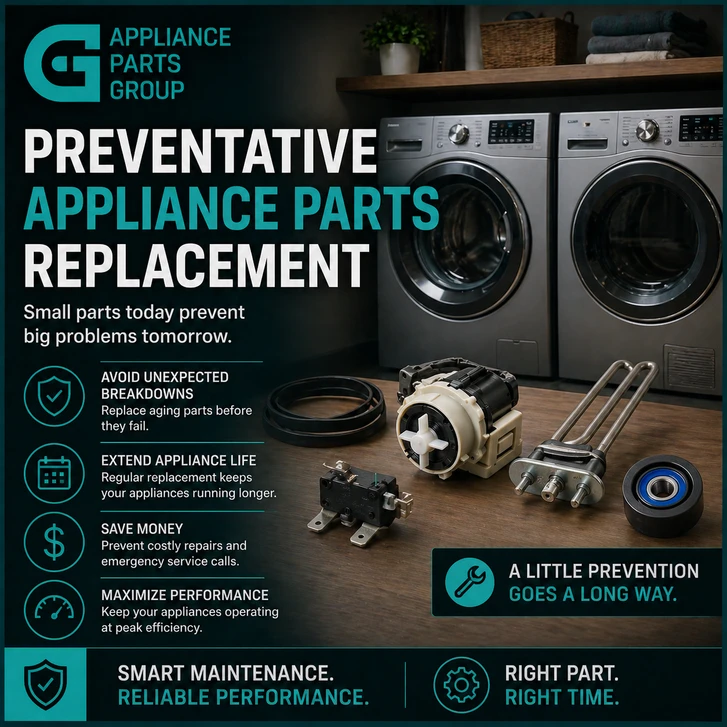
Key Takeaways
- Replacing wear-and-tear appliance parts early can prevent major failures.
- Common components like belts, seals, and filters degrade over time.
- Preventative maintenance extends appliance lifespan and efficiency.
- OEM replacement parts ensure proper fit and long-term reliability.
- Routine inspections help identify problems before they escalate.
Introduction
Most homeowners don’t think about appliance repair until something breaks. A dryer suddenly stops heating, a refrigerator loses its cooling power, or a dishwasher starts leaking all over the kitchen floor. These situations are frustrating—and often expensive.
But what if many of these breakdowns could be avoided entirely?
Preventative appliance parts replacement is a proactive approach to home maintenance that focuses on replacing high-wear components before they fail. Just like changing the oil in your car, regularly replacing certain appliance parts can save you from costly repairs, unexpected downtime, and even appliance replacement.
In this guide, we’ll explore which parts commonly fail, how to identify early warning signs, and how preventative replacement can keep your appliances running smoothly for years.
Why Preventative Replacement Matters
Appliances are made up of dozens of moving and electrical components, many of which naturally wear down over time. Waiting until a part completely fails can cause a chain reaction of damage throughout the appliance.
For example, a worn dryer belt might snap and leave your drum unable to spin. But if ignored, it could strain the motor or damage other internal components. Similarly, a failing refrigerator condenser fan motor can lead to overheating and compressor failure—a far more expensive repair.
Replacing parts early helps:
- Maintain energy efficiency
- Prevent secondary damage
- Reduce emergency repair costs
- Extend appliance lifespan
- Improve overall performance
Common Appliance Parts That Wear Out
1. Belts
Found in dryers and some washers, belts help rotate drums and other moving parts. Over time, they stretch, crack, or snap entirely.
2. Door Seals and Gaskets
Refrigerators, dishwashers, and washing machines rely on tight seals to prevent leaks and maintain temperature. Worn gaskets can lead to energy loss and water damage.
3. Filters
Filters in refrigerators, dishwashers, and dryers collect debris and contaminants. When clogged, they reduce efficiency and strain internal systems.
4. Heating Elements
Dryers, ovens, and dishwashers use heating elements that gradually weaken with repeated use.
5. Pumps and Motors
Dishwasher pumps and washer drain pumps experience heavy usage and are prone to wear.
6. Igniters and Valves
Gas appliances rely on igniters and valves that can degrade, causing inconsistent heating or failure to start.
Signs It’s Time to Replace Parts
Recognizing early warning signs can help you replace parts before a full breakdown occurs.
- Unusual noises (squealing, grinding, or banging)
- Longer cycle times
- Reduced heating or cooling performance
- Water leaks or moisture buildup
- Increased energy bills
- Intermittent operation
These symptoms often indicate that a component is wearing out and should be inspected or replaced.
Step-by-Step Preventative Maintenance Routine
- Inspect Appliances Monthly: Look for visible wear, leaks, or unusual sounds.
- Clean Filters and Vents: Remove lint, debris, and buildup regularly.
- Check Moving Parts: Listen for unusual noises in motors and belts.
- Test Performance: Ensure proper heating, cooling, and water flow.
- Replace High-Wear Components: Swap out parts like belts, seals, and filters proactively.
- Use OEM Parts: Ensure compatibility and reliability with manufacturer-approved replacements.
Common Parts That May Need Replacement
When it comes to preventative maintenance, certain OEM parts are more likely to require periodic replacement:
- Dryer drum belts
- Washer inlet valves
- Refrigerator water filters
- Dishwasher door gaskets
- Oven igniters
- Dryer heating elements
- Drain pumps
OEM replacement parts are designed specifically for your appliance model, ensuring proper fit and optimal performance. Investing in quality parts helps prevent repeat issues and ensures long-term reliability.
Appliance-Specific Preventative Tips
Refrigerators
- Replace water filters every 6 months
- Clean condenser coils annually
- Inspect door seals for cracks
Dryers
- Clean lint traps after every use
- Inspect belts and rollers yearly
- Check heating elements for wear
Washing Machines
- Inspect hoses for cracks or bulges
- Replace inlet valves if water flow weakens
- Check door seals for mold or damage
Dishwashers
- Clean spray arms and filters
- Inspect door gaskets for leaks
- Check pumps for unusual noise
Preventative Maintenance vs. Reactive Repair
Reactive repair means waiting until something breaks. Preventative maintenance means staying ahead of problems.
While reactive repair often involves higher costs, emergency service calls, and potential appliance replacement, preventative maintenance allows you to control costs and schedule repairs at your convenience.
In the long run, replacing a $20–$50 part early can prevent a $300–$1,000 repair later.
Preventative Maintenance Tips
- Create a maintenance schedule for each appliance
- Keep a log of part replacements
- Use manufacturer guidelines for replacement intervals
- Avoid overloading appliances
- Keep appliances clean and well-ventilated
- Address minor issues immediately
Frequently Asked Questions
What is preventative appliance parts replacement?
It involves replacing high-wear components before they fail to avoid breakdowns and costly repairs.
How often should appliance parts be replaced?
It depends on the part, but many components like filters and belts should be checked annually.
Are OEM parts better for preventative maintenance?
Yes, OEM parts are designed for your appliance and ensure proper fit and performance.
Can preventative maintenance extend appliance lifespan?
Absolutely. Regular maintenance reduces strain and prevents major failures.
What appliances benefit most from preventative replacement?
All major appliances, especially refrigerators, dryers, washers, and dishwashers.
Is preventative maintenance expensive?
No, it’s typically much cheaper than emergency repairs or appliance replacement.
What happens if I ignore worn parts?
Ignoring worn parts can lead to more severe damage and higher repair costs.
How do I know which part is failing?
Look for signs like noise, leaks, poor performance, or inconsistent operation.
Can I replace parts myself?
Many parts can be replaced DIY, but complex repairs may require a professional.
Do all appliances have parts that wear out?
Yes, every appliance has components that degrade over time with use.
Entities and Terms
- Dryer Belt
- Heating Element
- Water Inlet Valve
- Drain Pump
- Door Gasket
- Condenser Fan Motor
- Igniter
- Thermostat
- Lint Filter
- Spray Arm
This article was written by an AI program as part of a beta test by Appliance Parts Group to explore how artificial intelligence can help inform and educate our customers.
Our goal is to use AI tools to provide clear, reliable information so you can make confident, well-informed purchasing decisions.