
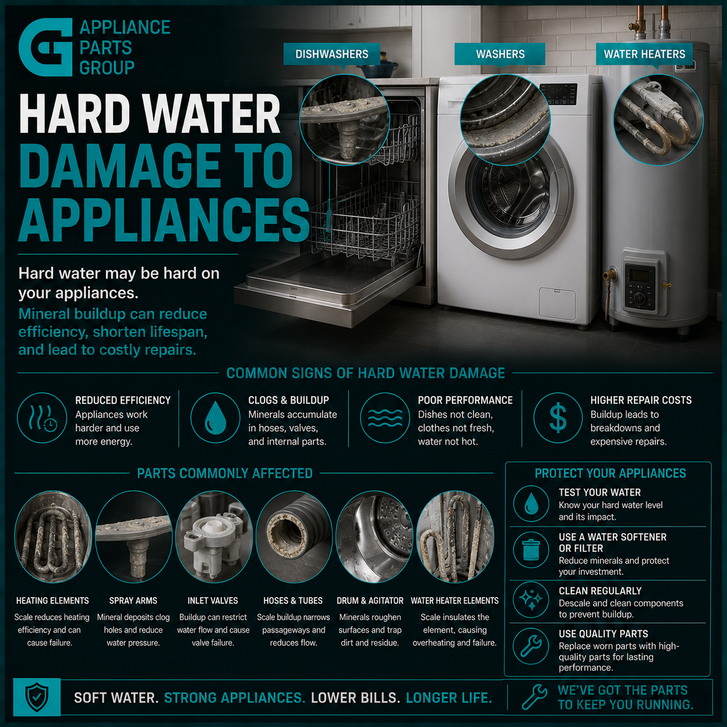
Key Takeaways
- Hard water contains high levels of minerals like calcium and magnesium that damage appliances over time.
- Scale buildup reduces efficiency, increases energy use, and shortens appliance lifespan.
- Commonly affected appliances include dishwashers, washing machines, water heaters, and refrigerators.
- Routine maintenance and water treatment solutions can significantly reduce damage.
- Replacing worn OEM parts early can prevent major system failures.
Introduction
If your appliances seem to wear out faster than expected, leave behind residue, or struggle to perform efficiently, hard water may be the hidden culprit. Hard water is a common issue in many households, and while it may seem harmless, the minerals it carries can quietly wreak havoc on your appliances over time.
From clogged valves to heating element failure, hard water damage is one of the leading causes of appliance breakdown. Understanding how it affects your appliances—and what you can do about it—can save you money, extend appliance life, and improve overall performance.
What Is Hard Water?
Hard water contains dissolved minerals, primarily calcium and magnesium. These minerals are left behind as water evaporates, forming a chalky residue known as limescale.
While not harmful to human health, these minerals can accumulate inside appliances, pipes, and components, causing blockages and reduced efficiency.
How Hard Water Damages Appliances
1. Scale Buildup on Heating Elements
Appliances like water heaters, dishwashers, and washing machines rely on heating elements. Hard water minerals coat these elements, forcing them to work harder and overheat.
2. Clogged Valves and Hoses
Mineral deposits can restrict water flow through inlet valves and hoses, reducing performance and potentially causing leaks or pressure issues.
3. Reduced Cleaning Efficiency
Dishwashers and washers struggle to clean effectively when mineral residue interferes with detergent performance.
4. Increased Energy Consumption
Scale buildup acts as insulation, requiring appliances to use more energy to achieve the same results.
5. Premature Part Failure
Over time, mineral deposits lead to wear and tear on internal components, increasing the likelihood of breakdowns.
Appliances Most Affected by Hard Water
Dishwashers
Hard water leaves spots on dishes, clogs spray arms, and damages heating elements.
Washing Machines
Minerals build up in the drum, hoses, and pump, reducing efficiency and causing odor issues.
Water Heaters
Sediment accumulation reduces heating efficiency and can lead to tank failure.
Refrigerators with Water Dispensers
Clogged filters and water lines reduce flow and affect ice production.
Coffee Makers and Small Appliances
Scale buildup can quickly ruin internal components and affect taste.
Common Signs of Hard Water Damage
- White, chalky residue on dishes or fixtures
- Appliances taking longer to complete cycles
- Reduced water pressure
- Strange noises from heating appliances
- Frequent part replacements
- Cloudy glassware or stiff laundry
Step-by-Step Troubleshooting
- Inspect visible components for white mineral buildup.
- Check water flow from inlet valves and hoses.
- Run a cleaning cycle with a descaling agent.
- Examine heating elements for scale coating.
- Test appliance performance after cleaning.
- Replace heavily scaled or damaged parts.
- Consider installing a water softening solution.
Common Parts That May Need Replacement
Hard water can damage several critical appliance components. Replacing these parts with OEM replacements ensures proper fit and performance:
- Water inlet valves
- Heating elements
- Dishwasher spray arms
- Pump assemblies
- Water filters
- Float switches
- Hoses and tubing
- Drain pumps
Preventative Maintenance Tips
- Use a water softener to reduce mineral content.
- Regularly descale appliances using manufacturer-approved cleaners.
- Clean filters and spray arms monthly.
- Use detergents designed for hard water conditions.
- Flush your water heater annually.
- Inspect and replace worn parts early.
- Install inline filters for sensitive appliances.
Frequently Asked Questions
What appliances are most affected by hard water?
Dishwashers, washing machines, water heaters, and refrigerators are the most commonly affected.
Can hard water permanently damage appliances?
Yes, long-term exposure can cause irreversible damage to internal components.
How often should I descale my appliances?
Every 1–3 months depending on water hardness levels.
Is a water softener worth it?
Yes, it can significantly extend appliance lifespan and improve efficiency.
What does limescale look like?
It appears as a white, chalky residue on surfaces.
Can hard water affect detergent performance?
Yes, it reduces effectiveness and can leave residue behind.
Do all homes have hard water?
No, water hardness varies by region.
Are OEM parts better for repairs?
OEM parts ensure compatibility and reliable performance.
Can I prevent buildup without a softener?
Regular descaling and maintenance can help reduce buildup.
Why is my water heater making noise?
Mineral buildup can cause popping or rumbling sounds.
Does hard water affect energy bills?
Yes, reduced efficiency leads to higher energy usage.
How do I test for hard water?
You can use a home test kit or contact your local water provider.
Entities and Terms
- Heating element
- Water inlet valve
- Limescale
- Spray arm
- Pump assembly
- Water softener
- Drain pump
- Float switch
- Water filter
- Descaling agent
This article was written by an AI program as part of a beta test by Appliance Parts Group to explore how artificial intelligence can help inform and educate our customers.
Our goal is to use AI tools to provide clear, reliable information so you can make confident, well-informed purchasing decisions.