
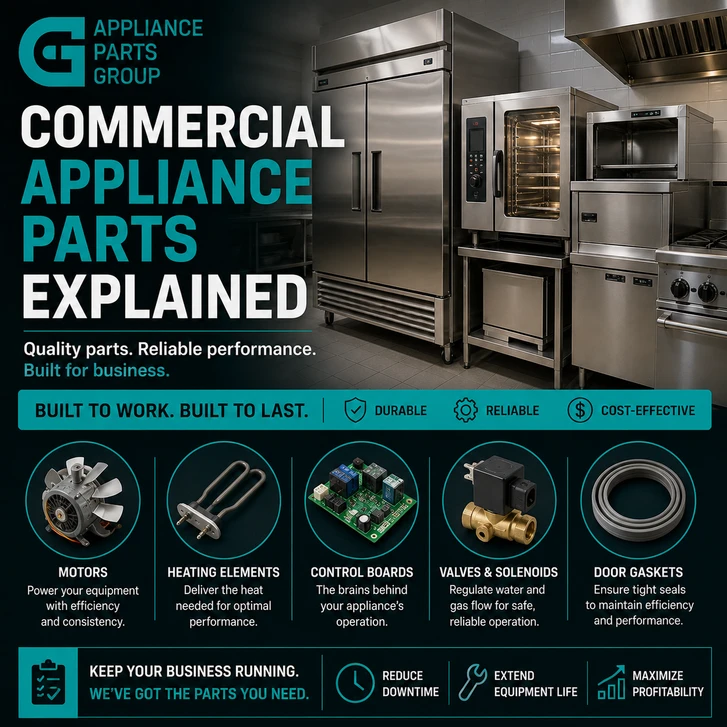
Key Takeaways
- Commercial appliance parts are built for higher durability, longer run times, and heavier workloads than residential components.
- Understanding the function of key commercial appliance parts can help reduce downtime and expensive emergency repairs.
- OEM replacement parts help maintain equipment performance, safety, and manufacturer specifications.
- Preventative maintenance and early part replacement can significantly extend appliance lifespan.
- Restaurants, hotels, laundromats, healthcare facilities, and retail businesses all rely on properly functioning commercial appliances.
Introduction
Commercial appliances are the backbone of many businesses. From restaurants and hotels to hospitals and laundromats, these machines operate for long hours under demanding conditions every day. Unlike residential appliances, commercial equipment is engineered for continuous use, higher temperatures, larger capacities, and more frequent cycling.
Because of these intense operating conditions, commercial appliance parts experience substantial wear and tear over time. Understanding how these components work — and recognizing when replacement parts are needed — can help business owners minimize downtime, reduce repair costs, and extend the life of their equipment.
In this guide, we’ll explain the most common commercial appliance parts, what they do, how they fail, and why OEM replacement parts are often the preferred solution for maintaining commercial equipment performance.
What Makes Commercial Appliance Parts Different?
Commercial appliance parts are specifically designed to withstand heavier workloads than residential components. A commercial refrigerator in a restaurant kitchen may open hundreds of times per day, while a residential refrigerator may only see a fraction of that usage.
Commercial components are typically built with:
- Higher-grade metals
- More powerful motors
- Industrial-strength seals and gaskets
- Enhanced heat resistance
- Longer duty cycles
- Higher electrical capacities
Because of these differences, commercial appliance parts are generally not interchangeable with residential components.
Common Types of Commercial Appliances
Commercial appliance parts are used across many industries. Common equipment categories include:
- Commercial refrigerators and freezers
- Ice machines
- Commercial ovens
- Deep fryers
- Commercial dishwashers
- Commercial laundry equipment
- Walk-in coolers
- Steamers and warming units
- Commercial microwaves
- Ventilation systems
Each appliance contains specialized components that support daily operation.
Commercial Refrigerator Parts Explained
Commercial refrigeration systems are essential for food safety and inventory preservation. Several components work together to maintain consistent cooling temperatures.
Compressor
The compressor is often considered the heart of a refrigeration system. It compresses refrigerant and circulates it through the cooling system.
Signs of compressor problems include:
- Warm interior temperatures
- Clicking noises
- Frequent cycling
- Complete cooling failure
Evaporator Fan Motor
The evaporator fan motor circulates cold air throughout the refrigeration compartment. When this motor fails, uneven cooling and frost buildup can occur.
Condenser Fan Motor
The condenser fan helps dissipate heat from the condenser coils. A failing fan motor can cause overheating and compressor strain.
Door Gaskets
Door gaskets create airtight seals that prevent warm air from entering the unit. Damaged gaskets increase energy consumption and reduce cooling efficiency.
Temperature Control Thermostat
This component monitors cabinet temperature and regulates compressor operation.
Commercial Oven Parts Explained
Commercial ovens experience extremely high heat and heavy daily usage. Several parts commonly wear out over time.
Heating Elements
Heating elements generate the heat required for cooking. Electric commercial ovens may contain separate bake and broil elements.
Symptoms of failed heating elements include:
- Uneven cooking
- Slow preheating
- No heat production
- Visible burns or cracks
Igniters
Gas commercial ovens rely on igniters to light the burner safely and efficiently.
A weak igniter may glow without fully igniting the gas burner.
Thermostats and Temperature Sensors
Temperature regulation is critical in commercial kitchens. Faulty sensors may cause inconsistent cooking temperatures.
Control Boards
Electronic control boards manage cooking cycles, timing, and temperature settings.
Commercial Dishwasher Parts Explained
Commercial dishwashers must clean large volumes of dishes quickly while maintaining sanitation standards.
Wash Pumps
The wash pump circulates water during cleaning cycles. Reduced water pressure may indicate pump failure.
Heating Elements
Commercial dishwashers use heating elements to maintain sanitizing water temperatures.
Spray Arms
Spray arms distribute water evenly throughout the dishwasher interior.
Clogs or cracks may reduce cleaning performance.
Door Latches
Safety interlock systems prevent operation when the dishwasher door is not securely closed.
Commercial Laundry Equipment Parts Explained
Laundromats, hotels, hospitals, and apartment complexes depend heavily on commercial laundry systems.
Drive Belts
Drive belts connect motors to drum assemblies.
Common signs of belt failure include:
- Squealing noises
- Drum not spinning
- Burning rubber smells
Water Inlet Valves
Water inlet valves control water flow into washers.
Faulty valves may cause overfilling or insufficient water levels.
Drain Pumps
Drain pumps remove water during spin cycles. Clogs and motor failures are common issues.
Thermal Fuses
Commercial dryers use thermal fuses to protect against overheating.
Commercial Ice Machine Parts Explained
Ice machines are critical in restaurants, healthcare facilities, hotels, and convenience stores.
Water Filters
Water filters reduce contaminants and improve ice quality.
Water Inlet Valves
These valves regulate water flow into the ice-making system.
Evaporator Plates
Evaporator plates freeze water into ice before harvest cycles begin.
Bin Thermostats
Bin thermostats monitor ice levels and stop production when storage bins are full.
Why OEM Commercial Appliance Parts Matter
OEM (Original Equipment Manufacturer) parts are designed to match the exact specifications of commercial equipment.
Benefits of OEM replacement parts include:
- Improved compatibility
- Reliable performance
- Manufacturer-tested durability
- Safer operation
- Warranty protection in some cases
Commercial appliances often operate under strict health and safety regulations. Using properly matched replacement components helps maintain compliance and equipment reliability.
Signs Commercial Appliance Parts May Need Replacement
Commercial equipment rarely fails without warning. Recognizing early symptoms can help prevent costly downtime.
Common warning signs include:
- Unusual noises
- Temperature inconsistencies
- Leaks
- Longer operating cycles
- Electrical burning smells
- Error codes
- Reduced efficiency
- Frequent resets
Addressing minor issues early often prevents larger system failures.
Step-by-Step Troubleshooting
- Disconnect power to the appliance before inspection.
- Check for visible signs of damage or wear.
- Inspect filters, vents, and airflow pathways.
- Verify power supply and circuit breaker status.
- Listen for abnormal noises during operation.
- Check for loose wiring or burned connectors.
- Inspect seals and gaskets for leaks.
- Review diagnostic codes if available.
- Test suspect components using manufacturer specifications.
- Replace damaged OEM parts as needed.
Common Parts That May Need Replacement
- Compressors
- Fan motors
- Heating elements
- Igniters
- Door gaskets
- Control boards
- Thermostats
- Drain pumps
- Water inlet valves
- Drive belts
- Spray arms
- Thermal fuses
- Sensors
- Relays and switches
Routine replacement of worn components helps maintain appliance efficiency and prevent emergency service interruptions.
Preventative Maintenance Tips
Preventative maintenance is one of the most effective ways to reduce commercial appliance repair costs.
- Clean condenser coils regularly
- Inspect door seals monthly
- Replace water filters on schedule
- Monitor operating temperatures
- Lubricate moving components where applicable
- Clean ventilation systems routinely
- Inspect electrical connections
- Train staff on proper equipment usage
- Schedule regular professional inspections
Businesses that prioritize preventative maintenance often experience fewer costly breakdowns and longer equipment lifespans.
How Downtime Impacts Businesses
Commercial appliance failures can have serious financial consequences. A broken refrigerator may lead to spoiled inventory, while a failed dishwasher can slow restaurant operations during peak service hours.
Potential business impacts include:
- Lost revenue
- Food spoilage
- Customer dissatisfaction
- Health code violations
- Increased labor costs
- Emergency repair expenses
Keeping replacement parts available and addressing repairs quickly helps minimize operational disruptions.
Choosing the Right Replacement Parts Supplier
Reliable access to OEM appliance parts is critical for commercial operations.
When selecting a supplier, consider:
- OEM inventory availability
- Fast shipping options
- Technical support resources
- Model compatibility assistance
- Commercial appliance expertise
- Detailed product information
Working with an experienced appliance parts supplier can simplify the repair process and reduce downtime.
Frequently Asked Questions
What are commercial appliance parts?
Commercial appliance parts are components specifically designed for heavy-duty appliances used in businesses such as restaurants, hotels, and laundromats.
Are commercial appliance parts different from residential parts?
Yes. Commercial parts are generally built for higher durability, heavier workloads, and longer operating cycles.
What does OEM mean?
OEM stands for Original Equipment Manufacturer. OEM parts are designed to match the appliance manufacturer’s specifications.
How often should commercial appliance parts be replaced?
Replacement schedules vary depending on appliance type, usage frequency, and maintenance practices.
Why do commercial appliances fail?
Common causes include heavy usage, lack of maintenance, electrical issues, worn components, and airflow restrictions.
Can worn door gaskets affect refrigeration performance?
Yes. Damaged gaskets allow warm air to enter refrigeration systems, reducing cooling efficiency.
What causes commercial oven heating problems?
Heating issues may result from failed heating elements, igniters, thermostats, or control boards.
How can businesses reduce appliance downtime?
Routine maintenance, early repairs, and keeping OEM replacement parts available can help minimize downtime.
What are signs of a failing commercial compressor?
Warm temperatures, loud noises, frequent cycling, and poor cooling performance are common symptoms.
Why are commercial dishwasher spray arms important?
Spray arms distribute water during wash cycles and help ensure proper cleaning performance.
How do thermal fuses protect commercial dryers?
Thermal fuses shut down dryers when overheating conditions occur, helping prevent equipment damage.
Should businesses use OEM replacement parts?
OEM parts are often recommended because they are engineered for compatibility, performance, and reliability.
Entities and Terms
- Compressor
- Evaporator Fan Motor
- Condenser Fan Motor
- Heating Element
- Igniter
- Control Board
- Thermostat
- Temperature Sensor
- Drain Pump
- Water Inlet Valve
- Drive Belt
- Spray Arm
- Thermal Fuse
- Door Gasket
- Evaporator Plate
- Bin Thermostat
- Commercial Refrigerator
- Commercial Oven
- Commercial Dishwasher
- Commercial Dryer
- Commercial Washer
- Ice Machine
This article was written by an AI program as part of a beta test by Appliance Parts Group to explore how artificial intelligence can help inform and educate our customers.
Our goal is to use AI tools to provide clear, reliable information so you can make confident, well-informed purchasing decisions.