
Key Takeaways
- Pressure switches are safety and control components used in many household appliances.
- They monitor air, water, or system pressure and communicate with the appliance control board.
- Faulty pressure switches can cause filling, draining, heating, or operational problems.
- Many appliance error codes can be traced to pressure switch failures or clogged sensing tubes.
- Using OEM replacement parts helps ensure proper fit, function, and reliability.
Introduction
Most homeowners are familiar with appliance components like motors, pumps, thermostats, and heating elements. However, one of the most important—and often overlooked—parts inside modern appliances is the pressure switch.
Pressure switches serve as critical monitoring devices that help appliances determine whether water levels, airflow, or operating pressures are within acceptable ranges. Without these switches, appliances would struggle to operate safely and efficiently.
Pressure switches can be found in washing machines, dishwashers, dryers, furnaces, HVAC equipment, and even some refrigerators. When a pressure switch fails, the appliance may stop working entirely, display error codes, overfill with water, fail to drain, or shut down as a safety precaution.
What Is an Appliance Pressure Switch?
A pressure switch is an electromechanical or electronic component that monitors pressure changes within an appliance system.
The switch detects changes in air pressure, water pressure, vacuum pressure, fluid levels, and airflow conditions. When pressure reaches a predetermined level, the switch opens or closes an electrical circuit. This signal is then sent to the appliance's control system, allowing it to continue, modify, or stop a specific operation.
How Pressure Switches Work
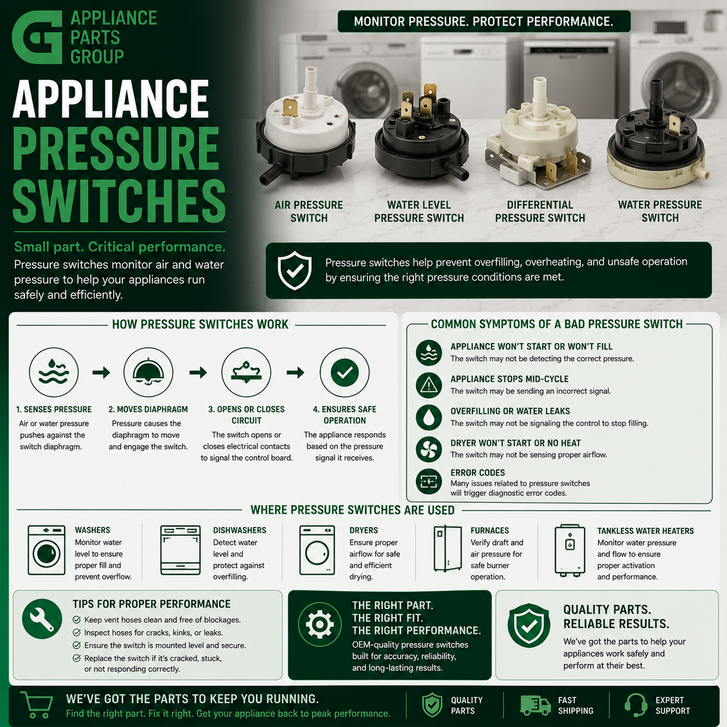
Most household pressure switches operate using a diaphragm. As pressure changes inside a chamber or sensing tube, the diaphragm moves. This movement activates electrical contacts or electronic sensors that communicate with the appliance control board.
The appliance then responds accordingly. For example, a washer may stop filling when the proper water level is reached, a dryer may verify airflow before ignition, or a dishwasher may confirm proper drainage.
Common Appliances That Use Pressure Switches
Washing Machines
Washers often use water-level pressure switches to determine when enough water has entered the tub. The switch monitors air pressure generated through a connected hose as water levels rise.
Dishwashers
Many dishwashers use pressure switches to monitor water levels and help prevent overfilling. Some models also use pressure sensors to verify circulation and drainage.
Dryers
Gas dryers may use airflow or pressure switches to verify proper venting before ignition occurs. This helps prevent unsafe operating conditions.
HVAC Systems
Furnaces and air handlers rely on pressure switches to monitor airflow and combustion safety. A faulty furnace pressure switch can prevent heating operation altogether.
Commercial Appliances
Commercial dishwashers, laundry equipment, and food-service appliances often use multiple pressure switches to manage more complex operating cycles.
Symptoms of a Bad Pressure Switch
When a pressure switch begins to fail, symptoms can vary depending on the appliance.
- Appliance will not start
- Unit stops mid-cycle
- Overfilling with water
- Insufficient water levels
- Drainage problems
- Heating issues
- Error codes on the display
- Repeated cycle interruptions
- Burner ignition failures
- Unexpected shutdowns
Common Causes of Pressure Switch Failure
Clogged Pressure Tubes
Many pressure switches depend on small air tubes. Soap residue, lint, grease, mineral buildup, or debris can block these tubes and prevent accurate readings.
Electrical Contact Wear
Mechanical pressure switches use electrical contacts that open and close repeatedly over time. Eventually, contact wear may cause intermittent operation.
Damaged Diaphragm
The diaphragm inside the switch can crack, harden, or lose flexibility as it ages. When this occurs, pressure changes may no longer be detected correctly.
Moisture Intrusion
Excess moisture can damage switch internals and cause corrosion. This is especially common in laundry and dishwasher environments.
Control Board Communication Issues
Sometimes the pressure switch itself is functioning properly, but the control board is unable to interpret the signal correctly. Proper diagnosis is important before replacing parts.
Step-by-Step Troubleshooting
- Disconnect power. Always unplug the appliance or turn off the breaker before inspection.
- Locate the pressure switch. Consult the owner's manual or service documentation.
- Inspect hoses and tubing. Look for cracks, kinks, blockages, or loose connections.
- Check for debris. Clean any buildup that may interfere with pressure readings.
- Inspect wiring. Verify connectors are secure and free from corrosion.
- Test continuity. Use a multimeter according to manufacturer specifications.
- Review error codes. Many modern appliances provide diagnostic information that can identify pressure-related faults.
- Replace the switch if defective. If testing confirms failure, install the correct OEM replacement component.
Common Parts That May Need Replacement
Pressure-switch-related repairs often involve more than the switch itself.
- Pressure switches
- Pressure sensors
- Air tubes
- Water level hoses
- Wire harnesses
- Control boards
- Drain pumps
- Float switches
- Vent assemblies
- Airflow sensors
OEM replacement parts are designed to match the appliance's original specifications and operating requirements.
Can You Repair a Pressure Switch?
In most cases, pressure switches are not designed to be repaired internally. Minor issues such as clogged hoses or dirty connections can sometimes be corrected without replacing the switch.
However, if the diaphragm, contacts, or electronic circuitry have failed, replacement is typically the recommended solution. Because pressure switches often serve critical safety functions, attempting internal repairs is generally not advisable.
Preventative Maintenance Tips
- Clean appliance filters regularly.
- Inspect hoses for damage or restrictions.
- Avoid excessive detergent use in washers.
- Remove mineral buildup from water systems.
- Keep dryer vents clean and unobstructed.
- Address drainage issues promptly.
- Perform annual appliance inspections.
- Use manufacturer-recommended cleaning procedures.
Why OEM Pressure Switches Matter
Pressure switches are calibrated to specific operating ranges. Even small differences in pressure sensitivity can affect appliance performance and safety.
OEM parts are engineered to meet the manufacturer's original specifications, helping ensure proper communication with control boards and accurate pressure monitoring. When replacing a pressure switch, verifying compatibility with the appliance model number is essential.
Frequently Asked Questions
What does a pressure switch do in an appliance?
A pressure switch monitors pressure changes and signals the appliance control system when specific operating conditions are reached.
Can a bad pressure switch stop an appliance from starting?
Yes. Many appliances use pressure switches as safety devices, and a failed switch may prevent startup.
How do I know if my pressure switch is bad?
Common symptoms include error codes, filling problems, drainage issues, shutdowns, or failed heating cycles.
Can a clogged hose cause pressure switch problems?
Yes. Blocked sensing tubes are one of the most common causes of pressure switch-related issues.
Are pressure switches used in washing machines?
Yes. Many washers use pressure switches to monitor water levels during fill cycles.
Do dishwashers have pressure switches?
Many dishwashers use pressure switches or pressure sensors to regulate water levels and system operation.
Can a pressure switch cause overfilling?
Yes. If the switch fails to detect proper water levels, overfilling can occur.
Can I test a pressure switch with a multimeter?
Many pressure switches can be tested for continuity, but manufacturer procedures should always be followed.
How long do appliance pressure switches last?
Most pressure switches last many years, though lifespan varies depending on usage and operating conditions.
Should I replace the hose when replacing a pressure switch?
If the hose shows signs of wear, cracking, or blockage, replacement may be recommended.
Are OEM pressure switches better for appliance repairs?
OEM parts are designed to match original specifications and are generally the preferred replacement option.
Can a pressure switch trigger appliance error codes?
Yes. Modern appliances frequently generate diagnostic codes when pressure-related faults are detected.
Entities and Terms
- Pressure Switch
- Pressure Sensor
- Water Level Switch
- Air Tube
- Diaphragm
- Control Board
- Drain Pump
- Float Switch
- Airflow Sensor
- Vent Assembly
- Wire Harness
- Water Inlet Valve
- Error Codes
- OEM Replacement Parts
This article was written by an AI program as part of a beta test by Appliance Parts Group to explore how artificial intelligence can help inform and educate our customers.
Our goal is to use AI tools to provide clear, reliable information so you can make confident, well-informed purchasing decisions.