
Key Takeaways
- Some appliance components fail suddenly with little to no warning signs.
- Electrical parts are the most common cause of unexpected breakdowns.
- Regular maintenance can reduce—but not eliminate—surprise failures.
- Understanding high-risk parts helps homeowners troubleshoot faster.
- Using OEM replacement parts ensures better reliability and longevity.
Introduction
Few things are more frustrating than an appliance that stops working without warning. One minute your refrigerator is cooling perfectly, and the next, it's warm. Your dryer runs yesterday but won’t start today. These sudden failures are often caused by specific appliance parts that tend to fail abruptly rather than gradually.
While many appliance issues develop over time, certain components—especially electrical ones—can stop functioning instantly. In this guide, we’ll explore the most common appliance parts that fail without warning, what causes these failures, and how to handle them when they happen.
Why Some Appliance Parts Fail Suddenly
Unlike mechanical wear-and-tear issues that develop slowly, some components are prone to immediate failure due to their design and function. These typically include electrical parts that rely on circuits, sensors, or rapid heat changes.
Common reasons for sudden failure include:
- Power surges or voltage spikes
- Internal short circuits
- Heat stress and thermal fatigue
- Manufacturing defects
- Moisture exposure
Common Appliance Parts That Fail Without Warning
1. Thermal Fuses
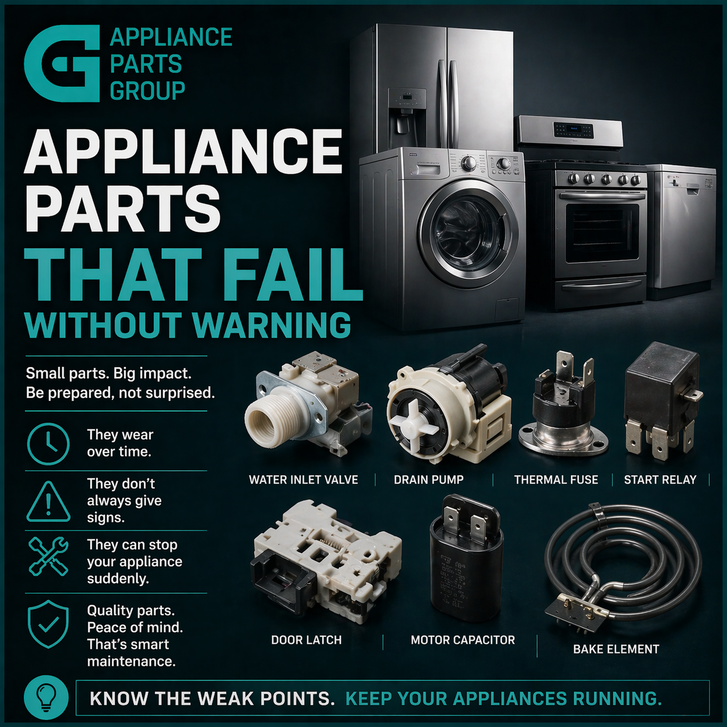
Thermal fuses are designed as safety devices that shut down appliances when temperatures exceed safe limits. When they blow, they stop working instantly—and permanently.
Common in dryers, ovens, and dishwashers, a blown thermal fuse will often result in an appliance that won’t start at all.
2. Control Boards (Electronic Control Modules)
Modern appliances rely heavily on electronic control boards. These boards act as the brain of the appliance, controlling cycles, temperatures, and functions.
Control boards can fail without warning due to power surges, internal component burnout, or moisture damage.
3. Capacitors
Capacitors help motors start and run efficiently. When they fail, the appliance motor may not start at all.
This is common in HVAC systems, refrigerators, and washing machines.
4. Door Switches
Door switches are small but critical components that signal whether an appliance is safe to operate. If a door switch fails, the appliance may suddenly stop working even if everything else is functional.
5. Igniters (Gas Appliances)
Gas oven and dryer igniters can weaken over time but often fail suddenly. One day they work; the next day, the appliance won’t heat.
6. Relays and Circuit Components
Relays control electrical flow within appliances. These small components can burn out instantly, cutting power to essential systems.
7. Water Inlet Valves
Water valves can fail suddenly due to internal electrical coil failure. This often results in a washer or dishwasher that won’t fill with water.
8. Sensors and Thermistors
Temperature sensors and thermistors monitor internal conditions. When they fail, appliances may stop working or behave erratically without warning.
Symptoms of Sudden Appliance Failure
Even though these parts fail without warning, the symptoms they cause are usually immediate and noticeable:
- Appliance won’t turn on
- No heat in ovens or dryers
- Washer won’t fill or drain
- Refrigerator stops cooling suddenly
- Cycles stop mid-operation
Step-by-Step Troubleshooting
- Check the power supply and circuit breaker.
- Inspect the appliance for blown fuses or tripped safety devices.
- Test door switches and basic sensors.
- Listen for unusual sounds or lack of motor activity.
- Look for error codes on digital displays.
- Test components like capacitors and relays with a multimeter.
- Inspect control boards for visible damage or burn marks.
- Replace faulty components with OEM parts.
Common Parts That May Need Replacement
When appliances fail without warning, these are the most commonly replaced OEM parts:
- Thermal fuses
- Electronic control boards
- Start capacitors
- Door switches
- Igniters
- Water inlet valves
- Temperature sensors
- Relays
OEM replacement parts are designed to meet manufacturer specifications, ensuring compatibility and long-term reliability.
Preventative Maintenance Tips
While not all sudden failures can be prevented, regular maintenance can reduce the risk:
- Use surge protectors for major appliances
- Keep appliances clean and free of debris
- Inspect wiring and connections periodically
- Avoid overloading washers and dryers
- Schedule routine appliance inspections
Frequently Asked Questions
Why do appliances stop working suddenly?
Sudden failures are often caused by electrical component failure, such as fuses, control boards, or capacitors.
Can a blown thermal fuse be reset?
No, thermal fuses must be replaced once they blow.
What is the most common part to fail unexpectedly?
Thermal fuses and control boards are among the most common sudden failure points.
How do I know if my control board is bad?
Signs include no power, erratic behavior, or visible burn marks.
Are sudden failures preventable?
Not always, but maintenance and surge protection can reduce the risk.
Can I replace these parts myself?
Many parts can be replaced DIY, but electrical components may require caution or professional help.
Why does my dryer suddenly stop heating?
A blown thermal fuse or failed heating element is a common cause.
What causes capacitors to fail?
Heat, age, and electrical stress are common causes.
Is it worth repairing sudden failures?
Yes, most component failures are affordable to repair compared to replacing the appliance.
Do OEM parts last longer?
OEM parts are designed for your specific appliance and typically provide better reliability.
Can power surges damage appliances?
Yes, surges can instantly damage control boards and other electrical components.
How often should appliances be inspected?
At least once a year for optimal performance and early issue detection.
Entities and Terms
- Thermal Fuse
- Control Board
- Capacitor
- Door Switch
- Igniter
- Relay
- Water Inlet Valve
- Thermistor
- Sensor
- Electrical Circuit
This article was written by an AI program as part of a beta test by Appliance Parts Group to explore how artificial intelligence can help inform and educate our customers.
Our goal is to use AI tools to provide clear, reliable information so you can make confident, well-informed purchasing decisions.