
Key Takeaways
- Wine coolers help maintain stable temperatures and humidity levels that protect wine quality.
- Common wine cooler problems include temperature fluctuations, noisy operation, leaks, and cooling failure.
- Routine maintenance such as cleaning condenser coils and checking door seals can extend appliance life.
- OEM replacement parts help restore proper performance and compatibility.
- Modern wine coolers include advanced features like dual-zone cooling and smart temperature controls.
Introduction
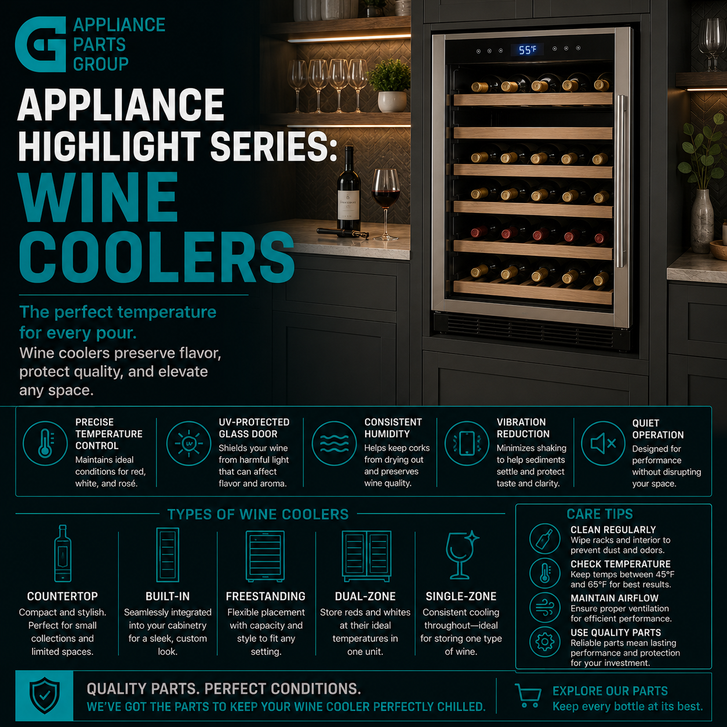
Wine coolers have become increasingly popular in modern homes, especially for homeowners who want to preserve wine properly without dedicating an entire cellar to storage. Unlike a standard refrigerator, wine coolers are specifically designed to maintain stable temperatures and humidity levels that help protect wine flavor, aroma, and aging potential.
Whether installed as a built-in kitchen appliance or used as a freestanding unit in a dining room or basement, wine coolers combine convenience with specialized cooling technology. However, like all appliances, they can eventually develop performance issues that require troubleshooting, maintenance, or replacement parts.
In this Appliance Highlight Series article, we’ll explore how wine coolers work, common problems homeowners experience, maintenance best practices, and the OEM parts that often require replacement.
What Is a Wine Cooler?
A wine cooler is a temperature-controlled appliance designed specifically for storing wine bottles at optimal serving or aging temperatures. These appliances are available in several configurations, including:
- Single-zone wine coolers
- Dual-zone wine coolers
- Built-in undercounter wine coolers
- Freestanding wine refrigerators
- Commercial wine display coolers
Wine coolers typically operate at temperatures between 45°F and 65°F depending on the type of wine being stored. Red wines generally require warmer temperatures than white wines or sparkling wines.
Unlike standard refrigerators, wine coolers minimize vibration and maintain more consistent humidity levels. Excessive vibration and low humidity can negatively impact wine quality over time.
How Wine Coolers Work
Most wine coolers operate using either compressor-based cooling systems or thermoelectric cooling technology.
Compressor Wine Coolers
Compressor models work similarly to traditional refrigerators. Refrigerant circulates through evaporator coils and condenser coils to remove heat from the cabinet interior. These systems are powerful and suitable for larger wine collections.
Thermoelectric Wine Coolers
Thermoelectric models use electronic cooling modules instead of compressors. They are generally quieter and produce less vibration, but they may struggle in warmer ambient environments.
Additional components commonly found in wine coolers include:
- Temperature control boards
- Thermistors and sensors
- Evaporator fans
- Door gaskets
- Interior circulation fans
- LED lighting systems
- Glass doors with UV protection
Common Wine Cooler Problems
Wine Cooler Not Cooling Properly
One of the most common issues homeowners encounter is insufficient cooling. Several components may contribute to this problem.
Possible causes include:
- Dirty condenser coils
- Faulty thermostat or control board
- Defective evaporator fan motor
- Damaged door gasket
- Low refrigerant levels
- Blocked air circulation
If the wine cooler struggles to maintain consistent temperatures, homeowners may notice premature wine aging or spoilage.
Wine Cooler Runs Constantly
A wine cooler that never cycles off may indicate airflow problems, dirty coils, a faulty thermistor, or poor door sealing. Compressor systems may also overwork when placed in hot environments such as garages without climate control.
Excessive Noise or Vibration
Some operational noise is normal, especially in compressor-based units. However, loud rattling, buzzing, or vibration may indicate:
- Loose fan blades
- Failing condenser fan motors
- Compressor mounting issues
- Uneven flooring
- Damaged shelves or bottle racks
Excessive vibration can disturb wine sediment and potentially impact long-term wine preservation.
Water Leaks Inside the Cabinet
Condensation problems can cause moisture buildup inside the wine cooler. This issue may result from:
- Clogged drain lines
- Frequent door openings
- Damaged door seals
- High ambient humidity
- Faulty defrost systems
Standing water should be addressed quickly to prevent mold growth and interior damage.
Interior Lights Not Working
LED lighting systems are common in modern wine coolers. If the lights fail, the issue could involve:
- Burned-out LED assemblies
- Door switch failure
- Control board problems
- Loose wiring connections
Step-by-Step Troubleshooting
-
Verify Power Supply
Make sure the wine cooler is plugged into a functioning outlet and that the circuit breaker has not tripped. -
Check Temperature Settings
Confirm the temperature controls are properly configured for the type of wine being stored. -
Inspect Door Gaskets
Examine the door seal for cracks, gaps, or dirt buildup that could allow warm air into the cabinet. -
Clean Condenser Coils
Dust-covered coils reduce cooling efficiency and force the compressor to work harder. -
Ensure Proper Ventilation
Built-in and freestanding units require sufficient airflow around ventilation openings. -
Listen for Fan Operation
Interior evaporator fans and condenser fans should operate smoothly without excessive noise. -
Monitor Internal Temperature
Use a separate thermometer to verify actual cabinet temperature accuracy. -
Check for Frost Buildup
Excess frost may indicate airflow restrictions or defrost system problems. -
Inspect Drain Lines
Clear clogged condensate drains that may cause water accumulation. -
Evaluate Control Components
If temperatures remain unstable, the thermostat, thermistor, or control board may require replacement.
Common Parts That May Need Replacement
Wine coolers rely on several critical components to maintain stable temperatures and proper airflow. Over time, these parts may wear out and require replacement.
Door Gaskets
Door gaskets create an airtight seal that prevents warm air infiltration. Worn or cracked seals can cause cooling inefficiency and excessive compressor runtime.
Evaporator Fan Motors
The evaporator fan circulates cool air evenly throughout the cabinet. A failed fan motor can lead to temperature inconsistencies.
Temperature Sensors and Thermistors
These components monitor internal temperatures and communicate with the control board. Faulty sensors may cause incorrect cooling cycles.
Control Boards
The electronic control board regulates compressor operation, fan speed, lighting, and temperature settings. Electrical surges or moisture exposure can damage these boards.
Condenser Fan Motors
Compressor-based systems use condenser fans to dissipate heat. A failing condenser fan may cause overheating and poor cooling performance.
LED Light Assemblies
Modern wine coolers often feature decorative interior lighting that may eventually require replacement.
Shelves and Bottle Racks
Damaged wooden shelves or sliding racks can reduce storage stability and convenience.
Dual-Zone Wine Coolers vs. Single-Zone Models
Dual-zone wine coolers have become increasingly popular because they allow homeowners to store red and white wines at separate temperatures within the same appliance.
Benefits of dual-zone models include:
- Greater storage flexibility
- Separate serving temperatures
- Improved organization
- Enhanced wine preservation
Single-zone units are often more affordable and work well for homeowners who primarily store one type of wine.
Smart Wine Cooler Features
Newer wine coolers increasingly include smart appliance technology. Advanced features may include:
- Wi-Fi connectivity
- Mobile app temperature monitoring
- Humidity sensors
- Touchscreen controls
- Voice assistant integration
- Energy-efficient compressors
These features improve convenience while helping homeowners maintain ideal storage conditions.
Preventative Maintenance Tips
- Clean condenser coils every 6 to 12 months.
- Avoid overloading shelves to maintain airflow.
- Inspect door gaskets regularly for wear.
- Keep the appliance level to reduce vibration.
- Maintain adequate ventilation clearance around the unit.
- Use stable room temperatures whenever possible.
- Clean interior surfaces to prevent odors and mold growth.
- Monitor humidity and condensation levels.
Routine maintenance can significantly extend the lifespan of a wine cooler while preserving energy efficiency.
When to Repair vs. Replace a Wine Cooler
Minor repairs such as replacing fans, sensors, or door gaskets are often cost-effective. However, compressor failure or sealed system leaks may be more expensive to repair, particularly in older units.
Homeowners should consider replacement when:
- The appliance is over 10 years old
- Repair costs approach replacement value
- Cooling performance continues to decline
- Energy efficiency is significantly reduced
- Replacement parts are discontinued
Modern wine coolers often provide improved insulation, quieter operation, and advanced electronic controls compared to older models.
Frequently Asked Questions
What temperature should a wine cooler be set to?
Most wine coolers operate between 45°F and 65°F depending on the type of wine being stored.
Why is my wine cooler not getting cold?
Dirty condenser coils, faulty fans, damaged door seals, or control board problems may reduce cooling performance.
How long do wine coolers last?
Many wine coolers last between 8 and 15 years with proper maintenance.
Can a wine cooler be repaired?
Yes. Many common issues involve replaceable parts such as fans, thermostats, sensors, and door gaskets.
Are wine coolers different from refrigerators?
Yes. Wine coolers maintain specialized temperature and humidity conditions designed for wine storage.
Why is my wine cooler noisy?
Noise may result from fan motors, compressor vibration, uneven flooring, or loose components.
Do wine coolers require ventilation?
Yes. Proper airflow is necessary for efficient heat dissipation and cooling performance.
What causes condensation inside a wine cooler?
High humidity, damaged door gaskets, clogged drains, or frequent door openings can cause condensation.
Can I store beverages other than wine in a wine cooler?
Many homeowners store canned beverages and bottled drinks, although wine coolers are optimized for wine storage.
What is the advantage of a dual-zone wine cooler?
Dual-zone models allow separate temperature settings for red and white wines.
How often should condenser coils be cleaned?
Condenser coils should typically be cleaned every 6 to 12 months.
Are OEM replacement parts important for wine coolers?
OEM parts are designed for compatibility and proper performance with specific appliance models.
Entities and Terms
- Wine cooler
- Wine refrigerator
- Compressor
- Thermoelectric cooling
- Evaporator fan motor
- Condenser fan motor
- Door gasket
- Thermistor
- Temperature sensor
- Control board
- Condenser coils
- Evaporator coils
- LED lighting
- Dual-zone cooling
- Humidity control
- Bottle rack
- Built-in wine cooler
- Freestanding wine cooler
This article was written by an AI program as part of a beta test by Appliance Parts Group to explore how artificial intelligence can help inform and educate our customers.
Our goal is to use AI tools to provide clear, reliable information so you can make confident, well-informed purchasing decisions.