
Key Takeaways
- Ventilation systems play a critical role in removing heat, moisture, smoke, and odors from your home.
- Range hoods, bathroom exhaust fans, and dryer vents are the most common residential ventilation systems.
- Poor airflow is often caused by clogged filters, blocked ducts, or failing fan motors.
- Routine cleaning and maintenance can significantly extend the life of ventilation components.
- OEM replacement parts ensure proper fit, performance, and long-term reliability.
Introduction
Ventilation systems are one of the most overlooked yet essential components in modern homes. Whether it's the range hood above your stove, the exhaust fan in your bathroom, or the venting system behind your dryer, these appliances quietly work to remove unwanted air contaminants and maintain indoor air quality.
When ventilation systems fail, the effects are noticeable—lingering odors, excessive humidity, grease buildup, and even mold growth. Understanding how these systems work and how to maintain them can help homeowners avoid costly repairs and keep appliances running efficiently.
What Are Ventilation Systems?
Ventilation systems are designed to move air from one space to another, typically removing contaminated air and replacing it with fresh air. In residential settings, these systems are integrated into various appliances and areas of the home.
Common Types of Ventilation Systems
- Kitchen range hoods
- Bathroom exhaust fans
- Dryer vent systems
- Whole-house ventilation systems
- Microwave vent hoods
How Ventilation Systems Work
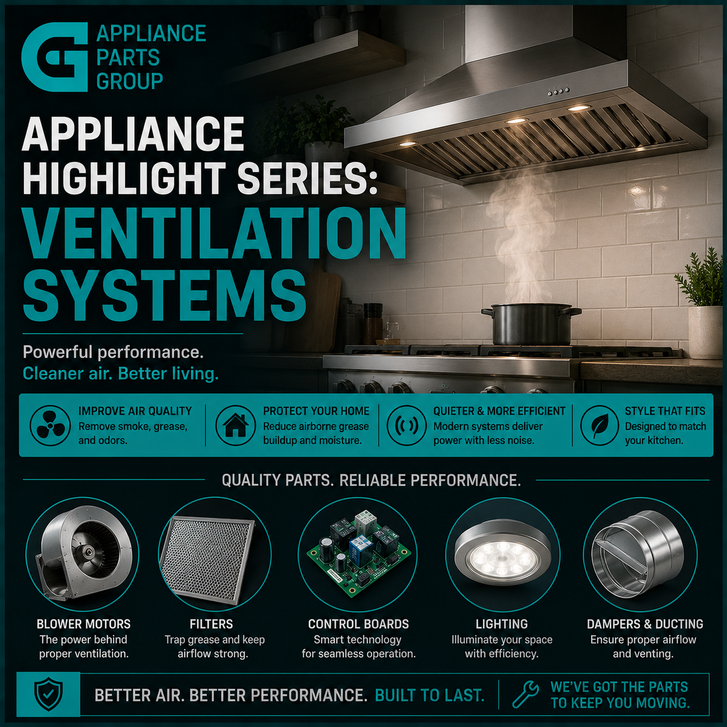
Most ventilation systems operate using a fan or blower motor that pulls air through a filter and pushes it through ductwork to the outside of the home. Some systems, like ductless range hoods, recirculate air after passing it through charcoal filters.
Key components include:
- Fan motor
- Blower wheel
- Filters (grease or charcoal)
- Ductwork
- Dampers
Common Ventilation System Problems
1. Poor Airflow
Weak airflow is one of the most common complaints. This can be caused by clogged filters, blocked ducts, or a failing motor.
2. Excessive Noise
Unusual noises often indicate a worn-out blower wheel, loose components, or motor issues.
3. Grease and Dirt Buildup
Kitchen ventilation systems are especially prone to grease accumulation, which can reduce efficiency and pose a fire risk.
4. Moisture Problems
Bathroom fans that fail to remove moisture can lead to mold growth and structural damage.
5. Dryer Vent Blockages
Lint buildup in dryer vents restricts airflow and increases drying times while posing a serious fire hazard.
Step-by-Step Troubleshooting
- Check Power Supply: Ensure the unit is receiving power and switches are functioning.
- Inspect Filters: Remove and clean or replace dirty filters.
- Examine Ductwork: Look for blockages, kinks, or disconnections.
- Test Airflow: Turn on the system and check airflow strength.
- Listen for Noise: Identify unusual sounds that may indicate motor or fan issues.
- Inspect Fan Blades: Check for debris or damage to the blower wheel.
- Check Exterior Vent: Ensure the outside vent flap opens properly.
Common Parts That May Need Replacement
Over time, certain components in ventilation systems wear out or become less effective. Replacing these parts with OEM components ensures compatibility and optimal performance.
- Fan motor
- Blower wheel
- Grease filters
- Charcoal filters
- Vent dampers
- Control switches
- Thermal fuses
- Duct connectors
Preventative Maintenance Tips
- Clean or replace filters every 1–3 months.
- Inspect and clean ductwork annually.
- Wipe down grease buildup on range hoods regularly.
- Check dryer vents for lint accumulation after every few loads.
- Ensure exterior vents are free from debris and pests.
- Listen for changes in noise that may indicate early issues.
Why Proper Ventilation Matters
A properly functioning ventilation system does more than eliminate odors—it protects your home and health. Poor ventilation can lead to:
- Indoor air pollution
- Excess humidity and mold growth
- Increased energy costs
- Reduced appliance efficiency
Frequently Asked Questions
Why is my range hood not pulling air?
This is usually caused by clogged filters, blocked ducts, or a failing fan motor.
How often should I clean ventilation filters?
Grease filters should be cleaned monthly, while charcoal filters should be replaced every 3–6 months.
Can I run my ventilation system without a filter?
No, filters protect internal components and improve air quality.
Why is my bathroom fan not removing moisture?
This could be due to a weak motor, blocked duct, or improper installation.
What causes loud noises in ventilation systems?
Worn fan motors, loose parts, or damaged blower wheels are common causes.
How do I know if my dryer vent is clogged?
Signs include longer drying times, overheating, and excessive lint buildup.
Are ductless range hoods effective?
They are effective for odor removal but less efficient at removing heat and moisture.
How long do ventilation motors last?
Typically 8–15 years depending on usage and maintenance.
Can I clean ductwork myself?
Basic cleaning is possible, but deep cleaning may require professional services.
What type of filter is best?
It depends on your system—metal grease filters for kitchens and charcoal filters for recirculating systems.
Why is my vent flap not opening?
This may be due to debris, a broken damper, or airflow issues.
Do ventilation systems improve energy efficiency?
Yes, they help appliances operate more efficiently and reduce strain.
Entities and Terms
- Fan motor
- Blower wheel
- Grease filter
- Charcoal filter
- Ductwork
- Vent damper
- Thermal fuse
- Control switch
- Exhaust fan
- Range hood
- Dryer vent
This article was written by an AI program as part of a beta test by Appliance Parts Group to explore how artificial intelligence can help inform and educate our customers.
Our goal is to use AI tools to provide clear, reliable information so you can make confident, well-informed purchasing decisions.