
Key Takeaways
- Laundry centers combine a washer and dryer into one compact appliance.
- They are ideal for apartments, condos, closets, and small laundry spaces.
- Common issues include poor draining, no heat, vibration, and spin problems.
- Many repairs involve OEM parts like drain pumps, belts, thermal fuses, and switches.
- Regular maintenance helps extend the life of the appliance.
Introduction
Laundry centers are a practical solution for homeowners and renters who need full laundry capability in a compact space. These appliances combine a washer and dryer into one vertically stacked unit, making them popular in apartments, condos, townhomes, vacation rentals, and small laundry rooms.
Unlike separate stackable washer and dryer units, a laundry center is built as one complete appliance. The washer is usually located on the bottom, while the dryer sits above it. This design saves floor space while still providing the everyday convenience of washing and drying clothes at home.
In this Appliance Highlight Series article, we will explain how laundry centers work, why they are useful, what problems they commonly experience, and which OEM replacement parts may help restore performance.
What Is a Laundry Center?
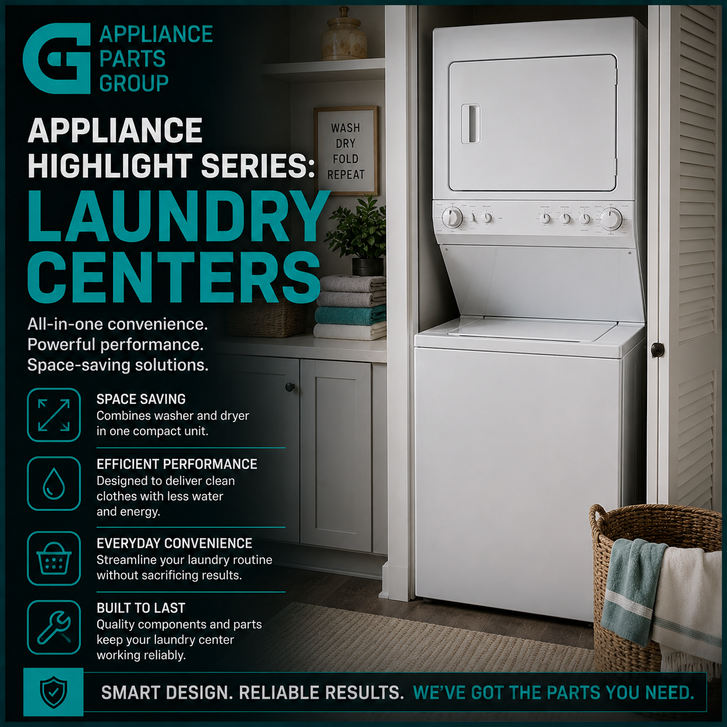
A laundry center is a single appliance that includes both a washing machine and a dryer. Most models use a top-load washer below and a front-load dryer above. They are commonly installed in closets, utility rooms, apartments, and other areas where space is limited.
Laundry centers are available in electric and gas dryer configurations. Many newer models also include high-efficiency wash systems, moisture sensors, quick wash cycles, and improved controls.
Benefits of Laundry Centers
Space-Saving Design
The biggest advantage of a laundry center is its compact footprint. Because the washer and dryer are stacked vertically, the appliance takes up less floor space than traditional side-by-side laundry appliances.
Convenient for Small Homes
Laundry centers are commonly used in apartments, condos, mobile homes, vacation homes, and smaller houses where a full laundry room may not be available.
All-in-One Appliance
Because the washer and dryer are built together, homeowners only need one appliance instead of two separate machines.
Modern Features
Many laundry centers now include features such as automatic load sensing, moisture sensing, multiple wash cycles, wrinkle care settings, and energy-saving options.
How Laundry Centers Work
A laundry center contains many of the same parts found in standard washers and dryers. The washer section fills with water, agitates or tumbles clothing, drains, and spins. The dryer section uses heat and airflow to remove moisture from clothing.
Common Washer Components
- Drain pump
- Water inlet valve
- Drive motor
- Agitator or impeller
- Lid switch or door lock
- Suspension rods
- Control board
Common Dryer Components
- Heating element
- Thermal fuse
- Drive belt
- Drum rollers
- Idler pulley
- Blower wheel
- Cycling thermostat
- Igniter on gas models
Common Laundry Center Problems
Washer Not Draining
If the washer does not drain, water may remain in the tub after the cycle ends. This can be caused by a clogged drain hose, failed drain pump, blocked pump filter, or faulty lid switch.
Dryer Not Heating
If the dryer tumbles but does not heat, the problem may be a blown thermal fuse, faulty heating element, bad thermostat, restricted vent, or failed igniter on gas models.
Washer Not Spinning
A washer that does not spin may leave clothing soaking wet. Common causes include a broken drive belt, bad lid switch, motor issue, worn suspension parts, or control failure.
Excessive Vibration
Laundry centers can vibrate when loads are unbalanced, the appliance is not level, or suspension components are worn.
Dryer Making Loud Noises
Squealing, grinding, or thumping noises often point to worn drum rollers, a damaged idler pulley, a loose belt, or blower wheel obstruction.
Step-by-Step Troubleshooting
- Disconnect power. Always unplug the appliance or shut off the breaker before inspection.
- Check the water supply. Make sure supply valves are open and hoses are not kinked.
- Inspect the drain hose. Look for clogs, bends, or improper installation.
- Clean the lint filter. Remove lint after every dryer cycle.
- Inspect the dryer vent. Restricted airflow can cause long dry times and overheating.
- Listen for unusual sounds. Grinding or squealing may indicate worn mechanical parts.
- Check for error codes. Many newer laundry centers display diagnostic codes.
- Inspect belts and rollers. Look for cracks, wear, or loose components.
- Test switches. Lid switches and door switches can prevent operation when faulty.
- Replace worn OEM parts. Use the model number to find the correct replacement part.
Common Parts That May Need Replacement
Drain Pump
The drain pump removes water from the washer. If it fails or becomes clogged, the washer may not drain properly.
Drive Belt
Drive belts help move the washer or dryer drum. A worn or broken belt can stop spinning or tumbling.
Thermal Fuse
The thermal fuse protects the dryer from overheating. A blown fuse can prevent the dryer from heating or running.
Heating Element
Electric dryers use a heating element to generate heat. If the element burns out, the dryer may tumble without heat.
Lid Switch or Door Switch
These safety switches tell the appliance when the lid or door is closed. A faulty switch can stop operation.
Drum Rollers and Idler Pulley
These parts support dryer drum movement. When worn, they can cause squealing, scraping, or thumping sounds.
Water Inlet Valve
The water inlet valve controls water flow into the washer. If it fails, the washer may fill slowly or not fill at all.
Preventative Maintenance Tips
- Clean the lint filter after every dryer cycle.
- Clean the dryer vent at least once per year.
- Avoid overloading the washer or dryer.
- Keep the appliance level to reduce vibration.
- Inspect water hoses for cracks, leaks, or bulges.
- Use HE detergent when required by the manufacturer.
- Run washer cleaning cycles to reduce odor and residue.
Why OEM Parts Matter
OEM replacement parts are designed to match the specifications of the original appliance. Using the correct OEM part can help maintain proper fit, safe operation, and reliable performance.
Before ordering parts, always locate the full model number on the laundry center. This helps ensure that the replacement part is compatible with the specific appliance.
Frequently Asked Questions
What is a laundry center?
A laundry center is a single appliance that combines a washer and dryer in one stacked unit.
Are laundry centers good for small spaces?
Yes. Laundry centers are ideal for apartments, closets, condos, and compact laundry rooms.
How long does a laundry center last?
Many laundry centers last 10 to 15 years with proper maintenance and timely repairs.
Why is my laundry center washer not draining?
Common causes include a clogged drain hose, failed drain pump, blocked filter, or faulty lid switch.
Why is my laundry center dryer not heating?
The issue may be a blown thermal fuse, faulty heating element, bad thermostat, restricted vent, or failed gas igniter.
Can laundry centers be repaired?
Yes. Many common laundry center problems can be repaired by replacing worn parts.
Why is my laundry center shaking?
Excessive vibration may be caused by an unbalanced load, uneven installation, or worn suspension parts.
Do laundry centers use standard washer and dryer parts?
Some components are similar, but parts must be matched by model number to ensure compatibility.
Should I use OEM parts for a laundry center?
OEM parts are recommended because they are designed for proper fit and performance with the appliance model.
How often should I clean the dryer vent?
Dryer vents should usually be cleaned at least once per year, or more often if drying times increase.
Can I replace a laundry center myself?
Some basic parts may be replaced by experienced DIYers, but electrical, gas, or major mechanical repairs should be handled carefully.
Is a laundry center the same as a stackable washer and dryer?
No. A laundry center is one combined appliance, while stackable washers and dryers are separate units installed together.
Entities and Terms
- Laundry center
- Stacked washer dryer
- Drain pump
- Heating element
- Thermal fuse
- Drive belt
- Drum roller
- Idler pulley
- Water inlet valve
- Lid switch
- Door switch
- Suspension rods
- Control board
- Dryer vent
- Blower wheel
This article was written by an AI program as part of a beta test by Appliance Parts Group to explore how artificial intelligence can help inform and educate our customers.
Our goal is to use AI tools to provide clear, reliable information so you can make confident, well-informed purchasing decisions.