
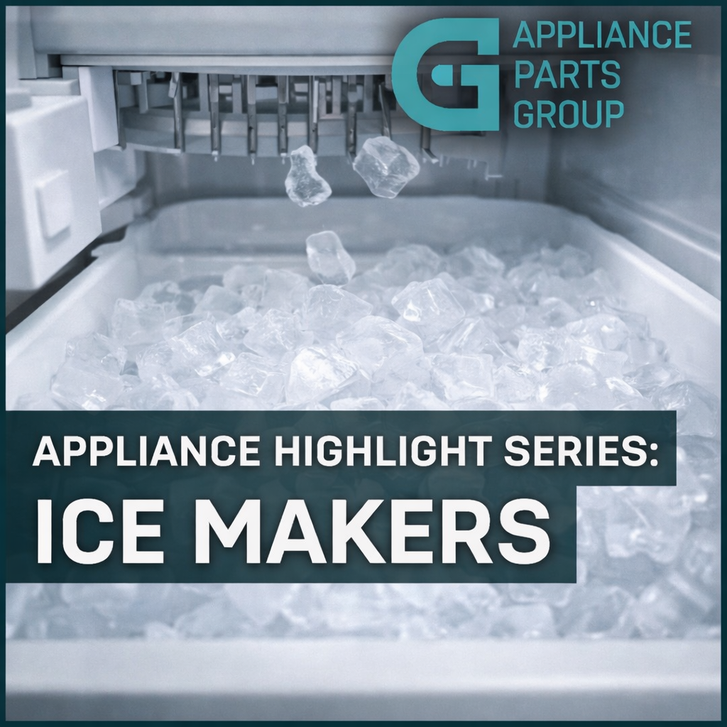
Key Takeaways
- Ice makers are essential components in modern refrigerators and standalone units, providing convenient access to ice.
- Common issues include low ice production, leaks, unusual noises, and complete failure to make ice.
- Most ice maker problems are caused by water supply issues, faulty components, or temperature inconsistencies.
- Routine maintenance can significantly extend the lifespan of your ice maker and improve performance.
- OEM replacement parts ensure compatibility, reliability, and optimal performance when repairs are needed.
Introduction
Ice makers have become a standard feature in modern kitchens, offering convenience and efficiency for households that rely on a steady supply of ice. Whether built into a refrigerator or installed as a standalone unit, ice makers simplify everyday tasks—from cooling beverages to hosting gatherings.
However, like any appliance component, ice makers can experience issues over time. When your ice maker stops working properly, it can be frustrating and inconvenient. Understanding how these systems function, what can go wrong, and how to fix them is key to keeping your appliance running smoothly.
How Ice Makers Work
Ice makers operate through a simple but precise process. Water flows from your home’s supply line into a mold, where it freezes into cubes. Once frozen, a heating element slightly warms the mold, allowing the cubes to be ejected into a storage bin. This cycle repeats automatically.
This process relies on several critical components working together seamlessly, including valves, thermostats, motors, and sensors.
Common Ice Maker Problems
Ice Maker Not Producing Ice
One of the most common issues is when the ice maker stops producing ice altogether. This can result from a clogged water line, faulty inlet valve, or a malfunctioning thermostat.
Slow Ice Production
If your ice maker is producing ice slowly, the problem is often related to temperature settings or restricted water flow. Freezers that are not cold enough can significantly reduce ice production.
Ice Cubes Are Too Small or Misshapen
Small or hollow ice cubes typically indicate low water pressure or a partially clogged water filter.
Ice Maker Leaking Water
Leaks can occur due to cracked water lines, faulty valves, or improper alignment of the ice mold.
Unusual Noises
Grinding or buzzing noises may signal motor issues or problems with the ice ejector mechanism.
Step-by-Step Troubleshooting
- Check the freezer temperature (should be between 0°F and 5°F).
- Inspect the water supply line for kinks or blockages.
- Replace or clean the water filter if it’s clogged.
- Ensure the ice maker is turned on and properly connected.
- Test the water inlet valve for proper operation.
- Inspect the ice mold for cracks or damage.
- Listen for unusual noises that may indicate motor failure.
- Reset the ice maker according to manufacturer instructions.
Common Parts That May Need Replacement
When troubleshooting doesn’t resolve the issue, replacing faulty components is often necessary. Using OEM (Original Equipment Manufacturer) parts ensures compatibility and long-term reliability.
- Water inlet valve
- Ice maker assembly
- Thermostat
- Ice mold
- Water filter
- Control module
- Fill tube
- Ejector motor
Each of these components plays a critical role in the ice-making process. For example, a faulty water inlet valve can prevent water from entering the mold, while a broken thermostat may stop the freezing cycle entirely.
Preventative Maintenance Tips
- Replace water filters every 6 months to maintain proper flow.
- Keep the freezer at the recommended temperature range.
- Regularly inspect water lines for leaks or damage.
- Clean the ice bin and mold to prevent buildup.
- Avoid overloading the freezer, which can affect airflow.
- Flush the water system periodically to remove sediment.
Frequently Asked Questions
Why is my ice maker not making ice?
This is usually caused by a clogged water line, faulty inlet valve, or incorrect freezer temperature.
How long should an ice maker last?
Most ice makers last between 5 to 10 years with proper maintenance.
Why are my ice cubes small?
Small cubes are often due to low water pressure or a clogged filter.
Can I replace an ice maker myself?
Yes, many ice maker assemblies are designed for straightforward replacement.
How often should I clean my ice maker?
It’s recommended to clean it every 3 to 6 months.
What temperature should my freezer be?
The ideal range is between 0°F and 5°F.
Why is my ice maker leaking?
Leaks are typically caused by damaged water lines or faulty valves.
Do I need to replace the entire ice maker?
Not always—sometimes replacing a single component will fix the issue.
What does the water inlet valve do?
It controls the flow of water into the ice maker.
Why is my ice cloudy?
Cloudy ice is usually caused by trapped air or impurities in the water.
Can a clogged filter stop ice production?
Yes, restricted water flow can prevent proper ice formation.
Is it better to use OEM parts?
OEM parts are designed for your specific appliance, ensuring better performance and fit.
Entities and Terms
- Ice maker assembly
- Water inlet valve
- Thermostat
- Ice mold
- Water filter
- Control module
- Fill tube
- Ejector motor
- Freezer temperature control
- Water supply line
This article was written by an AI program as part of a beta test by Appliance Parts Group to explore how artificial intelligence can help inform and educate our customers.
Our goal is to use AI tools to provide clear, reliable information so you can make confident, well-informed purchasing decisions.