
Key Takeaways
- Ice machines are essential appliances for homes, restaurants, healthcare facilities, offices, and commercial kitchens.
- Most ice machine problems are related to water flow, temperature control, dirty components, or worn parts.
- Routine cleaning and maintenance help improve ice quality, production speed, and appliance lifespan.
- Common replacement parts include water inlet valves, water filters, thermistors, control boards, pumps, and fan motors.
- Using the correct OEM replacement parts helps maintain proper fit, performance, and reliability.
Introduction
Ice machines are easy to take for granted until they stop working. Whether built into a refrigerator, installed under a counter, or used in a commercial kitchen, an ice machine provides a steady supply of ice for drinks, food storage, healthcare needs, and daily convenience.
Unlike a basic freezer tray, an automatic ice machine depends on several systems working together. Water must enter at the right pressure, the refrigeration system must freeze that water efficiently, and the machine must release and store the ice properly. When one part fails or becomes restricted, ice production can slow down or stop completely.
In this Appliance Highlight Series article, we’ll explain how ice machines work, the most common problems homeowners and businesses may notice, how to troubleshoot performance issues, and which OEM replacement parts are often used to restore reliable operation.
What Is an Ice Machine?
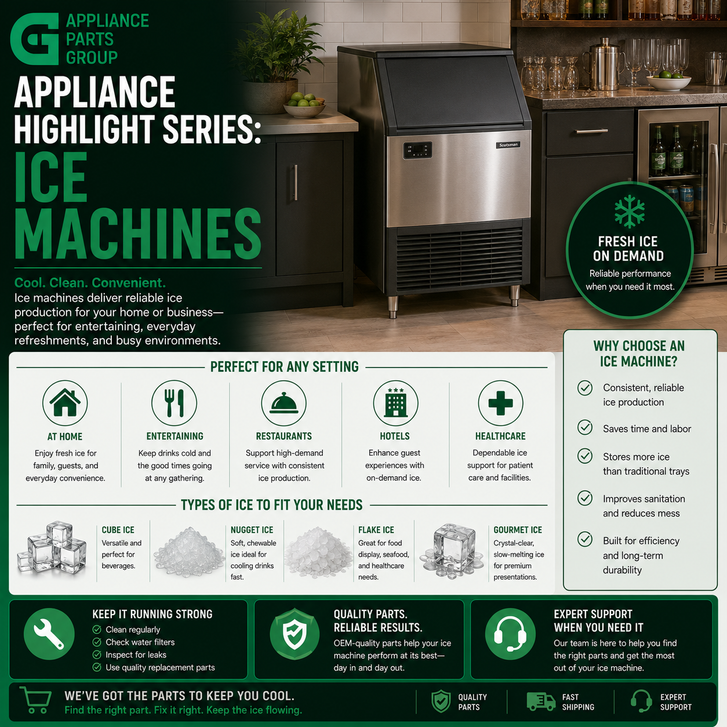
An ice machine is an appliance designed to automatically make ice. Some ice machines are small residential units built into refrigerators or installed under counters. Others are larger commercial machines used in restaurants, hotels, hospitals, convenience stores, cafeterias, and foodservice operations.
Although designs vary by brand and model, most ice machines follow the same basic process. Water enters the appliance, freezes on a mold or evaporator surface, releases during a harvest cycle, and drops into a storage bin. The machine repeats this process until the bin is full.
How Ice Machines Work
Water Fill Cycle
The process begins when the water inlet valve opens and allows water to enter the ice machine. In many units, the water flows into a reservoir, mold, or distribution system. If the water supply is restricted, the machine may produce small, hollow, or incomplete ice cubes.
Freeze Cycle
During the freeze cycle, the refrigeration system removes heat from the water. The compressor circulates refrigerant through the sealed system, while the evaporator provides the cold surface where ice forms. In cube-style machines, water may flow over an evaporator plate until ice builds to the proper thickness.
Harvest Cycle
Once the ice reaches the correct size or thickness, the machine enters the harvest cycle. Depending on the design, heat, mechanical movement, or a change in refrigerant flow helps release the ice from the mold or evaporator plate.
Storage Cycle
The harvested ice drops into a storage bin. A bin thermostat, sensor, or shutoff arm monitors the ice level and tells the machine when to stop making ice.
Common Types of Ice Machines
Refrigerator Ice Makers
These are built into residential refrigerators and freezers. They are common in household kitchens and usually produce crescent-shaped, cube-style, or specialty ice depending on the refrigerator model.
Undercounter Ice Machines
Undercounter models are often used in homes, offices, break rooms, bars, and small foodservice areas. They provide more ice than a standard refrigerator ice maker while fitting into a cabinet-style space.
Commercial Ice Machines
Commercial units are built for higher production and heavier use. Restaurants, hotels, healthcare facilities, and convenience stores rely on these machines for consistent ice output throughout the day.
Nugget, Flake, and Cube Ice Machines
Different applications require different ice styles. Cube ice is common for beverages, nugget ice is popular for soft chewable texture, and flake ice is often used for food displays, healthcare applications, and seafood storage.
Main Components of an Ice Machine
Water Inlet Valve
The water inlet valve controls water entering the machine. If the valve fails, clogs, or does not open properly, the ice machine may not fill with enough water.
Water Filter
The water filter helps reduce sediment, minerals, taste issues, and odors. A clogged or expired filter can restrict water flow and affect ice quality.
Evaporator Plate or Mold
The evaporator is the cold surface where ice forms. Scale buildup, damage, or poor temperature control can interfere with proper ice formation.
Compressor
The compressor moves refrigerant through the sealed cooling system. It is one of the most important components in the ice-making process.
Condenser Coil
The condenser coil releases heat from the refrigeration system. When the coil is covered with dust, grease, or debris, the machine may struggle to cool efficiently.
Condenser Fan Motor
The condenser fan motor helps move air across the condenser coil. If the fan motor fails, the machine may overheat or produce less ice.
Thermistor or Temperature Sensor
Thermistors and sensors help monitor temperatures inside the machine. A faulty sensor may cause the unit to cycle incorrectly.
Control Board
The control board manages the timing of the fill, freeze, harvest, and shutoff cycles. Electronic failures can create intermittent or complete ice production problems.
Drain Pump
Some undercounter ice machines use a drain pump to remove water. If the drain pump clogs or fails, the machine may leak, shut down, or display an error code.
Common Ice Machine Problems
Ice Machine Not Making Ice
If an ice machine is not making ice at all, start with the basics. Confirm the appliance has power, the water supply is turned on, and the bin is not already full. If those items check out, the issue may involve the water inlet valve, control board, thermostat, sensor, or refrigeration system.
Ice Machine Making Ice Slowly
Slow ice production is often caused by dirty condenser coils, poor airflow, warm room temperatures, scale buildup, or restricted water flow. A clogged water filter can also reduce output.
Small or Hollow Ice Cubes
Small or hollow cubes usually indicate a water supply problem. The filter may be clogged, the water pressure may be too low, or the inlet valve may not be allowing enough water into the machine.
Ice Tastes or Smells Bad
Bad-tasting ice is commonly related to water quality, an old water filter, or a dirty ice bin. Mold, mildew, food odors, and mineral buildup can also affect ice quality.
Ice Machine Leaking Water
Leaks may come from cracked water lines, loose fittings, blocked drains, damaged pumps, overflowing reservoirs, or faulty inlet valves. Water leaks should be addressed quickly to prevent cabinet, flooring, or equipment damage.
Ice Machine Is Noisy
Some operating noise is normal, especially during filling, freezing, and harvesting. However, grinding, buzzing, rattling, or loud fan noises may point to a worn motor, pump, valve, or loose component.
Step-by-Step Troubleshooting
- Confirm the ice machine is plugged in and receiving power.
- Make sure the appliance is turned on and not in cleaning, pause, or vacation mode.
- Check that the water supply valve is fully open.
- Inspect the water supply line for kinks, leaks, or restrictions.
- Replace the water filter if it is old, clogged, or past the recommended service interval.
- Check the ice bin level sensor, thermostat, or shutoff arm to make sure the machine is not falsely reading the bin as full.
- Inspect the condenser coil and clean away dust, lint, grease, or debris.
- Confirm the machine has proper airflow and enough clearance around vents.
- Look for scale buildup on the evaporator plate, reservoir, spray nozzles, or water distribution components.
- Listen for unusual noises from the fan motor, pump, compressor, or inlet valve.
- Check for error codes on electronic models and compare them to the appliance service information.
- If basic maintenance does not solve the issue, test components such as the inlet valve, thermistor, control board, pump, and fan motor.
Common Parts That May Need Replacement
Water Inlet Valve
A failing water inlet valve can prevent the machine from filling correctly. Symptoms may include no ice, small cubes, hollow cubes, or slow production.
Water Filter
Water filters are routine maintenance parts. Replacing the filter helps maintain water flow, taste, odor control, and overall ice quality.
Thermistor or Temperature Sensor
A faulty thermistor can cause the machine to misread temperatures, resulting in poor cycling, incomplete freezing, or harvest problems.
Control Board
The control board coordinates the machine’s major functions. If the board fails, the machine may not fill, freeze, harvest, or shut off properly.
Drain Pump
Drain pumps are common in undercounter models. A failed or clogged drain pump can lead to leaks, standing water, or shutdowns.
Condenser Fan Motor
The condenser fan motor helps remove heat from the appliance. If it stops working, the ice machine may overheat or make less ice.
Water Pump
Some ice machines use a water pump to circulate water over the evaporator. If the pump fails, ice may form unevenly or not at all.
Ice Maker Assembly
In residential refrigerators, the entire ice maker assembly may sometimes be replaced if internal mold heaters, motors, gears, or switches fail.
When replacing parts, model number accuracy is important. Ice machines often have brand-specific components, and even similar-looking parts may have different connectors, ratings, or mounting points. OEM replacement parts are designed to match the manufacturer’s specifications for fit and function.
Preventative Maintenance Tips
- Replace the water filter according to the manufacturer’s recommended schedule.
- Clean and sanitize the ice bin regularly.
- Clean condenser coils to prevent overheating and poor ice production.
- Inspect water lines and fittings for leaks or mineral buildup.
- Keep vents clear and maintain proper airflow around the machine.
- Use approved ice machine cleaner when removing scale from applicable models.
- Do not store food, bottles, or other items inside the ice bin.
- For commercial machines, follow a regular cleaning and service schedule.
Why Ice Machine Maintenance Matters
Ice machines combine water, refrigeration, airflow, electronics, and moving parts. Because they handle water constantly, mineral scale and buildup can develop over time. Because they remove heat during operation, dirty condenser coils and poor airflow can also reduce performance.
Regular maintenance helps protect the machine from unnecessary wear. It can also improve ice clarity, taste, production speed, and energy efficiency. In commercial settings, maintenance is especially important because a failed ice machine can disrupt daily operations and customer service.
When to Call a Professional
Many basic ice machine issues can be checked by a homeowner or maintenance team, including water filters, dirty coils, blocked vents, and visible leaks. However, some problems require professional service.
Call a qualified technician if the issue involves sealed-system refrigeration repairs, compressor testing, refrigerant leaks, complex electrical diagnostics, or repeated error codes. Commercial ice machines may also require professional cleaning and inspection based on local requirements or business policies.
Frequently Asked Questions
How often should an ice machine be cleaned?
Many ice machines should be cleaned and sanitized about every six months, though heavy-use commercial machines may need more frequent cleaning.
Why is my ice machine not making ice?
Common causes include no water supply, a clogged filter, a faulty water inlet valve, dirty condenser coils, a full-bin sensor issue, or a control problem.
Why is my ice machine making ice slowly?
Slow ice production is often caused by restricted airflow, dirty condenser coils, scale buildup, warm room temperatures, or low water flow.
Can a clogged water filter stop ice production?
Yes. A clogged filter can reduce water flow enough to cause small cubes, hollow cubes, slow production, or no ice at all.
Why do my ice cubes taste bad?
Bad-tasting ice can come from an expired water filter, dirty ice bin, mineral buildup, food odors, or water quality issues.
What causes hollow ice cubes?
Hollow cubes usually point to insufficient water flow during the freeze cycle. The water filter, supply line, or inlet valve may need attention.
Why is my ice machine leaking?
Leaks can be caused by loose fittings, cracked water lines, blocked drains, overflowing reservoirs, or a faulty drain pump or inlet valve.
Do dirty condenser coils affect ice production?
Yes. Dirty condenser coils reduce cooling efficiency and can make the machine produce ice slowly or shut down due to overheating.
What parts commonly fail in ice machines?
Common replacement parts include water inlet valves, water filters, thermistors, control boards, pumps, fan motors, and ice maker assemblies.
Should I use OEM replacement parts for an ice machine?
OEM replacement parts are designed to match the original manufacturer specifications for fit, performance, and reliability.
How do I find the correct ice machine part?
Use the appliance model number to match the correct replacement part. The model number is usually found on a rating label or data plate.
When should I replace an ice machine instead of repairing it?
Replacement may make more sense if the machine has major sealed-system failure, repeated breakdowns, severe corrosion, or repair costs that approach the price of a new unit.
Entities and Terms
- Ice Machine
- Ice Maker Assembly
- Water Inlet Valve
- Water Filter
- Evaporator Plate
- Compressor
- Condenser Coil
- Condenser Fan Motor
- Thermistor
- Temperature Sensor
- Control Board
- Drain Pump
- Water Pump
- Ice Bin Thermostat
- Water Supply Line
- Harvest Cycle
- Freeze Cycle
- Storage Bin
- OEM Replacement Parts
This article was written by an AI program as part of a beta test by Appliance Parts Group to explore how artificial intelligence can help inform and educate our customers.
Our goal is to use AI tools to provide clear, reliable information so you can make confident, well-informed purchasing decisions.