
Key Takeaways
- Freezers play a critical role in food preservation by maintaining temperatures at or below 0°F.
- Different freezer styles offer unique benefits for storage capacity, organization, and energy efficiency.
- Key components such as compressors, evaporator fans, thermostats, and door gaskets keep freezers operating properly.
- Many common freezer problems can be diagnosed through simple troubleshooting steps.
- Routine maintenance can extend the lifespan of your freezer and help prevent costly repairs.
Introduction
When most homeowners think about major appliances, refrigerators, washers, and dryers often receive the most attention. However, freezers are among the hardest-working appliances in any home. Whether integrated into a refrigerator, positioned in a garage as a standalone unit, or used in a commercial setting, freezers help preserve food, reduce waste, and save money.
Modern freezers are designed to maintain consistently low temperatures that slow bacterial growth and preserve food quality for extended periods. From chest freezers packed with bulk purchases to upright freezers offering convenient organization, these appliances provide valuable storage solutions for households of every size.
In this Appliance Highlight Series article, we'll explore how freezers work, common freezer types, key components, troubleshooting tips, replacement parts, and maintenance practices that can help keep your freezer running efficiently for years.
What Is a Freezer and How Does It Work?
A freezer is a refrigeration appliance specifically designed to maintain temperatures below the freezing point of water. Most residential freezers operate at approximately 0°F (-18°C), which helps preserve food quality and safety.
Freezers operate using a refrigeration cycle that continuously removes heat from the interior compartment and releases it outside the appliance. This process relies on several key components working together:
- Compressor
- Condenser coils
- Evaporator coils
- Evaporator fan motor
- Thermostat or temperature control system
- Defrost system
As refrigerant circulates through the system, it absorbs heat from inside the freezer and transfers it outdoors, maintaining consistently cold temperatures.
Types of Freezers
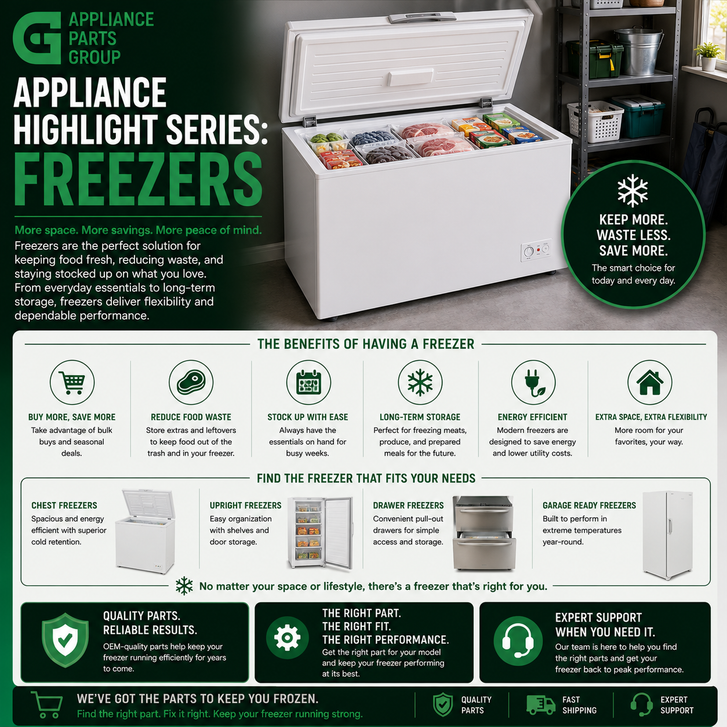
Chest Freezers
Chest freezers feature a top-opening lid and provide excellent storage capacity. Their design minimizes cold air loss when opened because cold air naturally remains inside the compartment.
Advantages include:
- Excellent energy efficiency
- Large storage capacity
- Longer food preservation during power outages
- Typically lower purchase cost
Upright Freezers
Upright freezers resemble refrigerators and offer shelving and door storage for easier organization.
Advantages include:
- Easy access to food items
- Better organization
- Smaller footprint
- Automatic defrost options
Built-In Freezers
Built-in freezers are designed to integrate seamlessly with kitchen cabinetry. These premium units provide high-end aesthetics and advanced temperature management features.
Drawer Freezers
Common in luxury kitchens, drawer-style freezers provide convenient access while maintaining a streamlined appearance.
Commercial Freezers
Restaurants, grocery stores, and food service operations often rely on commercial freezers designed for heavy-duty use and larger storage requirements.
Essential Freezer Components
Several components work together to keep a freezer operating efficiently.
Compressor
The compressor acts as the heart of the refrigeration system. It pressurizes refrigerant and circulates it throughout the cooling system.
Evaporator Fan Motor
The evaporator fan distributes cold air throughout the freezer compartment, helping maintain consistent temperatures.
Condenser Fan Motor
This fan helps remove heat from the condenser coils and improves cooling efficiency.
Thermostat
The thermostat monitors temperature and signals the cooling system when adjustments are needed.
Defrost Heater
Automatic defrost systems use heaters to remove frost buildup from evaporator coils.
Door Gasket
The door gasket creates an airtight seal that prevents warm air from entering the freezer.
Temperature Sensors
Modern freezers use electronic sensors to monitor and regulate temperature accurately.
Benefits of Owning a Dedicated Freezer
Many homeowners invest in standalone freezers because they offer significant advantages.
- Additional food storage capacity
- Ability to buy food in bulk
- Reduced grocery trips
- Better meal preparation flexibility
- Lower food waste
- Emergency food storage capability
For large families, hunters, gardeners, and meal-prepping households, a dedicated freezer can quickly become one of the most valuable appliances in the home.
Common Freezer Problems
Like any appliance, freezers can experience operational issues over time.
Freezer Not Cooling Properly
Possible causes include:
- Dirty condenser coils
- Faulty compressor
- Defective thermostat
- Failed evaporator fan motor
- Low refrigerant levels
Excessive Frost Buildup
Common causes include:
- Damaged door gasket
- Defrost system failure
- Frequent door openings
- Humidity entering the freezer
Unusual Noises
Noises may originate from:
- Fan motors
- Compressor operation
- Loose components
- Ice accumulation around moving parts
Water Leaks
Leaks can occur when:
- Defrost drains become clogged
- Ice melts due to temperature fluctuations
- Door seals fail
Freezer Running Constantly
Potential causes include:
- Dirty coils
- Poor airflow
- Faulty thermostat
- Worn door gasket
- Overloaded freezer compartment
Step-by-Step Troubleshooting
- Verify Temperature Settings
Ensure the freezer is set to approximately 0°F.
- Inspect the Door Seal
Look for cracks, tears, or gaps that may allow warm air inside.
- Check Airflow
Make sure food packages are not blocking air vents.
- Clean Condenser Coils
Dust and debris reduce cooling efficiency and increase energy consumption.
- Listen for Fan Operation
Confirm that evaporator and condenser fans are running properly.
- Inspect for Frost Buildup
Heavy frost may indicate a defrost system issue.
- Check Interior Lighting and Controls
Electronic control failures can affect freezer performance.
- Evaluate Compressor Operation
If the compressor is not running or repeatedly clicking, professional diagnosis may be required.
Common Parts That May Need Replacement
Over the lifespan of a freezer, certain components may eventually wear out and require replacement.
- Door gaskets
- Evaporator fan motors
- Condenser fan motors
- Temperature control thermostats
- Defrost heaters
- Defrost thermostats
- Temperature sensors
- Start relays
- Compressor overload protectors
- Storage baskets and shelves
- Door hinges
- Electronic control boards
Using OEM replacement parts helps ensure proper fit, compatibility, and long-term reliability.
Preventative Maintenance Tips
Regular maintenance can improve freezer performance and extend appliance lifespan.
Clean Condenser Coils Annually
Dust-covered coils force the refrigeration system to work harder.
Inspect Door Gaskets
Replace worn seals to prevent energy loss and frost accumulation.
Maintain Proper Airflow
Avoid overpacking the freezer and keep air vents unobstructed.
Monitor Temperature
Periodically verify that temperatures remain near 0°F.
Defrost When Necessary
Manual-defrost models should be defrosted whenever ice accumulation becomes excessive.
Keep the Exterior Clean
Removing dust and debris improves overall appliance efficiency.
The Future of Freezer Technology
Modern freezer technology continues to evolve with innovations focused on efficiency, food preservation, and convenience.
Emerging features include:
- Smart temperature monitoring
- Wi-Fi connectivity
- Advanced inverter compressors
- Improved insulation materials
- Energy-saving operating modes
- Enhanced food preservation zones
These innovations help consumers reduce energy usage while improving food storage performance.
Frequently Asked Questions
What temperature should a freezer be set to?
Most manufacturers recommend maintaining a freezer temperature of 0°F (-18°C).
How long do freezers typically last?
Many freezers operate reliably for 12 to 20 years with proper maintenance.
Why is my freezer building up frost?
Frost often results from warm air entering through damaged seals or defrost system failures.
How often should condenser coils be cleaned?
Cleaning once or twice per year is generally recommended.
Can a freezer be kept in a garage?
Many models can, but performance depends on ambient temperature conditions and manufacturer specifications.
Why is my freezer making unusual noises?
Fan motors, compressors, and ice buildup are common sources of freezer noise.
How full should a freezer be?
A moderately full freezer often operates more efficiently than one that is nearly empty.
What causes a freezer to stop cooling?
Possible causes include compressor issues, fan failures, thermostat problems, or dirty coils.
When should a door gasket be replaced?
Replace the gasket if cracks, tears, or sealing issues are present.
Are chest freezers more efficient than upright freezers?
In many cases, chest freezers are more energy efficient because they lose less cold air when opened.
How can I reduce freezer energy consumption?
Keep coils clean, maintain door seals, and avoid frequent door openings.
What replacement parts fail most often?
Door gaskets, fan motors, thermostats, and defrost components are among the most commonly replaced parts.
Entities and Terms
- Freezer
- Compressor
- Condenser Coil
- Evaporator Coil
- Evaporator Fan Motor
- Condenser Fan Motor
- Thermostat
- Defrost Heater
- Defrost Thermostat
- Temperature Sensor
- Door Gasket
- Start Relay
- Control Board
- Storage Basket
- Shelf Assembly
This article was written by an AI program as part of a beta test by Appliance Parts Group to explore how artificial intelligence can help inform and educate our customers.
Our goal is to use AI tools to provide clear, reliable information so you can make confident, well-informed purchasing decisions.