
Key Takeaways
- Commercial refrigeration equipment protects inventory, food safety, and daily business operations.
- Common failure points include door gaskets, fan motors, thermostats, start components, defrost parts, and temperature controls.
- Warm cabinet temperatures, frost buildup, short cycling, and noisy operation are early warning signs.
- Routine cleaning and inspection can reduce emergency repair calls and extend equipment life.
- Using the correct OEM replacement part helps maintain fit, performance, and long-term reliability.
Introduction
Commercial refrigeration is one of the most important appliance categories for restaurants, convenience stores, bakeries, cafeterias, grocery operations, medical storage rooms, and foodservice businesses. Unlike a home refrigerator, a commercial refrigeration system may run through constant door openings, heavy product loads, warm kitchen temperatures, grease, dust, and long operating hours.
When a commercial refrigerator or freezer starts losing temperature, the problem is more than an inconvenience. It can affect food quality, inventory cost, customer service, and compliance with safe cold storage practices. Many operators first notice small warning signs: a reach-in cooler runs longer than usual, a walk-in cooler door does not seal tightly, a freezer develops frost around the evaporator, or the temperature display begins drifting upward.
This Appliance Highlight Series guide explains how commercial refrigeration works, what parts commonly fail, how to troubleshoot temperature problems, and when replacement parts may be needed.
What Is Commercial Refrigeration?
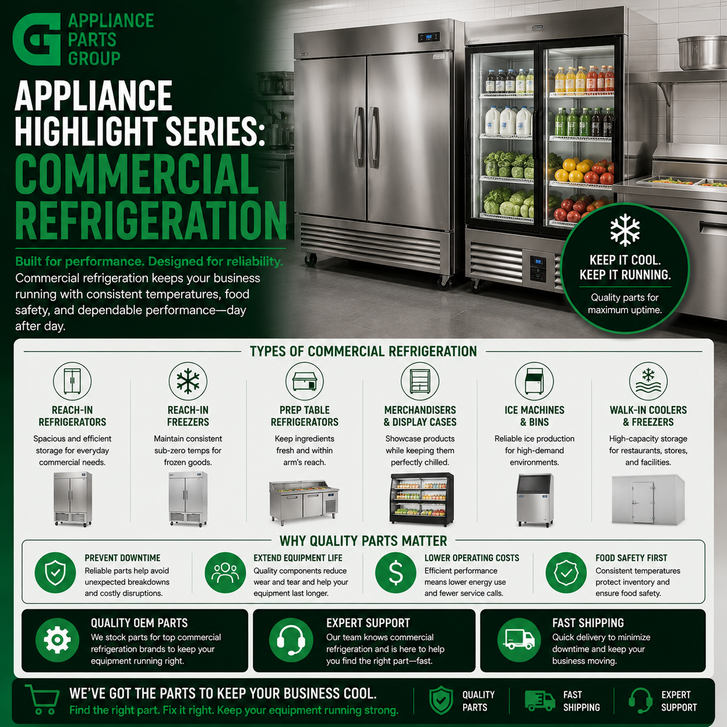
Commercial refrigeration refers to refrigeration equipment designed for business, foodservice, retail, and institutional use. Common examples include reach-in refrigerators, reach-in freezers, prep tables, undercounter coolers, merchandisers, display cases, walk-in coolers, walk-in freezers, ice cream cabinets, and refrigerated beverage units.
These systems use the same basic refrigeration cycle as residential refrigerators, but they are built for heavier use. A compressor circulates refrigerant through the system. The condenser releases heat. The evaporator absorbs heat from inside the cabinet or room. Fan motors move air across coils, while thermostats, sensors, control boards, relays, switches, and defrost parts manage operation.
Why Commercial Refrigeration Parts Matter
Commercial refrigeration depends on many components working together. A small part can cause a major performance issue. A torn door gasket may let warm air enter the cabinet. A weak evaporator fan motor may reduce airflow and create uneven temperatures. A failing temperature control may cause the compressor to run too long or not long enough.
Because commercial units are often used in high-demand environments, part fit and performance are especially important. OEM replacement parts are designed to match the original equipment specifications for the model. This can help with installation accuracy, correct electrical ratings, airflow, sealing, and long-term dependability.
Common Commercial Refrigeration Problems
Commercial Refrigerator Not Cooling
A commercial refrigerator that is not cooling may have dirty condenser coils, a failed condenser fan motor, a weak compressor start component, a faulty thermostat, an evaporator fan issue, or a sealed-system problem. Before assuming the compressor has failed, check airflow, door sealing, temperature settings, and coil cleanliness.
Commercial Freezer Building Frost
Frost buildup can be caused by frequent door openings, damaged gaskets, a clogged drain, a failed defrost heater, a bad defrost timer, a faulty termination thermostat, or poor evaporator airflow. Heavy frost can block air movement and make the freezer appear to run constantly.
Walk-In Cooler Running Constantly
A walk-in cooler that runs continuously may be struggling with heat load, poor door sealing, dirty condenser coils, low refrigerant, failing fan motors, or incorrect control settings. Continuous operation increases wear on the compressor and electrical components.
Temperature Fluctuations
Temperature swings may point to a failing thermostat, sensor, control board, door switch, evaporator fan, condenser fan, or defrost system. In some cases, the issue is operational: overloading shelves, blocking vents, or placing hot product directly into the cooler.
Noisy Operation
Rattling, grinding, buzzing, or squealing sounds can come from worn fan motors, loose brackets, vibrating panels, failing compressor components, or ice contacting the evaporator fan blade. A new noise should be inspected before it becomes a full equipment failure.
Step-by-Step Troubleshooting
- Check the temperature setting. Confirm the thermostat or digital control is set correctly for the application.
- Inspect the door gasket. Look for cracks, tears, gaps, hardened rubber, or sections pulling away from the liner.
- Verify the door closes fully. Check hinges, latches, closers, and door alignment.
- Look for blocked airflow. Make sure product is not packed tightly against vents or evaporator fans.
- Clean the condenser coil. Dust, grease, and debris restrict heat removal and make the system work harder.
- Check the condenser fan. The fan should run smoothly when the condensing unit is operating.
- Check the evaporator fan. Weak or stopped airflow can create warm spots and frost problems.
- Look for frost or ice buildup. Heavy ice on the evaporator may indicate a defrost or airflow issue.
- Inspect the drain line. A clogged drain can cause water leaks, ice buildup, and cabinet moisture problems.
- Listen for compressor cycling. Rapid clicking, humming, or short cycling may point to start components or electrical problems.
- Check model and serial information. Use the equipment tag when ordering replacement parts.
- Call a licensed refrigeration technician when needed. Refrigerant, sealed-system, and high-voltage repairs should be handled by qualified professionals.
Common Parts That May Need Replacement
Door Gaskets
Door gaskets seal cold air inside the cabinet. A damaged gasket allows warm, moist air to enter, which can lead to longer run times, frost buildup, sweating, and temperature instability. Gaskets are among the most common commercial refrigeration replacement parts.
Evaporator Fan Motors and Blades
The evaporator fan circulates cold air inside the refrigerated space. If the motor fails or the blade is damaged, temperatures may become uneven. You may also hear scraping or rattling if ice contacts the fan blade.
Condenser Fan Motors
The condenser fan helps remove heat from the refrigeration system. A failing fan motor can cause high head pressure, poor cooling, overheating, and compressor strain.
Thermostats and Temperature Controls
Mechanical thermostats, digital controls, and temperature sensors tell the unit when to start and stop cooling. A faulty control can cause warm temperatures, freezing, short cycling, or continuous operation.
Defrost Timers, Heaters, and Thermostats
Freezers and some medium-temperature systems use defrost components to prevent evaporator ice buildup. A failed defrost heater, timer, sensor, or termination thermostat can leave the coil packed with ice.
Start Relays, Capacitors, and Overloads
Compressor start components help the compressor start and run properly. Clicking, humming, or repeated start attempts may indicate a start relay, capacitor, or overload problem.
Door Hinges, Closers, and Latches
Commercial refrigeration doors take a lot of abuse. Worn hinges, weak closers, or damaged latches can prevent the gasket from sealing correctly.
Drain Pans, Drain Lines, and Heaters
Drain components move defrost water away from the evaporator. If the drain freezes or clogs, water may leak inside the cabinet or freeze on the floor.
Preventative Maintenance Tips
Preventative maintenance is one of the best ways to reduce emergency refrigeration repairs. Clean condenser coils regularly, especially in kitchens where grease and dust collect quickly. Inspect door gaskets often and replace them when they no longer seal. Keep shelving organized so air can move freely through the cabinet.
Do not overload the unit or block evaporator fans. Avoid placing hot pans or warm product directly into the refrigerator. Check temperature logs, listen for new noises, and inspect drain areas for standing water or ice. For walk-in coolers and freezers, make sure doors close fully and strip curtains, sweeps, hinges, and closers are in good condition.
OEM Commercial Refrigeration Parts from Appliance Parts Group
Appliance Parts Group helps customers find replacement parts for many appliance and refrigeration categories. When searching for commercial refrigeration parts, always start with the model number and serial number from the equipment tag. This helps identify the correct gasket, fan motor, control, relay, sensor, switch, or defrost component.
Commercial refrigeration repairs can involve electrical components, moving parts, sharp metal edges, and refrigerant systems. Disconnect power before basic inspection or part replacement, and contact a qualified technician for sealed-system repairs, refrigerant work, or any repair you are not comfortable performing.
Frequently Asked Questions
What is commercial refrigeration?
Commercial refrigeration includes refrigerators, freezers, coolers, and display equipment designed for business use in restaurants, stores, kitchens, and foodservice facilities.
Why is my commercial refrigerator not cooling?
Common causes include dirty condenser coils, bad door gaskets, failed fan motors, thermostat problems, start component issues, or sealed-system concerns.
How often should commercial refrigerator coils be cleaned?
Many busy kitchens should inspect coils monthly or more often if grease, dust, or debris builds up quickly.
What causes frost inside a commercial freezer?
Frost may be caused by warm air entering through a bad gasket, frequent door openings, poor airflow, or a failed defrost component.
Can a bad door gasket affect cooling?
Yes. A damaged gasket lets warm air enter the cabinet, which can cause longer run times, frost, sweating, and higher internal temperatures.
What does an evaporator fan motor do?
The evaporator fan motor moves cold air through the cabinet or cooler space so temperatures stay consistent.
What does a condenser fan motor do?
The condenser fan motor helps remove heat from the refrigeration system. If it fails, the unit may overheat or stop cooling properly.
Why is my commercial refrigerator running all the time?
Continuous operation can be caused by dirty coils, warm room conditions, bad gaskets, low airflow, overloaded storage, or control problems.
Should I use the model number when ordering parts?
Yes. The model number is the best way to match the correct OEM replacement part to your equipment.
Can I replace a commercial refrigerator gasket myself?
Many gaskets are replaceable with basic tools, but the correct part and proper installation are important for a tight seal.
When should I call a refrigeration technician?
Call a qualified technician for refrigerant work, sealed-system repairs, compressor diagnosis, electrical issues, or repeated temperature failures.
What parts commonly fail on commercial refrigeration equipment?
Common replacement parts include gaskets, fan motors, thermostats, sensors, defrost heaters, timers, relays, capacitors, hinges, and latches.
Entities and Terms
- Commercial refrigerator
- Commercial freezer
- Walk-in cooler
- Walk-in freezer
- Reach-in refrigerator
- Compressor
- Condenser coil
- Evaporator coil
- Evaporator fan motor
- Condenser fan motor
- Door gasket
- Thermostat
- Temperature sensor
- Defrost heater
- Defrost timer
- Start relay
- Run capacitor
- Door hinge
- Door latch
- Drain line
This article was written by an AI program as part of a beta test by Appliance Parts Group to explore how artificial intelligence can help inform and educate our customers.
Our goal is to use AI tools to provide clear, reliable information so you can make confident, well-informed purchasing decisions.