
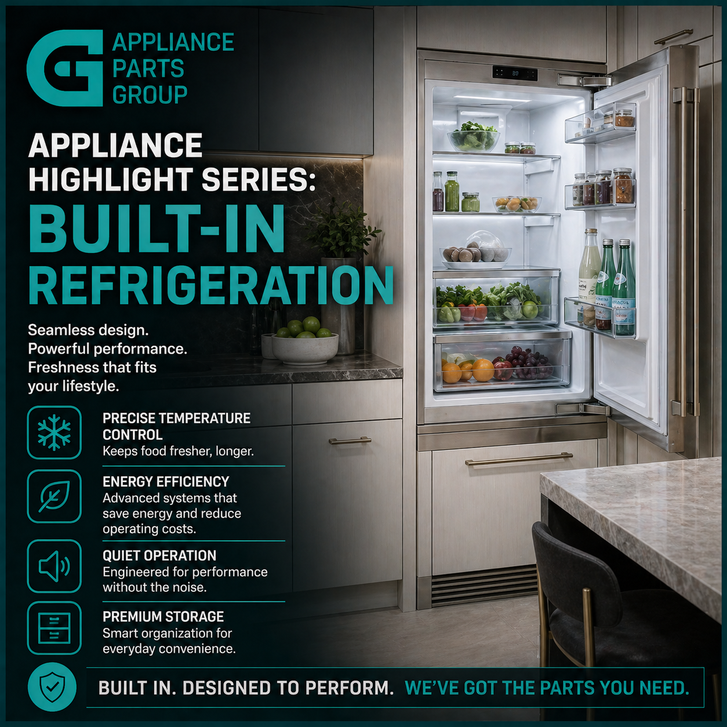
Key Takeaways
- Built-in refrigerators offer seamless integration with cabinetry for a high-end kitchen aesthetic.
- They provide superior temperature control and food preservation compared to many freestanding models.
- Common configurations include side-by-side, bottom freezer, and column refrigeration systems.
- Proper installation and ventilation are critical for long-term performance.
- OEM replacement parts ensure reliability and maintain manufacturer standards.
Introduction
Built-in refrigeration has become a defining feature of modern luxury kitchens. Unlike standard refrigerators that sit independently, built-in units are designed to blend seamlessly into cabinetry, offering a clean, integrated look that enhances both functionality and aesthetics.
Homeowners investing in premium appliances often turn to brands like Subzero, Thermador, and Bosch for their built-in refrigeration solutions. But beyond the visual appeal, these systems offer advanced cooling technologies, customizable storage, and long-term durability.
In this Appliance Highlight Series, we’ll explore how built-in refrigeration works, its benefits, common issues, and how to maintain it for peak performance.
What Is Built-In Refrigeration?
Built-in refrigerators are designed to be installed flush with kitchen cabinetry. Unlike freestanding units, they are typically deeper, taller, and often require professional installation. Many models also allow for custom paneling to match surrounding cabinets.
Common Types of Built-In Refrigeration
- Side-by-Side Built-In Refrigerators
- Bottom Freezer Built-In Units
- Column Refrigeration (separate fridge and freezer units)
- Drawer Refrigerators
- Wine and Beverage Coolers
Key Features and Benefits
Seamless Kitchen Design
Built-in units align perfectly with cabinetry, eliminating gaps and protrusions. This creates a streamlined, professional kitchen appearance.
Advanced Temperature Control
Many built-in systems use dual compressors and evaporators, allowing independent control of refrigerator and freezer environments.
Improved Food Preservation
Humidity-controlled drawers, air purification systems, and precise cooling help extend the life of fresh food.
Customization Options
Panel-ready models allow homeowners to match their refrigerator to cabinetry for a fully integrated look.
Common Problems with Built-In Refrigerators
Not Cooling Properly
This is one of the most common issues and may be caused by:
- Dirty condenser coils
- Faulty evaporator fan motor
- Malfunctioning thermostat
Excessive Frost Build-Up
- Defrost heater failure
- Defrost thermostat issues
- Door seal leaks
Water Leaks
- Clogged defrost drain
- Damaged water inlet valve
- Cracked water lines
Unusual Noises
- Worn condenser fan motor
- Evaporator fan obstruction
- Compressor issues
Step-by-Step Troubleshooting
- Check power supply and ensure the unit is plugged in.
- Inspect temperature settings and adjust if necessary.
- Clean condenser coils to improve airflow.
- Verify that vents inside the refrigerator are not blocked.
- Examine door seals for gaps or damage.
- Listen for fan operation to confirm motors are working.
- Check for error codes on digital displays.
- Inspect the defrost system if frost is present.
- Ensure proper ventilation around the unit.
- Consult a professional technician if issues persist.
Common Parts That May Need Replacement
Built-in refrigerators rely on high-quality components. Over time, certain parts may wear out and require replacement:
- Compressor
- Evaporator Fan Motor
- Condenser Fan Motor
- Defrost Heater
- Thermostat / Temperature Sensor
- Door Gaskets
- Water Inlet Valve
- Ice Maker Assembly
Using OEM replacement parts ensures compatibility and maintains the integrity of your appliance.
Installation Considerations
Proper Ventilation
Built-in units require adequate airflow to prevent overheating. Poor ventilation can lead to compressor failure.
Electrical Requirements
These appliances often require dedicated circuits to handle their power demands.
Professional Installation
Due to their size and complexity, professional installation is highly recommended.
Preventative Maintenance Tips
- Clean condenser coils every 6–12 months
- Inspect and clean door seals regularly
- Keep vents clear for proper airflow
- Replace water filters as recommended
- Monitor temperature settings periodically
- Schedule annual professional maintenance
Frequently Asked Questions
What is the lifespan of a built-in refrigerator?
Most built-in refrigerators last 15–20 years with proper maintenance.
Are built-in refrigerators worth the cost?
They offer premium aesthetics, performance, and longevity, making them a valuable investment for many homeowners.
Can I replace a built-in refrigerator with a standard one?
It’s possible but may require cabinet modifications due to size differences.
Why is my built-in refrigerator not cooling?
Common causes include dirty coils, faulty fans, or thermostat issues.
How often should I clean condenser coils?
Every 6–12 months depending on usage and environment.
Do built-in refrigerators require special installation?
Yes, professional installation is recommended for proper fit and ventilation.
What is a column refrigerator?
A modular system with separate refrigerator and freezer units installed side-by-side.
Why is my refrigerator making noise?
Noises may come from fans, compressors, or airflow obstructions.
How do I prevent frost build-up?
Ensure door seals are tight and the defrost system is functioning properly.
Are OEM parts better than aftermarket parts?
OEM parts are designed specifically for your appliance, ensuring proper fit and performance.
Entities and Terms
- Compressor
- Evaporator Coil
- Condenser Coil
- Thermostat
- Defrost Heater
- Fan Motor
- Door Gasket
- Water Inlet Valve
- Ice Maker Assembly
This article was written by an AI program as part of a beta test by Appliance Parts Group to explore how artificial intelligence can help inform and educate our customers.
Our goal is to use AI tools to provide clear, reliable information so you can make confident, well-informed purchasing decisions.