
Key Takeaways
- Gaskets and seals are essential for maintaining airtight and watertight conditions in appliances.
- Worn or damaged seals can lead to energy loss, leaks, and poor appliance performance.
- Common issues include cracking, warping, mold buildup, and loss of elasticity.
- Replacing faulty gaskets is often an affordable and effective repair solution.
- Regular cleaning and maintenance can significantly extend gasket lifespan.
Introduction
When it comes to appliance performance, most homeowners focus on motors, compressors, or electronic components. However, one of the most critical—and often overlooked—parts of any appliance is the gasket or seal. These flexible components play a vital role in maintaining internal conditions, preventing leaks, and ensuring energy efficiency.
From refrigerators and ovens to dishwashers and washing machines, gaskets and seals are constantly exposed to heat, moisture, pressure, and daily wear. Over time, they can degrade, leading to noticeable problems that affect both performance and utility costs.
What Are Appliance Gaskets and Seals?
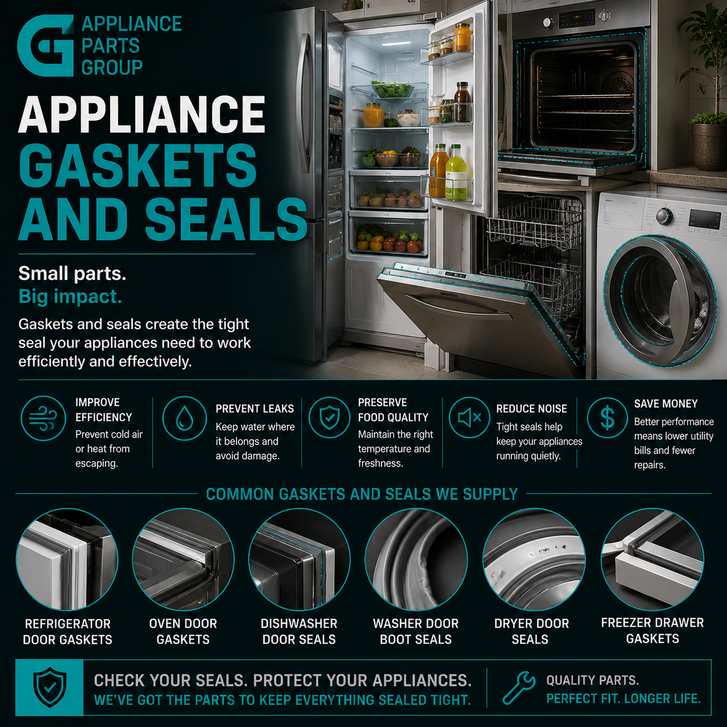
Gaskets and seals are flexible materials—typically made of rubber, silicone, or specialized polymers—designed to create a tight barrier between two surfaces. Their primary function is to prevent air, water, or heat from escaping or entering areas where they shouldn’t.
They are commonly found in:
- Refrigerator and freezer doors
- Oven doors
- Dishwasher doors
- Washing machine doors and tubs
- Dryer systems
Common Types of Appliance Gaskets and Seals
Refrigerator Door Gaskets
These seals keep cold air inside the fridge and warm air out. A failing gasket can cause the compressor to work harder, increasing energy consumption.
Oven Door Seals
Designed to withstand high temperatures, oven seals ensure heat stays inside for consistent cooking results.
Dishwasher Door Seals
These prevent water from leaking during wash cycles and maintain internal pressure.
Washer Door Boot Seals
Front-load washers use rubber boots to keep water contained during operation while allowing drum movement.
Dryer Drum Seals
Dryer seals maintain proper airflow and prevent heat loss, improving drying efficiency.
Signs Your Gasket or Seal Is Failing
- Visible cracks or tears
- Warping or looseness
- Condensation buildup
- Water leaks around doors
- Increased energy bills
- Mold or mildew growth
- Appliance not maintaining temperature
Main Causes of Gasket and Seal Failure
Normal Wear and Tear
Daily use causes gradual degradation, especially in high-use appliances like refrigerators and washers.
Exposure to Heat and Moisture
Extreme temperatures and humidity can cause materials to crack or lose flexibility.
Poor Maintenance
Dirt, grease, and debris can prevent proper sealing and accelerate wear.
Mold and Mildew Growth
Especially common in washers and dishwashers, mold can break down rubber materials over time.
Step-by-Step Troubleshooting
- Inspect the gasket: Look for visible damage such as cracks, gaps, or warping.
- Perform the paper test: Close the door on a piece of paper. If it slides out easily, the seal may be weak.
- Check for leaks: Look for water or air escaping during operation.
- Clean the gasket: Use warm soapy water and a soft cloth to remove debris and buildup.
- Test appliance performance: Monitor temperature consistency or water containment.
- Replace if necessary: If cleaning doesn’t resolve the issue, install a new OEM gasket.
Common Parts That May Need Replacement
- Refrigerator door gasket
- Freezer seal
- Oven door gasket
- Dishwasher door seal
- Washer door boot seal
- Dryer drum seal
- Tub-to-pump seals
- Valve seals
Using OEM replacement parts ensures proper fit, durability, and compatibility with your appliance model.
Preventative Maintenance Tips
- Clean gaskets regularly with mild detergent
- Dry seals after each use to prevent mold growth
- Avoid slamming appliance doors
- Inspect seals every few months for early signs of wear
- Apply a light coat of petroleum jelly (for some gaskets) to maintain flexibility
- Ensure proper alignment of doors and latches
Frequently Asked Questions
What does an appliance gasket do?
It creates a seal that prevents air, water, or heat from escaping or entering the appliance.
How do I know if my refrigerator gasket is bad?
Look for gaps, condensation, or increased energy usage.
Can I replace a gasket myself?
Yes, most gaskets are designed for DIY replacement with basic tools.
How long do appliance gaskets last?
Typically 5–10 years depending on usage and maintenance.
Why is my dishwasher leaking?
A worn or damaged door seal is a common cause.
Can mold damage a gasket?
Yes, mold can weaken and degrade the material over time.
Are OEM gaskets better than generic ones?
OEM parts are designed specifically for your appliance, ensuring proper fit and performance.
How do I clean a gasket?
Use warm water, mild soap, and a soft cloth or brush.
Why is my washer door seal smelly?
Mold and mildew buildup are usually the cause.
Do dryer seals affect performance?
Yes, damaged seals can reduce efficiency and increase drying time.
Can a bad seal increase energy bills?
Yes, appliances must work harder when seals are compromised.
Is it worth replacing a gasket?
In most cases, yes—it’s a cost-effective way to restore performance.
Entities and Terms
- Door gasket
- Rubber seal
- Silicone gasket
- Washer boot seal
- Dryer drum seal
- Oven gasket
- Dishwasher seal
- Compressor
- Heating element
- Water inlet valve
- Airflow system
This article was written by an AI program as part of a beta test by Appliance Parts Group to explore how artificial intelligence can help inform and educate our customers.
Our goal is to use AI tools to provide clear, reliable information so you can make confident, well-informed purchasing decisions.