
Key Takeaways
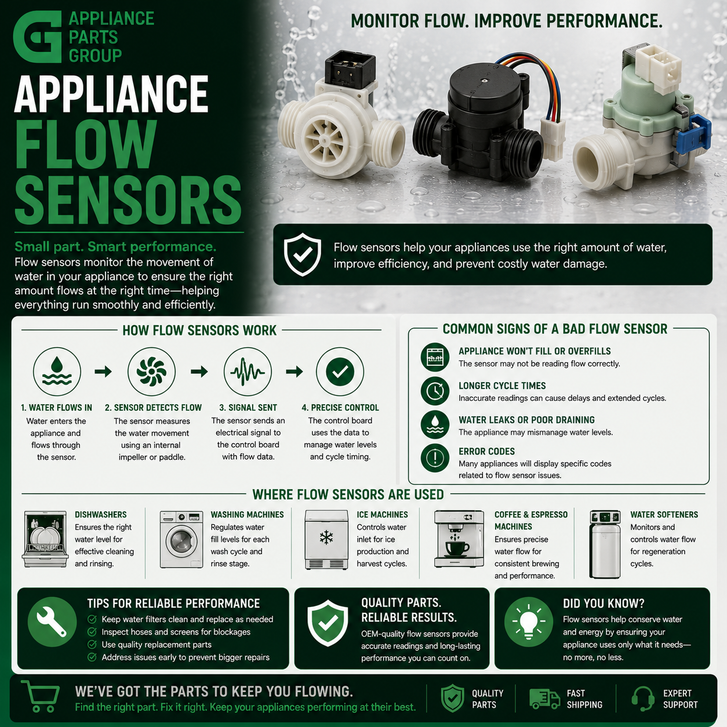
- Flow sensors monitor the movement of water or air through appliance systems.
- Modern dishwashers, refrigerators, water dispensers, and some washing machines rely on flow sensors for proper operation.
- A faulty flow sensor can cause filling problems, error codes, poor performance, or appliance shutdowns.
- Many flow sensor issues stem from mineral buildup, debris, wiring faults, or component wear.
- Using OEM replacement parts helps maintain proper compatibility and performance.
Introduction
Modern appliances use electronic components to improve efficiency, conserve resources, and provide more reliable operation. One component that often goes unnoticed is the appliance flow sensor. While relatively small, this device helps appliances monitor and regulate the movement of water or air throughout their systems.
Flow sensors are commonly found in dishwashers, refrigerators with water dispensers, ice makers, washing machines, water filtration systems, and some commercial appliances. When a flow sensor fails, an appliance may struggle to fill correctly, display error codes, stop mid-cycle, or experience reduced performance.
What Is an Appliance Flow Sensor?
A flow sensor is a device designed to measure the rate at which a fluid or gas moves through a system. In household appliances, flow sensors most commonly monitor water movement, although some systems use sensors to track airflow.
The information collected by the sensor is sent to the appliance control board. The control board then uses this data to determine how much water enters the appliance, whether flow is restricted, and whether the appliance can safely continue operating.
How Appliance Flow Sensors Work
Most appliance flow sensors contain a small turbine, paddle wheel, magnetic rotor, or electronic sensing mechanism. As water moves through the sensor housing, the internal component rotates or generates electrical signals.
The sensor converts this movement into pulses that are sent to the appliance control board. By counting these pulses, the board estimates the volume and speed of water passing through the system.
Appliances That Commonly Use Flow Sensors
Dishwashers
Many dishwashers use flow sensors to verify that the correct amount of water enters the tub during wash and rinse cycles.
Refrigerators
Refrigerators with water dispensers, ice makers, and internal filtration systems may use flow sensors to regulate water delivery.
Washing Machines
High-efficiency washers may use flow sensors to help control fill levels while reducing water usage.
Water Filtration Systems
Some filtration systems use flow sensors to monitor usage and help track filter life.
Symptoms of a Faulty Flow Sensor
- Appliance fails to fill with water
- Slow filling cycles
- Unexpected cycle interruptions
- Error codes related to water supply
- Water dispenser not working properly
- Ice maker production problems
- Poor washing or cleaning performance
- Long cycle times
- Inconsistent water levels
Common Causes of Flow Sensor Failure
Mineral Buildup
Hard water deposits can collect inside the sensor housing and interfere with moving components.
Debris and Sediment
Small particles in the water supply may obstruct the sensor’s internal rotor or turbine.
Electrical Problems
Damaged wiring, loose connectors, or corroded terminals can interrupt communication between the sensor and the control board.
Mechanical Wear
Moving parts inside a flow sensor can wear over time, especially in appliances used frequently.
Step-by-Step Troubleshooting
- Disconnect power. Unplug the appliance or turn off power at the breaker before service.
- Check the water supply. Make sure shutoff valves are fully open and water pressure is adequate.
- Inspect filters and inlet screens. Clean any restricted screens or replace clogged filters.
- Look for error codes. Use the appliance manual to identify water flow or sensor-related faults.
- Examine wiring connections. Check harnesses and connectors leading to the flow sensor.
- Inspect the sensor housing. Look for cracks, leaks, buildup, or debris.
- Test the sensor. Use manufacturer specifications and a multimeter when applicable.
- Replace if necessary. Install an OEM replacement flow sensor designed for the appliance model.
Common Parts That May Need Replacement
- Flow sensor assembly
- Water inlet valve
- Water filter
- Wiring harness
- Control board
- Pressure sensor
- Float switch
- Water tubing and connectors
- Ice maker fill components
- Circulation pump
OEM replacement parts are designed to match the appliance’s original specifications and help maintain proper fit, communication, and performance.
Preventative Maintenance Tips
- Replace water filters according to manufacturer recommendations.
- Address hard water issues when mineral buildup is common.
- Inspect water supply lines periodically.
- Clean inlet screens during routine service.
- Investigate water-related error codes promptly.
- Use the correct OEM replacement parts when repairs are needed.
Frequently Asked Questions
What does a flow sensor do in an appliance?
A flow sensor measures water or airflow and sends information to the appliance control board.
Can a dishwasher run with a bad flow sensor?
Some dishwashers may run poorly, while others may stop operating or display an error code.
How long do appliance flow sensors last?
Many flow sensors last several years, depending on water quality, usage, and appliance design.
Can hard water damage a flow sensor?
Yes. Mineral deposits can interfere with sensor movement and accuracy.
What are common flow sensor failure symptoms?
Common symptoms include filling problems, error codes, poor performance, and interrupted cycles.
Can a clogged filter affect a flow sensor?
Yes. Restricted water flow can cause inaccurate readings or water supply errors.
Do refrigerators use flow sensors?
Many refrigerators with water dispensers and ice makers use flow sensors.
Can I clean a flow sensor instead of replacing it?
Cleaning may help if debris or buildup is the issue, but damaged sensors usually require replacement.
How do technicians test a flow sensor?
Technicians may use diagnostic modes, wiring checks, and multimeter testing based on manufacturer specifications.
Are OEM flow sensors recommended?
OEM flow sensors are designed to match the appliance’s original fit and operating requirements.
Entities and Terms
- Flow Sensor
- Water Inlet Valve
- Control Board
- Water Filter
- Ice Maker
- Water Dispenser
- Pressure Sensor
- Float Switch
- Wiring Harness
- Circulation Pump
- Turbine Sensor
- Magnetic Rotor
- Water Supply Line
- Hard Water Deposits
- OEM Replacement Parts
This article was written by an AI program as part of a beta test by Appliance Parts Group to explore how artificial intelligence can help inform and educate our customers.
Our goal is to use AI tools to provide clear, reliable information so you can make confident, well-informed purchasing decisions.