
Key Takeaways
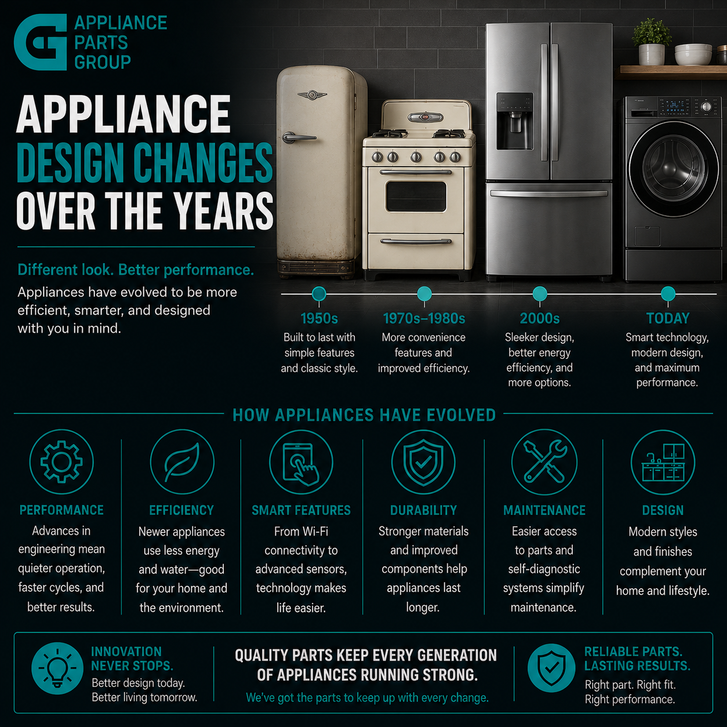
- Home appliance design has changed dramatically over the past century.
- Modern appliances prioritize energy efficiency, smart technology, and compact engineering.
- Older appliances were often simpler mechanically but less efficient.
- Today's appliances rely heavily on electronic control boards and sensors.
- OEM replacement parts play an important role in extending appliance lifespan.
Introduction
Home appliances have transformed dramatically over the decades. Refrigerators once relied on bulky mechanical controls and thick steel cabinets, while today’s models include Wi-Fi connectivity, inverter compressors, and touchscreen displays. Washers have evolved from simple agitator-based systems into high-efficiency front-load machines that carefully balance water use and cleaning performance.
These design changes have improved convenience, reduced energy consumption, and added advanced features that homeowners now expect. However, modern appliance innovation has also introduced more sophisticated components, including sensors, electronic control boards, and smart technology systems that require specialized troubleshooting and replacement parts.
Understanding how appliance designs have evolved helps homeowners appreciate modern technology while also understanding why repairs and maintenance differ from older machines. Whether you own a vintage refrigerator or the latest smart oven, knowing how appliances changed over time can help you make informed repair and replacement decisions.
The Early Years of Appliance Design
Early household appliances focused primarily on durability and basic functionality. Appliances manufactured during the 1940s through the 1960s were often built using heavy steel components, simple motors, and mechanical switches.
Refrigerators featured straightforward thermostats and robust compressors. Washing machines relied on belt-driven motors and large center agitators. Dryers used basic heating elements and timers with minimal electronic components.
Because these appliances contained fewer electronic systems, repairs were often easier for homeowners and technicians. Components such as timers, belts, switches, and motors could frequently be replaced individually without extensive diagnostic equipment.
However, these older appliances consumed significantly more electricity and water compared to modern designs. Refrigerators used more energy due to less efficient insulation and compressor systems. Older washers required large amounts of water per cycle, and dryers often lacked moisture sensors that optimize drying times.
The Shift Toward Energy Efficiency
One of the biggest appliance design changes occurred during the late 1970s and 1980s when energy efficiency became a major manufacturing focus.
Government regulations and rising energy costs encouraged manufacturers to redesign major appliances to reduce electricity and water usage. This led to significant engineering changes across nearly every appliance category.
Refrigerators
Modern refrigerators use:
- Improved insulation materials
- Variable-speed compressors
- Electronic temperature controls
- Efficient evaporator fan motors
- LED lighting systems
These upgrades dramatically lowered energy consumption while improving temperature consistency.
Dishwashers
Dishwashers evolved from loud, high-water-use machines into quieter and more efficient systems. Manufacturers redesigned spray arms, pumps, and filtration systems to clean dishes effectively while using less water.
Modern dishwashers often include soil sensors that automatically adjust cycle times based on load conditions.
Washing Machines
Traditional top-load washers with center agitators gradually gave way to high-efficiency models that use less water and detergent.
Front-load washers introduced:
- Higher spin speeds
- Reduced water usage
- Improved fabric care
- Lower energy consumption
While these systems improved efficiency, they also introduced additional components such as door lock assemblies, pressure sensors, and advanced electronic controls.
The Rise of Electronic Controls
Mechanical timers and rotary switches once controlled most appliances. Over time, manufacturers transitioned toward electronic control boards and digital interfaces.
This change allowed appliances to offer:
- Precise temperature control
- Multiple wash cycles
- Diagnostic error codes
- Smart sensors
- Automated performance adjustments
Electronic controls significantly improved appliance functionality, but they also changed the repair landscape.
Instead of replacing a simple mechanical timer, repairs now may involve diagnosing communication errors between control boards, sensors, and user interface panels.
Common modern appliance electronic components include:
- Main control boards
- User interface boards
- Thermistors
- Moisture sensors
- Hall sensors
- Inverter boards
- Touchpad assemblies
How Appliance Materials Changed
Appliance manufacturers also shifted away from heavy all-metal construction toward lighter and more cost-efficient materials.
Older Appliance Materials
- Heavy-gauge steel cabinets
- Cast metal pulleys
- Mechanical switches
- Porcelain-coated interiors
Modern Appliance Materials
- Composite plastics
- Lightweight aluminum components
- Foam insulation systems
- Electronic touch controls
- Tempered glass shelves
These material changes reduced manufacturing costs and improved energy efficiency but sometimes affected long-term durability.
Plastic brackets, clips, and mounts can wear or crack over time, especially in high-heat environments such as dryers and dishwashers.
Smart Appliance Technology
One of the most significant recent design changes is the rise of smart appliances.
Modern refrigerators, ovens, washers, and dishwashers can now connect to home Wi-Fi networks and mobile apps.
Smart appliance features may include:
- Remote monitoring
- Diagnostic alerts
- Voice assistant integration
- Cycle notifications
- Energy usage tracking
- Remote temperature adjustment
While smart technology adds convenience, it also introduces additional repair complexity. Wi-Fi modules, communication boards, and firmware updates are now part of appliance ownership.
When smart systems fail, homeowners may experience connectivity issues, software glitches, or communication errors between electronic components.
Changes in Refrigerator Design
Refrigerators have experienced some of the most dramatic design transformations over the years.
Older Refrigerator Designs
- Top-freezer configurations
- Mechanical cold controls
- Manual defrost systems
- Simple condenser coils
Modern Refrigerator Designs
- French door layouts
- Dual evaporator systems
- Inverter compressors
- Smart temperature sensors
- Door-mounted ice makers
- Touchscreen interfaces
These features improve convenience and food preservation but increase the number of components that may eventually require replacement.
Changes in Laundry Appliance Design
Washers and dryers have evolved to handle larger loads while using fewer resources.
Modern Washer Innovations
- Direct-drive motors
- High-speed spin cycles
- Load-balancing sensors
- Steam cleaning features
- Automatic detergent dispensing
Modern Dryer Innovations
- Moisture sensor drying
- Steam refresh cycles
- Heat pump technology
- Electronic moisture detection
- Improved airflow systems
These advancements improve clothing care while reducing utility costs.
How Appliance Repairs Have Changed
Because appliance designs have evolved, appliance repairs have changed significantly as well.
Older appliances typically required mechanical troubleshooting. Technicians focused on moving parts such as belts, pulleys, switches, and motors.
Modern appliances often require:
- Error code diagnostics
- Electronic testing
- Sensor calibration
- Software updates
- Control board replacement
This shift makes OEM replacement parts increasingly important because modern appliances often rely on exact electronic compatibility.
Step-by-Step Troubleshooting for Modern Appliances
- Check for visible error codes on the display panel.
- Disconnect power for several minutes to reset electronic controls.
- Inspect power connections and circuit breakers.
- Verify water supply valves are fully open.
- Clean filters, vents, and condenser coils.
- Inspect door seals and gaskets for leaks.
- Listen for unusual noises from motors or fans.
- Review the owner’s manual for diagnostic guidance.
- Test appliance functions individually when possible.
- Replace worn OEM parts as needed.
Common Parts That May Need Replacement
As appliance technology evolved, several replacement parts became increasingly common during repairs.
- Electronic control boards
- Thermistors and temperature sensors
- Door lock assemblies
- Inverter boards
- Drain pumps
- Evaporator fan motors
- Heating elements
- Moisture sensors
- Touchpad control panels
- Water inlet valves
Using OEM replacement parts helps maintain compatibility and appliance performance, especially in electronically controlled systems.
Preventative Maintenance Tips
- Clean refrigerator condenser coils regularly.
- Inspect washer hoses for cracks or leaks.
- Clean dryer vents to improve airflow.
- Use proper detergent quantities in high-efficiency washers.
- Replace water filters according to manufacturer recommendations.
- Keep appliance vents free from obstruction.
- Check door gaskets for wear.
- Address small performance issues before they worsen.
The Future of Appliance Design
Appliance technology continues evolving rapidly. Manufacturers are increasingly focused on automation, sustainability, and smart home integration.
Future appliance trends may include:
- Artificial intelligence-assisted diagnostics
- Predictive maintenance systems
- Further energy optimization
- Advanced heat pump systems
- Expanded smart home connectivity
- Voice-controlled operation
- Self-monitoring appliance systems
As these technologies continue developing, appliance repair and maintenance will likely become even more specialized.
Frequently Asked Questions
Why are modern appliances more energy efficient?
Modern appliances use advanced motors, insulation, sensors, and electronic controls designed to reduce energy and water consumption.
Do modern appliances last as long as older appliances?
Older appliances were often mechanically simpler, while modern appliances prioritize efficiency and advanced features. Lifespan can vary depending on maintenance and usage.
Why do newer appliances use electronic control boards?
Electronic controls allow appliances to offer more precise operation, advanced cycles, diagnostics, and smart technology features.
What is an inverter compressor?
An inverter compressor adjusts operating speed based on cooling demand, improving efficiency and temperature consistency.
Why are front-load washers more efficient?
Front-load washers use less water and higher spin speeds to improve cleaning performance and reduce drying time.
Are smart appliances harder to repair?
Smart appliances can require more advanced diagnostics due to additional electronic and communication components.
Why do modern dryers use moisture sensors?
Moisture sensors help dryers stop automatically when clothes are dry, reducing energy use and fabric wear.
Can OEM replacement parts improve appliance reliability?
OEM parts are designed to match original appliance specifications for compatibility and performance.
Why are appliances quieter today?
Manufacturers use improved insulation, variable-speed motors, and redesigned airflow systems to reduce noise.
What appliance components fail most often?
Common failures include control boards, pumps, sensors, heating elements, and fan motors.
How often should appliances be maintained?
Basic maintenance such as cleaning coils, vents, and filters should be performed several times per year.
Will appliances continue becoming smarter?
Yes. Manufacturers continue adding automation, diagnostics, and smart home integration features.
Entities and Terms
- Control board
- Inverter compressor
- Evaporator fan motor
- Heating element
- Thermistor
- Moisture sensor
- Drain pump
- Water inlet valve
- Door gasket
- Direct-drive motor
- Dual evaporator system
- Hall sensor
- Touchpad interface
- High-efficiency washer
- Heat pump dryer
This article was written by an AI program as part of a beta test by Appliance Parts Group to explore how artificial intelligence can help inform and educate our customers.
Our goal is to use AI tools to provide clear, reliable information so you can make confident, well-informed purchasing decisions.