
Key Takeaways
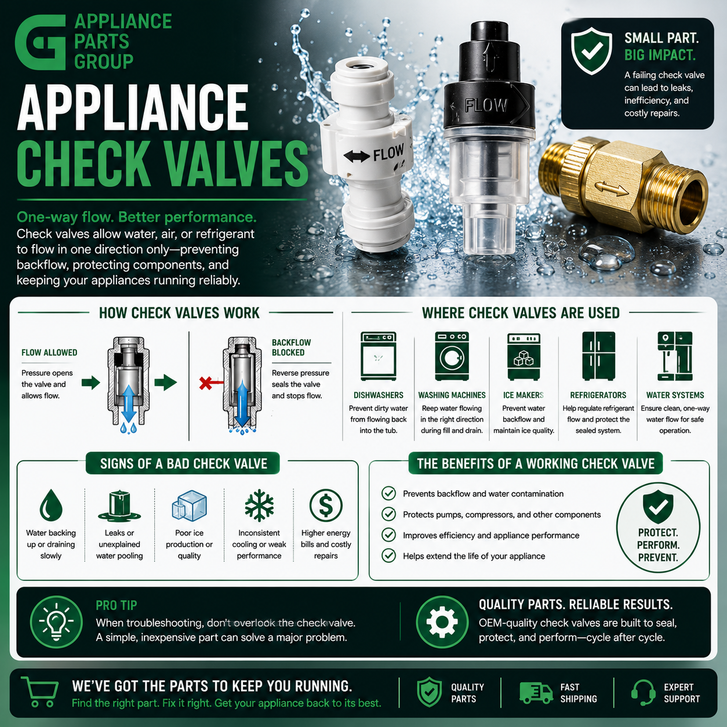
- Appliance check valves help water move in one direction and prevent backflow.
- They are commonly found in dishwashers, washing machines, ice makers, and some refrigerator water systems.
- A failed check valve can cause slow draining, water returning to the tub, leaks, odors, or poor wash performance.
- Many check valve problems are caused by debris, mineral buildup, worn flaps, or damaged seals.
- Replacing the correct OEM check valve helps restore proper water flow and fit.
Introduction
Appliance check valves are small parts, but they play an important role in how water moves through many household appliances. Their job is simple: allow water to flow in one direction while preventing it from flowing backward. When a check valve works properly, most homeowners never notice it. When it fails, the symptoms can look like a clogged drain, a weak pump, a leaking hose, or a larger appliance problem.
Check valves are most often associated with dishwashers and washing machines, but they may also appear in refrigerator water lines, ice maker systems, condensate drain systems, and commercial appliances. Because these valves are usually hidden inside drain assemblies, pump housings, hoses, or water inlet systems, they are often overlooked during troubleshooting.
This guide explains what appliance check valves do, where they are used, the symptoms of failure, how to troubleshoot them, and which OEM replacement parts may be needed.
What Is an Appliance Check Valve?
An appliance check valve is a one-way valve that controls the direction of water or fluid flow. In most residential appliances, it prevents dirty water, drain water, or supply water from moving backward into an area where it does not belong.
The design can vary depending on the appliance. Some check valves use a rubber flap. Others use a ball, spring, diaphragm, duckbill-style insert, or molded plastic gate. Regardless of design, the purpose is the same: open when water moves in the correct direction and close when water tries to reverse.
In a dishwasher, a check valve may stop drained water from returning to the dishwasher tub. In a washing machine, it may help prevent backflow through a drain or pump system. In a refrigerator, it may help regulate water flow to a dispenser or ice maker.
Why Check Valves Matter in Appliances
Appliances depend on controlled water movement. Dishwashers need to fill, wash, drain, and rinse without dirty water returning to the tub. Washing machines need to remove water efficiently without allowing drain water to flow backward. Refrigerator water systems need clean, controlled water delivery to dispensers and ice makers.
When a check valve fails, water can move in the wrong direction. This may cause standing water, unpleasant smells, leaking, poor cleaning performance, or repeated error codes. In some cases, a failed check valve can make another part look defective. For example, a dishwasher drain pump may seem weak when the real issue is a stuck or damaged check valve.
Common Appliances That Use Check Valves
Dishwashers
Dishwasher check valves are commonly found in the drain path. Depending on the model, the valve may be located near the drain pump, sump assembly, drain hose connection, or outlet port. Its purpose is to stop wastewater from flowing back into the dishwasher after the drain cycle.
Washing Machines
Some washers use check valves in drain systems, recirculation systems, dispenser systems, or inlet-related assemblies. These valves help control water direction during fill, wash, rinse, and drain cycles.
Refrigerators and Ice Makers
Refrigerator water systems may include valve-style components that help control flow to the dispenser or ice maker. While the main water inlet valve is different from a simple check valve, certain systems may use one-way flow components to prevent unwanted reverse movement.
Commercial Appliances
Commercial dishwashers, laundry equipment, and food-service appliances may use check valves to manage higher-volume water movement and protect against backflow.
Common Symptoms of a Bad Appliance Check Valve
A failing check valve can produce several symptoms. The exact signs depend on the appliance and valve location.
Water Returns After Draining
One of the most common signs is water returning to the appliance after a drain cycle. In a dishwasher, you may notice clean-looking or dirty water collecting in the bottom of the tub after the cycle ends.
Slow or Incomplete Draining
If the check valve is stuck closed, partially blocked, or restricted by debris, water may not drain properly. This can make the appliance appear to have a clogged hose or weak drain pump.
Bad Odors
When drain water flows backward or remains trapped, odors can develop. Dishwasher odors are often linked to food debris, grease, or wastewater that is not leaving the appliance completely.
Leaks Around Hoses or Pump Areas
A blocked or malfunctioning check valve can increase pressure in the drain path. This may contribute to leaks around hose connections, clamps, pump housings, or seals.
Poor Cleaning Performance
If dirty water re-enters a dishwasher tub, dishes may come out cloudy, gritty, or poorly rinsed. In washers, improper water movement can affect rinse quality or leave clothing wetter than expected.
Error Codes
Some modern appliances detect drain or fill problems electronically. A check valve issue may trigger drain-related, flow-related, or water-level-related error codes depending on the model.
What Causes Appliance Check Valves to Fail?
Debris and Food Particles
Dishwasher check valves are especially vulnerable to food particles, broken glass, labels, seeds, and other debris. Even a small obstruction can keep the valve from sealing correctly.
Mineral Buildup
Hard water can leave mineral deposits on valve surfaces. Over time, buildup may prevent the valve from opening or closing smoothly.
Worn Rubber Components
Many check valves rely on rubber flaps, seals, or diaphragms. Heat, detergent, water chemistry, and age can cause rubber to harden, curl, crack, or lose flexibility.
Damaged Springs or Internal Mechanisms
Some check valves use springs or moving internal parts. If these parts weaken or corrode, the valve may stick open or closed.
Incorrect Installation
A check valve must be installed in the correct direction. If installed backward, water may not flow properly, and the appliance may fail to drain or fill as designed.
Normal Wear Over Time
Check valves open and close repeatedly during appliance operation. Like any mechanical part, they can wear out after years of use.
Step-by-Step Troubleshooting
- Disconnect power and water if needed. Always unplug the appliance or turn off power at the breaker before inspecting internal parts.
- Identify the symptom. Note whether the issue is standing water, slow draining, backflow, leaking, odor, or poor performance.
- Check the drain hose. Look for kinks, clogs, improper routing, or a missing high loop in dishwasher installations.
- Inspect filters and sump areas. Remove food debris, lint, coins, or foreign objects that may block water flow.
- Locate the check valve. Use the appliance model number to find the correct parts diagram and valve location.
- Inspect the valve for debris. Look for buildup, stuck flaps, broken rubber, or blocked ports.
- Test valve movement. The valve should open in the correct flow direction and close against reverse flow.
- Check nearby parts. Inspect the drain pump, hoses, clamps, sump housing, seals, and gaskets.
- Replace the valve if damaged. If the check valve is warped, cracked, stuck, or no longer sealing, replacement is usually the best repair.
- Run a test cycle. After reassembly, confirm proper draining, filling, and leak-free operation.
Common Parts That May Need Replacement
Dishwasher Check Valve
A dishwasher check valve prevents drained water from flowing back into the tub. Depending on the model, it may be sold as an individual valve, a flapper, a drain outlet insert, or part of a sump or pump assembly.
Drain Pump Assembly
If the check valve is built into the drain pump or pump outlet, the full drain pump assembly may need replacement. This is common when the valve is not sold separately.
Drain Hose
A damaged, clogged, or improperly routed drain hose can create symptoms similar to check valve failure. Some hoses may include an integrated check valve.
Sump Assembly
In some dishwashers, the check valve is located within the sump or connected to the sump outlet. If the housing is cracked or the valve seat is damaged, a sump-related part may be needed.
Rubber Flapper or Diaphragm
Some appliances use a simple rubber flapper or diaphragm as the one-way valve. If it is curled, brittle, torn, or missing, it should be replaced.
Water Inlet Valve or Flow Control Component
In refrigerator and washer systems, a suspected check valve issue may involve a related inlet valve or flow-control part. Always verify the exact part using the appliance model number.
Why OEM Replacement Parts Matter
Check valves are small, but fit and direction matter. An OEM replacement part is designed for the specific appliance model, connection size, water path, and operating conditions. A valve that does not seal correctly or fit securely can allow backflow, cause leaks, or create repeat drainage problems.
When ordering a replacement check valve, use the full appliance model number from the model tag. This helps confirm the correct part number and avoids confusion between similar-looking valves.
Preventative Maintenance Tips
- Clean dishwasher filters regularly to reduce food debris in the drain path.
- Scrape large food particles from dishes before loading the dishwasher.
- Inspect washer pockets for coins, clips, and small objects before washing.
- Use the correct detergent and avoid excessive detergent amounts.
- Address hard water buildup with routine cleaning when recommended by the appliance manufacturer.
- Make sure dishwasher drain hoses are installed with the proper high loop or air gap where required.
- Replace cracked, brittle, or leaking hoses before they cause larger problems.
Frequently Asked Questions
What does an appliance check valve do?
An appliance check valve allows water to move in one direction and helps prevent backflow into the appliance or water system.
Where is the check valve in a dishwasher?
It is often located near the drain pump, sump assembly, drain hose outlet, or drain port. The exact location depends on the model.
Can a bad check valve cause standing water in a dishwasher?
Yes. If the check valve sticks closed or allows drain water to return, standing water may appear in the bottom of the dishwasher.
Can I clean a check valve instead of replacing it?
Sometimes. If debris is the only issue, cleaning may help. If the valve is warped, cracked, stiff, or no longer sealing, replacement is recommended.
How do I know if a check valve is stuck open?
A stuck-open valve may allow water to flow backward after draining, causing water to reappear in the tub or drain area.
How do I know if a check valve is stuck closed?
A stuck-closed valve may restrict drainage and cause slow draining, standing water, or drain-related error codes.
Are dishwasher check valves sold separately?
Some are sold separately, while others are built into a drain pump, hose, or sump assembly. Use your model number to confirm.
Can a bad check valve cause odors?
Yes. Backflow or trapped wastewater can contribute to unpleasant smells, especially in dishwashers.
Is a check valve the same as a water inlet valve?
No. A water inlet valve controls water entering an appliance. A check valve is usually a one-way valve that prevents reverse flow.
Can I install a check valve backward?
Yes, and doing so can block proper water flow. Always follow the flow-direction marking or manufacturer instructions.
Should I replace nearby hoses when replacing a check valve?
If hoses are brittle, cracked, clogged, or leaking, replacing them at the same time can help prevent repeat repairs.
Why should I use my appliance model number when buying a check valve?
Model numbers help identify the correct OEM part, fit, connection style, and valve design for your appliance.
Entities and Terms
- Appliance check valve
- Dishwasher check valve
- Washer check valve
- Drain pump
- Drain hose
- Sump assembly
- Rubber flapper
- Diaphragm valve
- Backflow prevention
- Water inlet valve
- OEM appliance parts
This article was written by an AI program as part of a beta test by Appliance Parts Group to explore how artificial intelligence can help inform and educate our customers.
Our goal is to use AI tools to provide clear, reliable information so you can make confident, well-informed purchasing decisions.