
Key Takeaways
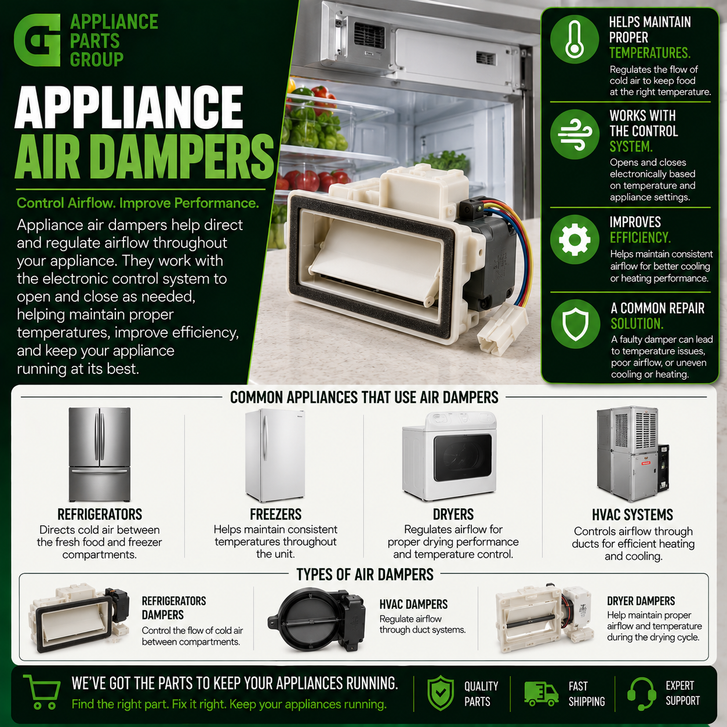
- Appliance air dampers regulate airflow inside refrigerators and other appliances that depend on controlled air circulation.
- In refrigerators, the air damper helps control how much cold air moves from the freezer compartment into the fresh-food compartment.
- A stuck, broken, or malfunctioning damper can contribute to a refrigerator that is too warm, too cold, or experiencing inconsistent temperatures.
- Damper problems can be mechanical, electrical, or related to another component such as a temperature sensor, thermistor, or electronic control board.
- Replacing a failed damper with the correct OEM replacement part can restore proper airflow and temperature regulation.
Introduction
Temperature control inside a modern refrigerator involves more than simply turning the compressor on and off. Cold air must also be directed to the correct areas of the appliance at the right time. One component that plays an important role in this process is the appliance air damper.
An air damper is essentially an adjustable passageway that regulates airflow between different sections of an appliance. In many refrigerators, the evaporator produces cold air in or near the freezer compartment. A controlled amount of that cold air is then directed into the refrigerator compartment through an air duct. The damper opens and closes to regulate this airflow.
When the damper works properly, you may never notice it. When it fails, however, the symptoms can resemble several other refrigerator problems. Food may freeze in the fresh-food section, temperatures may become too warm, or the refrigerator may struggle to maintain a consistent temperature.
Understanding what an appliance air damper does, how it fails, and how to troubleshoot it can make diagnosing refrigerator temperature problems much easier.
What Is an Appliance Air Damper?
An appliance air damper is a component designed to regulate the movement of air through an appliance. It may also be called an air diffuser, damper assembly, air control, or air damper control assembly, depending on the manufacturer and appliance design.
In a typical refrigerator, the damper is installed between the freezer and fresh-food compartments. The freezer is generally responsible for producing most of the cold air used by both compartments. A fan circulates that air, while the damper determines how much of it enters the refrigerator section.
The damper may use a small door, flap, shutter, or louver inside an air passage. Depending on the refrigerator, this door may be controlled mechanically or by a small electric motor.
Modern electronically controlled refrigerators frequently use motorized damper assemblies. The refrigerator's electronic control system monitors temperature information from thermistors or other sensors and commands the damper to open or close as needed.
How a Refrigerator Air Damper Works
The basic principle behind a refrigerator air damper is straightforward: more airflow generally means more cooling in the fresh-food compartment, while less airflow reduces cooling.
Imagine the refrigerator compartment is beginning to get warmer than its target temperature. A temperature sensor detects the change and sends information to the refrigerator's control system. Depending on the appliance design, the control board may activate the evaporator fan and command the damper door to open.
Cold air can then travel through the duct and into the refrigerator compartment.
Once the desired temperature is reached, the control system may close or partially close the damper. This reduces the amount of freezer air entering the fresh-food section.
This process happens automatically throughout normal refrigerator operation.
The exact design varies significantly between manufacturers and models. Some refrigerators use a relatively simple mechanical control, while others incorporate a motorized damper, thermistors, electronic controls, and multiple airflow passages.
Why Refrigerator Airflow Matters
A refrigerator does not cool every area independently. Instead, many designs rely on controlled air circulation to distribute cold air throughout the appliance.
Proper airflow helps maintain consistent temperatures and reduces extreme hot or cold spots. When airflow becomes restricted or excessive, food storage temperatures can change dramatically.
For example, a damper stuck fully open may continuously allow very cold freezer air into the refrigerator compartment. Items stored near the air outlet may begin freezing even when the refrigerator temperature setting appears normal.
A damper stuck closed can cause the opposite problem. The freezer may remain properly frozen while the refrigerator compartment becomes too warm because insufficient cold air is reaching it.
Common Symptoms of a Bad Appliance Air Damper
Air damper failures can produce several different symptoms. Because similar symptoms can also be caused by fans, sensors, frost buildup, control boards, or airflow obstructions, a damper should not automatically be replaced without diagnosis.
Refrigerator Compartment Is Too Warm
A refrigerator compartment that remains warm while the freezer stays cold is one possible indication of an airflow problem.
If the damper door remains closed, cold air may not be able to enter the fresh-food compartment in sufficient quantities.
However, the same symptom can occur if the evaporator fan is not operating, an air duct is blocked by ice, or the refrigerator has a defrost system problem.
Food Is Freezing in the Refrigerator
A damper that remains open can allow excessive amounts of freezer air into the refrigerator compartment.
Food stored near the air vent may freeze first. Produce, beverages, dairy products, and other temperature-sensitive foods may be particularly noticeable.
Before assuming the damper has failed, verify the refrigerator temperature setting and make sure food is not blocking temperature sensors or airflow passages.
Uneven Refrigerator Temperatures
Another potential symptom is significant temperature variation throughout the fresh-food compartment.
Some temperature difference is normal, but extreme differences between shelves or areas of the refrigerator can indicate poor air circulation.
Clicking or Unusual Noises
Motorized damper assemblies contain small moving components. A damaged gear or struggling actuator may sometimes produce clicking, buzzing, or repetitive movement noises.
Noise alone does not confirm damper failure, but unusual sounds coming from the air diffuser area can provide an important diagnostic clue.
Damper Door Does Not Move
If the refrigerator calls for additional cooling but the damper remains closed, there may be a problem with the damper motor, mechanical linkage, wiring, control system, or temperature-sensing components.
A door that remains permanently open can indicate similar issues.
What Causes an Appliance Air Damper to Fail?
Air dampers operate repeatedly throughout the life of a refrigerator. Mechanical movement, moisture, temperature changes, and electrical components can eventually contribute to failure.
Damaged Damper Motor
Electronically controlled dampers often use a small motor or actuator to move the damper door. If the motor fails, the door may become stuck in one position.
Broken Plastic Gears or Linkages
Many damper assemblies use plastic gears or mechanical linkages. These parts can wear, crack, or become damaged over time.
A motor may still operate even though the damper door no longer moves correctly.
Ice or Frost Buildup
Moisture can freeze around an air passage or damper door, physically preventing it from opening or closing.
In this situation, the damper itself may not be defective. Excessive frost can originate from other refrigerator problems, including air leaks or defrost system issues.
Foreign Objects or Food Obstructions
Food containers placed directly against air vents can interfere with airflow. In some cases, debris or ice may also obstruct the damper mechanism.
Temperature Sensor Problems
A properly functioning damper cannot regulate temperature correctly if the refrigerator is receiving inaccurate temperature information.
A faulty thermistor or related sensor may cause the control system to command the damper incorrectly.
Electronic Control Problems
Some refrigerators rely on an electronic control board to operate the damper. A wiring issue or control board problem can therefore mimic a defective damper assembly.
Step-by-Step Troubleshooting
- Check the refrigerator temperature. Use a reliable appliance thermometer if necessary. Refrigerator temperatures are generally intended to remain around 37°F, although settings and normal operating ranges vary by manufacturer and model.
- Verify the temperature controls. Make sure the refrigerator has not accidentally been set unusually warm or cold. Allow sufficient time for temperatures to stabilize after changing settings.
- Inspect the air vents. Locate the vents that allow cold air to enter the refrigerator compartment. Make sure food containers, packaging, or other objects are not blocking them.
- Check for airflow. When the refrigerator is actively cooling, determine whether cold air is reaching the fresh-food compartment. Depending on the model, a door switch may need to be held closed for the fan to operate.
- Inspect for frost or ice. Look for abnormal frost around the damper opening or air passages. Significant ice accumulation can indicate a separate defrost or moisture problem.
- Observe the damper door if accessible. On some models, you may be able to see whether the damper opens and closes. Never force the door because small gears and linkages can be damaged.
- Listen for unusual sounds. Clicking or repeated attempts to move can indicate that a motor or internal gear is struggling.
- Check related components. If the damper appears functional, investigate the evaporator fan, thermistors, wiring, defrost system, and electronic controls according to the manufacturer's service information.
- Disconnect power before disassembly. Unplug the refrigerator or disconnect electrical power before removing covers, accessing wiring, or replacing components.
- Confirm the correct replacement part. Use the refrigerator's complete model number to identify the appropriate OEM air damper or air diffuser assembly.
Common Parts That May Need Replacement
A temperature-control problem involving the refrigerator's airflow system can involve several different components. Accurate diagnosis is important before ordering replacement parts.
Air Damper Assembly
The complete air damper assembly is often replaced when its motor, gears, housing, or damper door fails. Depending on the manufacturer, the replacement may include the actuator and housing as a complete assembly.
Air Diffuser
Some manufacturers refer to the airflow control component as an air diffuser. Its function is similar: controlling or distributing cold air entering the refrigerator compartment.
Damper Motor or Actuator
On certain appliance designs, the motor or actuator may be available separately. On others, it is supplied only as part of the complete damper assembly.
Thermistor
A refrigerator thermistor measures temperature and communicates that information to the electronic control system. Incorrect sensor readings can affect damper operation and overall cooling performance.
Evaporator Fan Motor
The evaporator fan moves cold air across the evaporator and through the refrigerator's airflow system. If the fan fails, replacing the damper will not correct the underlying airflow problem.
Electronic Control Board
The electronic control board may determine when a motorized damper opens or closes. Control board diagnosis should generally be performed only after other likely causes have been investigated.
When purchasing replacement components, always identify the appliance by its complete model number. Components that look nearly identical may have different motors, connectors, dimensions, software requirements, or mounting arrangements.
Using the correct OEM appliance replacement part helps ensure the component matches the manufacturer's specifications for the appliance.
How to Find the Correct Air Damper Replacement
The safest way to identify a replacement air damper is by using the appliance model number rather than relying only on appearance.
Refrigerator model number labels are commonly located inside the fresh-food compartment, on an interior wall, near the ceiling, around the door frame, or behind a lower drawer. Location varies by manufacturer.
Record the entire model number exactly as it appears on the appliance identification label. Even a small difference in a model suffix can sometimes indicate different components.
Once you have the model number, use a model-specific parts diagram or parts lookup to identify the damper, diffuser, thermistor, fan, or related component required for the repair.
Can You Replace a Refrigerator Air Damper Yourself?
Air damper replacement can be a manageable repair on some refrigerators, but difficulty varies considerably by model.
Some damper assemblies are located behind a small cover near the upper rear portion of the refrigerator compartment. Replacement may involve removing shelves, removing the cover, disconnecting an electrical connector, and transferring or installing the replacement assembly.
Other refrigerators integrate the damper into larger duct assemblies or control housings, making the repair more involved.
Always disconnect electrical power before beginning a repair. If accessing the damper requires extensive disassembly, electrical diagnosis, sealed-system work, or procedures you are uncomfortable performing, consider contacting a qualified appliance service technician.
Preventative Maintenance Tips
Air dampers generally do not require routine lubrication or adjustment, but good refrigerator maintenance can help the entire airflow system operate correctly.
- Keep air vents clear. Avoid packing food tightly against refrigerator and freezer air vents.
- Do not overfill the refrigerator. Cold air needs space to circulate around food and shelves.
- Maintain proper temperature settings. Extremely cold settings can contribute to frozen food and unnecessary compressor operation.
- Inspect door gaskets. Damaged or dirty gaskets can allow warm, humid air into the refrigerator.
- Address abnormal frost quickly. Heavy frost can obstruct airflow and may indicate a defrost system or door-sealing problem.
- Keep food away from sensors. Blocking a thermistor or temperature sensor can affect temperature regulation.
- Clean accessible condenser areas when recommended. Follow the manufacturer's instructions for condenser cleaning and general refrigerator maintenance.
- Investigate unusual noises. Repetitive clicking near the damper should be checked before a mechanical problem becomes worse.
Frequently Asked Questions
What does an air damper do in a refrigerator?
A refrigerator air damper regulates the amount of cold air that moves from the freezer or evaporator area into the fresh-food compartment. Opening the damper increases airflow, while closing it reduces airflow.
What happens when a refrigerator damper goes bad?
A failed damper may become stuck open or closed. This can contribute to a refrigerator compartment that becomes too cold, too warm, or experiences inconsistent temperatures.
Can a bad air damper cause food to freeze?
Yes. If a damper remains open and allows excessive cold air into the fresh-food compartment, items near the air outlet may freeze. Other problems can cause the same symptom, so diagnosis is important.
Can a bad damper make the refrigerator too warm?
Yes. If the damper remains closed or cannot open sufficiently, the fresh-food compartment may not receive enough cold air even though the freezer remains cold.
Why is my freezer cold but my refrigerator warm?
A closed or obstructed air damper is one possible cause. Other possibilities include a failed evaporator fan, blocked air passages, excessive frost, a faulty thermistor, or an electronic control problem.
Where is the air damper located?
The location varies by refrigerator model. It is commonly found near an air inlet in the upper portion of the fresh-food compartment where cold freezer air enters the refrigerator section.
Is an air damper the same as an air diffuser?
The terms are sometimes used for components that perform similar airflow-control functions. Manufacturers may use terms such as damper, diffuser, air control, or damper control assembly in their parts documentation.
Can ice stop an air damper from working?
Yes. Ice or frost can physically obstruct the damper door or air passage. When this happens, it is important to determine why the excessive ice developed instead of assuming the damper itself has failed.
How do I know if my refrigerator damper is stuck?
Inspect the damper according to the refrigerator's service procedures and observe whether the door changes position when cooling demand changes. A door that never moves may indicate a damper, motor, wiring, sensor, or control problem.
Can I manually open a refrigerator damper?
A motorized damper generally should not be forced open. Forcing the mechanism can damage small gears, linkages, or the actuator. Follow the manufacturer's diagnostic procedures for the specific refrigerator model.
Do all refrigerators have an air damper?
No. Refrigerator cooling and airflow designs vary. Many refrigerator-freezer designs use a damper or similar airflow-control device, while other designs distribute and regulate cooling differently.
How do I find the correct replacement air damper?
Locate the complete refrigerator model number on the appliance identification label and use a model-specific parts lookup or diagram. Do not select a replacement solely because it looks similar to the original component.
Entities and Terms
- Appliance air damper
- Refrigerator air damper
- Air diffuser
- Damper control assembly
- Damper motor
- Damper actuator
- Damper door
- Evaporator
- Evaporator fan motor
- Thermistor
- Temperature sensor
- Electronic control board
- Refrigerator air duct
- Defrost system
- OEM refrigerator parts
- Refrigerator airflow
This article was written by an AI program as part of a beta test by Appliance Parts Group to explore how artificial intelligence can help inform and educate our customers.
Our goal is to use AI tools to provide clear, reliable information so you can make confident, well-informed purchasing decisions.