
Key Takeaways
- Oven heating elements fail due to wear, electrical issues, and physical damage over time.
- Common warning signs include uneven cooking, no heat, and visible element damage.
- Voltage fluctuations and overheating are leading contributors to premature failure.
- Most heating element issues can be diagnosed with simple troubleshooting steps.
- Replacing a faulty heating element with an OEM part ensures proper performance and safety.
Introduction
Your oven is one of the most relied-on appliances in your kitchen, and at the heart of its performance is the heating element. Whether you're baking, roasting, or broiling, the heating element is responsible for generating consistent heat. But like any component exposed to repeated high temperatures, it can wear out over time.
If your oven suddenly stops heating properly—or stops heating altogether—a failing heating element is one of the most common causes. Understanding why oven heating elements fail can help you diagnose issues faster and make informed repair decisions.
How Oven Heating Elements Work
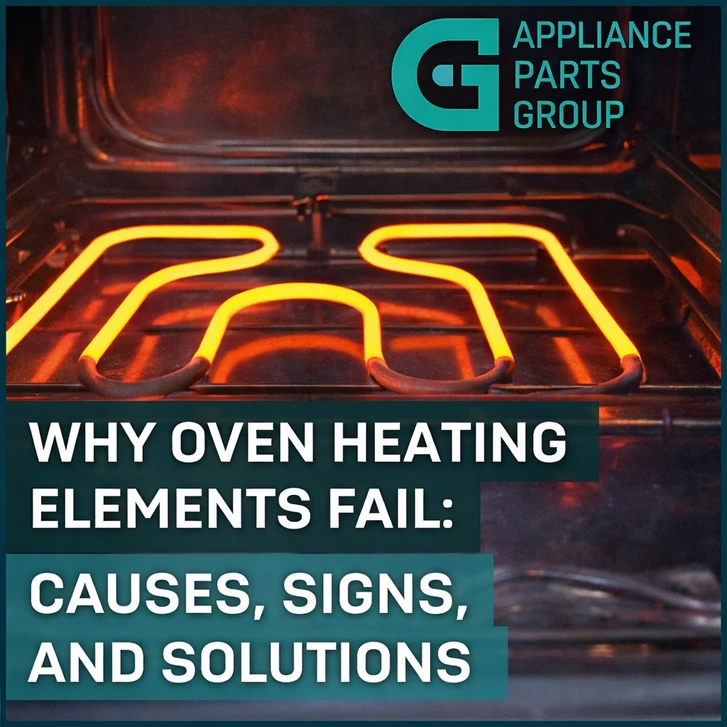
Oven heating elements are typically made of a metal alloy that resists electrical flow, generating heat as electricity passes through it. Most ovens have two primary elements:
- Bake element (bottom of the oven)
- Broil element (top of the oven)
These elements cycle on and off to maintain the desired temperature, controlled by the oven’s thermostat or electronic control board.
Common Causes of Oven Heating Element Failure
1. Normal Wear and Tear
Over time, repeated heating and cooling cycles cause the metal inside the element to weaken. This natural degradation eventually leads to cracks or breaks in the element.
2. Electrical Surges
Power surges or voltage fluctuations can overload the heating element, causing it to burn out prematurely. This is especially common in areas with unstable electrical supply.
3. Overheating
If an oven runs hotter than intended due to a faulty thermostat or control board, the heating element can overheat and fail faster than expected.
4. Physical Damage
Heating elements are exposed and can be accidentally damaged during cleaning or when placing heavy cookware inside the oven.
5. Food Spills and Grease Buildup
Grease and food debris can accumulate on the element, leading to hot spots that weaken the metal and cause eventual failure.
6. Loose or Damaged Wiring
Electrical connections behind the element can loosen or corrode, leading to inconsistent heating or complete failure.
Signs Your Oven Heating Element Is Failing
- Oven not heating at all
- Uneven cooking or baking results
- Element not glowing red
- Visible cracks, blisters, or burn marks
- Sparking or burning smell
If you notice any of these symptoms, it’s important to inspect the heating element promptly to avoid further damage.
Step-by-Step Troubleshooting
- Turn off power to the oven at the breaker for safety.
- Inspect the heating element for visible damage such as cracks or burns.
- Check for proper glow when the oven is turned on.
- Test continuity using a multimeter to determine if the element is functioning.
- Inspect wiring connections behind the element for damage or looseness.
- Test the oven control board if the element appears intact but does not heat.
- Replace the element if it fails the continuity test.
Common Parts That May Need Replacement
When dealing with heating issues, several components may need to be replaced:
- Bake heating element
- Broil heating element
- Oven temperature sensor
- Electronic control board
- Wiring harness
Using OEM replacement parts ensures compatibility, durability, and optimal performance for your specific oven model.
Preventative Maintenance Tips
- Clean spills promptly to prevent buildup on heating elements
- Avoid using abrasive cleaning tools on elements
- Do not place foil directly on the oven floor or element
- Inspect elements periodically for signs of wear
- Use surge protection to minimize electrical damage
Routine maintenance can significantly extend the life of your oven’s heating elements and reduce the likelihood of unexpected failures.
Frequently Asked Questions
Why did my oven heating element suddenly stop working?
It may have burned out due to age, electrical surge, or internal break in the element.
Can I still use my oven if one element is broken?
You may be able to use partial functions, but performance will be compromised and uneven cooking is likely.
How long do oven heating elements last?
Most heating elements last between 5–10 years depending on usage and maintenance.
Is it safe to replace a heating element myself?
Yes, if power is disconnected and proper precautions are taken.
How do I know if my bake or broil element is bad?
Check for visible damage or test continuity with a multimeter.
What causes a heating element to spark?
Sparking is often caused by a break in the element or grease buildup.
Do heating elements weaken over time?
Yes, repeated heating cycles gradually degrade the internal metal.
Can a faulty thermostat damage the heating element?
Yes, overheating due to thermostat failure can shorten element lifespan.
Why is my oven heating unevenly?
This could be due to a partially functioning heating element or sensor issue.
Are OEM heating elements better?
OEM parts are designed for exact fit and performance, ensuring reliable operation.
How much does it cost to replace a heating element?
Costs vary, but heating elements are generally affordable and easy to replace.
What tools do I need to replace a heating element?
Typically a screwdriver and possibly a multimeter for testing.
Entities and Terms
- Bake element
- Broil element
- Oven thermostat
- Temperature sensor
- Control board
- Electrical wiring
- Heating coil
- Multimeter
This article was written by an AI program as part of a beta test by Appliance Parts Group to explore how artificial intelligence can help inform and educate our customers.
Our goal is to use AI tools to provide clear, reliable information so you can make confident, well-informed purchasing decisions.