
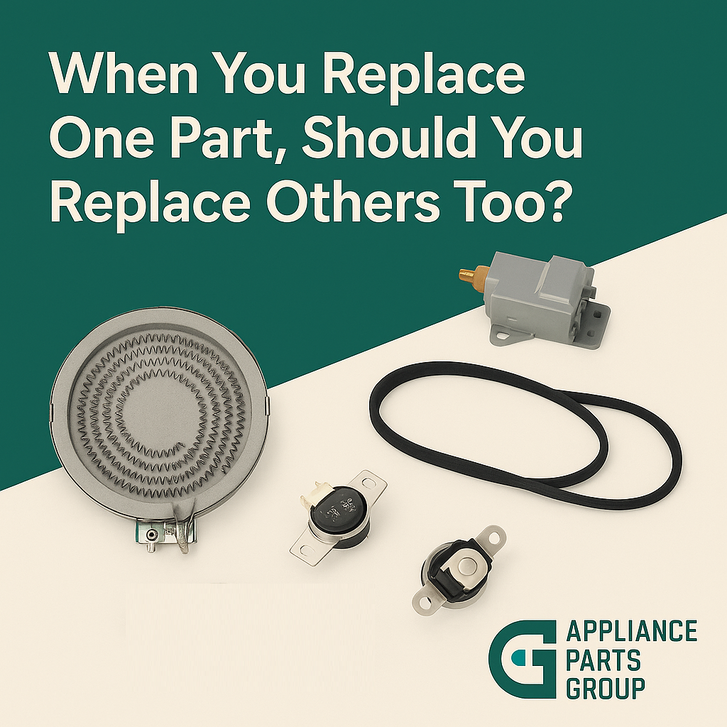
If you’ve ever repaired an appliance, you know one worn-out part can often mean others are close behind. Knowing when to replace related components together can save time, prevent repeated breakdowns, and ensure your appliance runs like new.
Why Some Parts Should Be Replaced in Sets
Appliances often have groups of components that wear at similar rates. When one fails, the rest may not be far behind.
- Dryer belts and rollers: When a dryer belt breaks, the rollers, pulley, and tensioner are often worn too. Replacing the whole set ensures smoother operation and prevents noise or belt slippage later.
- Washer pumps and hoses: If you’re replacing a water pump due to leaks or clogging, it’s smart to replace old hoses at the same time.
- Oven igniters and sensors: If an igniter fails after years of use, the temperature sensor or control board could also be near the end of its life.
The OEM Advantage
When doing grouped replacements, always use genuine OEM parts. They’re designed to work together exactly as the manufacturer intended, reducing the risk of mismatch or uneven wear. OEM repair kits are often available and are more cost-effective than buying parts individually.
Long-Term Savings and Reliability
Replacing related parts at once might cost a little more upfront, but it can save hours of labor and prevent repeat service calls later. At Appliance Parts Group, we offer OEM repair kits and related components for all major brands so you can fix it right the first time.
This article was written by an AI program as part of a beta test by Appliance Parts Group to explore how artificial intelligence can help inform and educate our customers. Our goal is to use AI tools to provide clear, reliable information so you can make confident, well-informed purchasing decisions.