
Key Takeaways
- Appliance control boards act as the central “brain” that manages all functions and cycles.
- Common symptoms of failure include unresponsive controls, error codes, and inconsistent operation.
- Power surges, moisture, and normal wear are leading causes of control board issues.
- Accurate diagnosis is critical before replacing a control board due to cost.
- Using OEM replacement control boards ensures compatibility and long-term reliability.
Introduction
Modern appliances are smarter than ever, thanks to advanced electronic systems that automate everything from wash cycles to temperature control. At the center of this technology is the appliance control board. Whether it’s your refrigerator, washer, dryer, or dishwasher, the control board is responsible for coordinating all major functions.
When something goes wrong with your appliance, the control board is often suspected—but it’s also one of the most misunderstood components. In this guide, we’ll break down what appliance control boards do, how they fail, how to troubleshoot them, and when replacement is necessary.
What Is an Appliance Control Board?
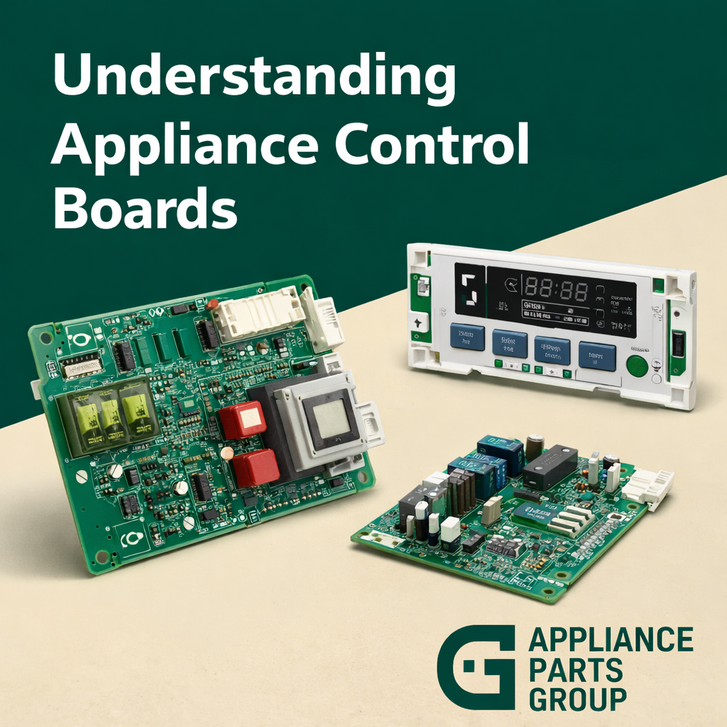
An appliance control board is essentially a printed circuit board (PCB) that acts as the command center for your appliance. It receives input from sensors, user controls, and timers, then sends signals to various components like motors, valves, and heating elements.
There are typically two types of control boards:
- Main Control Board: Handles overall appliance operation
- User Interface Board: Controls buttons, displays, and user input
Some appliances combine these functions into a single board, while others separate them.
How Control Boards Work
Control boards operate by processing electrical signals. For example, when you select a wash cycle on your dishwasher, the user interface sends that command to the main control board. The board then activates the appropriate components in sequence—water inlet valve, circulation pump, heating element, and drain pump.
Control boards also monitor feedback from sensors such as:
- Temperature sensors
- Water level switches
- Door switches
- Moisture sensors
This allows the appliance to adjust performance in real time.
Common Symptoms of a Faulty Control Board
Because control boards manage so many functions, failures can appear in different ways depending on the appliance.
- Appliance won’t start
- Unresponsive buttons or display
- Error codes or flashing lights
- Cycles stopping mid-operation
- Components not activating (e.g., no heat, no spin)
- Random or erratic behavior
It’s important to note that these symptoms can also be caused by other components, so proper troubleshooting is essential.
What Causes Control Boards to Fail?
1. Power Surges
Voltage spikes can damage delicate electronic components on the board.
2. Moisture Exposure
Humidity or leaks can corrode circuits and cause short circuits.
3. Overheating
Poor ventilation or prolonged use can cause components to overheat and fail.
4. Age and Wear
Like any electronic device, control boards degrade over time.
5. Manufacturing Defects
Occasionally, boards fail prematurely due to defects in materials or design.
Step-by-Step Troubleshooting
- Disconnect Power: Always unplug the appliance or shut off the breaker.
- Check for Error Codes: Refer to your appliance manual.
- Inspect Wiring: Look for loose or damaged connections.
- Test Power Supply: Ensure the appliance is receiving proper voltage.
- Inspect the Control Board: Look for burnt spots, corrosion, or damaged components.
- Test Related Components: Rule out sensors, switches, and motors.
- Reset the Appliance: Sometimes a reset can resolve temporary glitches.
Common Parts That May Need Replacement
If troubleshooting confirms a faulty control board, replacement is often the best solution. Common related parts include:
- Main control board
- User interface control panel
- Touchpad assemblies
- Wire harnesses
- Thermistors and sensors
OEM replacement parts are recommended to ensure proper compatibility and performance with your specific appliance model.
When Should You Replace a Control Board?
Replacing a control board is typically necessary when:
- Visible damage is present
- The board fails diagnostic tests
- All other components have been ruled out
- The appliance shows persistent electronic errors
Because control boards can be one of the more expensive components, accurate diagnosis is key before purchasing a replacement.
Preventative Maintenance Tips
- Use surge protectors to prevent voltage damage
- Keep appliances in dry, well-ventilated areas
- Address leaks immediately to prevent moisture exposure
- Clean vents and filters regularly
- Avoid overloading appliances
Frequently Asked Questions
What does a control board do in an appliance?
It manages and coordinates all functions by sending signals to various components.
How do I know if my control board is bad?
Common signs include unresponsive controls, error codes, and inconsistent operation.
Can a control board be repaired?
In some cases, minor issues can be repaired, but replacement is usually more reliable.
Is it expensive to replace a control board?
Costs vary by appliance, but control boards are typically one of the pricier components.
Can power surges damage control boards?
Yes, voltage spikes are a leading cause of control board failure.
Do all appliances have control boards?
Most modern appliances use electronic control boards for operation.
Can I replace a control board myself?
DIY replacement is possible with proper safety precautions and technical knowledge.
What is the difference between a main board and interface board?
The main board controls operations, while the interface handles user input.
Will replacing the control board fix my appliance?
Only if the board is the root cause—proper diagnosis is essential.
How long do control boards last?
Typically 10–15 years, depending on usage and conditions.
Can moisture damage control boards?
Yes, moisture can cause corrosion and electrical shorts.
Are OEM control boards better?
OEM parts ensure compatibility and reliable performance.
Entities and Terms
- Control board
- Printed circuit board (PCB)
- User interface board
- Thermistor
- Relay
- Capacitor
- Wire harness
- Sensor
- Voltage supply
- Error codes
This article was written by an AI program as part of a beta test by Appliance Parts Group to explore how artificial intelligence can help inform and educate our customers.
Our goal is to use AI tools to provide clear, reliable information so you can make confident, well-informed purchasing decisions.