
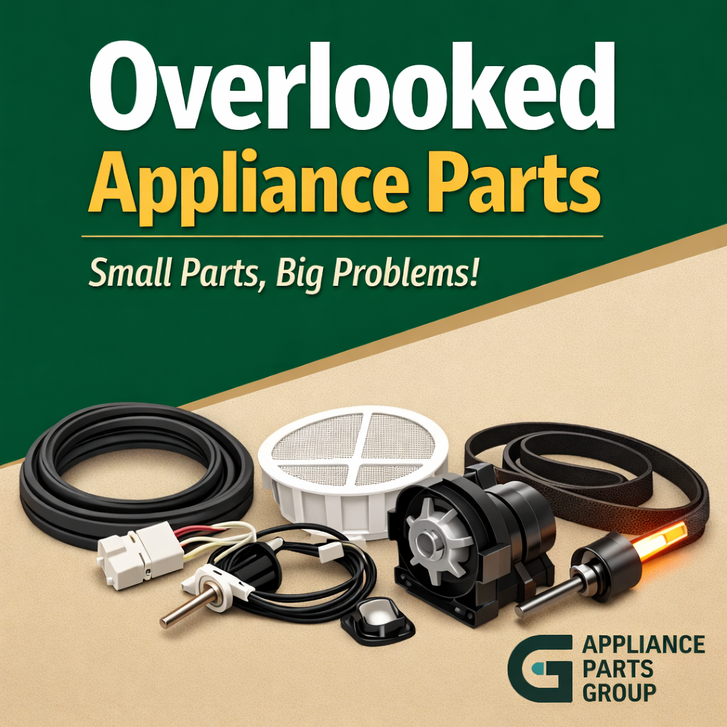
Key Takeaways
- Small, overlooked components are often the root cause of major appliance failures.
- Parts like sensors, seals, and filters play a critical role in efficiency and safety.
- Ignoring minor components can lead to expensive repairs or full appliance replacement.
- Routine inspection of these parts can extend appliance lifespan significantly.
- OEM replacement parts ensure proper fit, performance, and durability.
Introduction
When an appliance stops working, most homeowners immediately think of major components like motors, compressors, or control boards. However, the truth is that many appliance issues start with small, often overlooked parts that quietly wear down over time.
These components may be inexpensive and easy to replace, but they play a critical role in keeping your appliances running efficiently. Ignoring them can lead to bigger failures, higher energy bills, and unexpected breakdowns.
In this guide, we’ll explore the most commonly overlooked appliance components, how they fail, and what you can do to maintain or replace them before they cause major problems.
Why Small Components Matter
Appliances are complex systems made up of both large and small parts working together. While major components handle the heavy lifting, smaller parts control airflow, regulate temperature, seal moisture, and ensure safe operation.
When these smaller components fail:
- Efficiency drops
- Wear on major parts increases
- Appliance lifespan shortens
- Energy consumption rises
In many cases, replacing a small part early can prevent hundreds of dollars in repairs later.
Most Overlooked Appliance Components
1. Door Gaskets and Seals
Door seals are found in refrigerators, freezers, dishwashers, and ovens. Their job is to create an airtight seal that keeps temperatures stable and prevents leaks.
Common issues:
- Cracks or brittleness
- Mold buildup
- Loose or warped edges
Symptoms:
- Refrigerator running constantly
- Water leaking from dishwasher
- Oven heat escaping
A worn gasket forces the appliance to work harder, increasing energy use and wear on internal components.
2. Air Filters and Vent Filters
Filters are critical in appliances like refrigerators, dryers, and range hoods. They trap debris, lint, grease, and airborne particles.
Common issues:
- Clogging due to lack of cleaning
- Reduced airflow
- Overheating components
Symptoms:
- Dryer takes longer to dry clothes
- Refrigerator cooling inefficiency
- Range hood losing suction power
Clogged filters are one of the leading causes of appliance inefficiency and even fire hazards in dryers.
3. Thermistors and Temperature Sensors
Thermistors regulate temperature in appliances like refrigerators, ovens, and dryers. They communicate with control boards to maintain proper operation.
Common issues:
- Incorrect readings
- Electrical failure
Symptoms:
- Food freezing in refrigerator
- Oven overheating or underheating
- Dryer shutting off prematurely
These small sensors are often misdiagnosed as larger failures, leading to unnecessary repairs.
4. Drain Pumps and Drain Hoses
Dishwashers and washing machines rely on drain systems to remove water efficiently.
Common issues:
- Clogs from debris
- Kinks in hoses
- Worn pump impellers
Symptoms:
- Standing water
- Slow drainage
- Unpleasant odors
Regular inspection can prevent water damage and costly service calls.
5. Igniters and Heating Elements
In ovens and dryers, igniters and heating elements are essential for generating heat.
Common issues:
- Gradual weakening
- Burnout
Symptoms:
- Long preheat times
- No heat production
- Inconsistent temperatures
These parts often degrade slowly, making the issue easy to overlook until complete failure occurs.
6. Float Switches and Water Level Sensors
Dishwashers and washers use float switches to regulate water levels and prevent overflows.
Common issues:
- Debris blocking movement
- Switch failure
Symptoms:
- Overfilling
- Underfilling
- Cycle interruptions
7. Belts and Pulleys
Dryers and washers use belts and pulleys to transfer motion from motors to drums.
Common issues:
- Wear and stretching
- Cracking or snapping
Symptoms:
- Drum not spinning
- Squeaking noises
- Burning smell
Step-by-Step Troubleshooting
- Unplug the appliance and ensure safety first.
- Inspect visible components like seals, filters, and hoses.
- Check for buildup, cracks, or blockages.
- Test airflow in dryers and refrigerators.
- Listen for unusual noises during operation.
- Monitor temperature consistency.
- Check for leaks or standing water.
- Replace worn or damaged parts with OEM components.
- Run a test cycle to confirm the issue is resolved.
Common Parts That May Need Replacement
When addressing overlooked appliance issues, several OEM replacement parts are commonly involved:
- Door gaskets and seals
- Lint filters and air filters
- Thermistors and temperature sensors
- Drain pumps and hoses
- Heating elements and igniters
- Float switches
- Drive belts and pulleys
Using OEM parts ensures compatibility, durability, and optimal appliance performance.
Preventative Maintenance Tips
- Clean filters monthly to maintain airflow.
- Inspect door seals for cracks or gaps.
- Run cleaning cycles in dishwashers and washers.
- Check hoses for kinks or buildup.
- Listen for unusual sounds during operation.
- Replace worn components before failure occurs.
Frequently Asked Questions
What is the most commonly overlooked appliance part?
Door gaskets and filters are among the most commonly overlooked components, yet they significantly impact performance.
How often should appliance filters be cleaned?
Most filters should be cleaned monthly, though dryer lint filters should be cleaned after every use.
Can a bad gasket increase energy bills?
Yes, a damaged gasket allows air leaks, forcing the appliance to work harder and consume more energy.
Are thermistors expensive to replace?
Thermistors are generally affordable and much cheaper than replacing major components.
What causes drain pumps to fail?
Clogs, debris, and wear over time are the most common causes of drain pump failure.
How do I know if my dryer belt is bad?
If the drum doesn’t spin but the motor runs, the belt is likely worn or broken.
Can I replace these parts myself?
Many small components can be replaced with basic tools and proper safety precautions.
Do OEM parts last longer?
OEM parts are designed for your specific appliance model, offering better durability and performance.
Why is my appliance making new noises?
Unusual sounds often indicate worn belts, pulleys, or other small components.
What maintenance prevents appliance failure?
Regular cleaning, inspection, and timely part replacement are key to preventing breakdowns.
How can I extend appliance lifespan?
Routine maintenance and replacing worn components early can significantly extend lifespan.
When should I call a professional?
If troubleshooting doesn’t resolve the issue or involves electrical components, professional service is recommended.
Entities and Terms
- Door gasket
- Air filter
- Thermistor
- Drain pump
- Heating element
- Igniter
- Float switch
- Drive belt
- Pulley system
- Vent system
This article was written by an AI program as part of a beta test by Appliance Parts Group to explore how artificial intelligence can help inform and educate our customers.
Our goal is to use AI tools to provide clear, reliable information so you can make confident, well-informed purchasing decisions.