
Key Takeaways
- Appliance manufacturers are releasing more smart-enabled replacement parts in 2026.
- New inverter compressors and advanced sensors are improving appliance efficiency.
- Modern control boards now include diagnostic capabilities that simplify troubleshooting.
- Many new OEM parts are designed to support Wi-Fi and smart home connectivity.
- Technicians and DIY homeowners must understand these components to perform modern repairs.
Introduction
The appliance industry is constantly evolving, and 2026 is shaping up to be a major year for new appliance technology. From smart refrigerators to energy-efficient washing machines, modern appliances rely on increasingly advanced components.
For homeowners, that means appliance repairs are also changing. Many newer models include sophisticated electronics, sensors, and high-efficiency mechanical parts that were not common just a few years ago.
As manufacturers release updated appliances, they also release new OEM replacement parts designed to support these technologies. These components help appliances run more efficiently, diagnose problems automatically, and integrate with smart home systems.
In this guide, we’ll explore some of the most notable appliance parts released in 2026, how they work, and why they are becoming important for appliance repair and maintenance.
Why New Appliance Parts Are Being Developed
Appliance manufacturers are investing heavily in new components for three main reasons: energy efficiency, smart technology integration, and improved reliability.
Government efficiency standards continue to tighten, which encourages manufacturers to develop components that use less electricity and water.
At the same time, smart home technology is becoming more common. Many homeowners now expect appliances to connect with mobile apps, voice assistants, and home automation systems.
Finally, appliance companies are introducing parts with built-in diagnostics that make troubleshooting easier for technicians and homeowners.
The result is a new generation of appliance components designed for smarter, more efficient homes.
Smart Appliance Control Boards
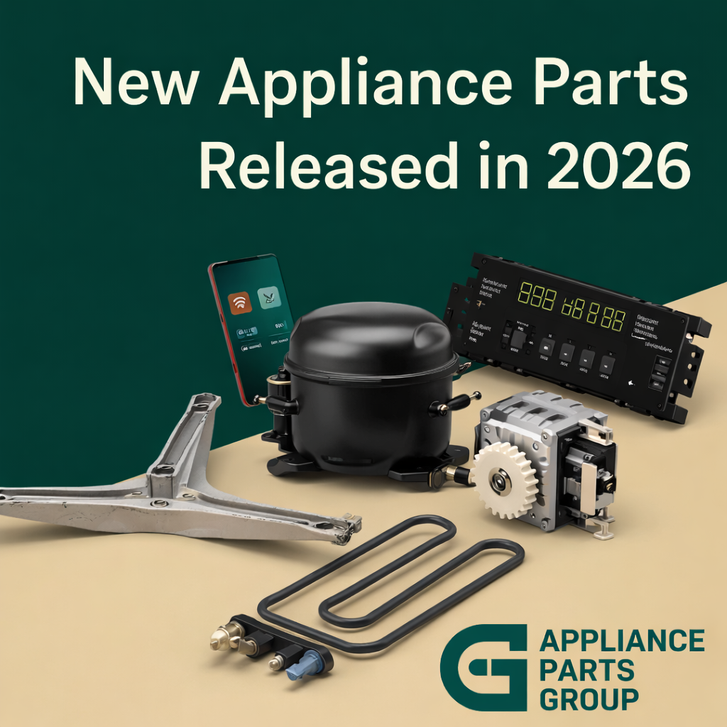
One of the most important new parts appearing in 2026 appliances is the advanced control board. While control boards have existed for decades, modern versions are significantly more sophisticated.
These updated boards function as the “brain” of the appliance, coordinating all electronic operations.
New 2026 control boards may include:
- Wi-Fi connectivity
- Remote diagnostics
- Energy monitoring
- Smart home integration
- Self-diagnostic error reporting
For example, many new refrigerators and dishwashers can now send error codes directly to smartphone apps. This helps homeowners identify problems before they become serious.
When a control board fails, replacing it with the correct OEM version ensures the appliance continues to communicate properly with other components.
Inverter and Linear Compressor Technology
Another major innovation appearing in 2026 appliances is improved compressor technology.
Traditional compressors operate by switching fully on and off. New inverter compressors and linear compressors operate more efficiently by adjusting their speed based on cooling demand.
This allows refrigerators and freezers to maintain consistent temperatures while using less electricity.
Benefits of these newer compressor designs include:
- Lower energy consumption
- Quieter operation
- Improved temperature stability
- Reduced wear on mechanical components
As these compressors become more common, replacement compressor parts designed for inverter systems are increasingly available through OEM parts suppliers.
Advanced Sensor Technology
Modern appliances rely on sensors to monitor performance and maintain efficiency. In 2026 models, manufacturers are expanding the number and accuracy of these sensors.
Some common sensors appearing in new appliances include:
- Temperature sensors
- Humidity sensors
- Water level sensors
- Load sensors
- Air quality sensors
For example, newer washing machines can automatically detect the size and weight of a laundry load. The machine then adjusts water levels and cycle time to optimize performance.
Dishwashers now use turbidity sensors to measure how dirty the water is during a wash cycle, allowing them to extend or shorten cleaning time as needed.
If these sensors malfunction, replacing the correct OEM sensor restores proper appliance performance.
Smart Water Inlet Valves
Water inlet valves are common components in dishwashers, washing machines, and some refrigerators. New 2026 models include upgraded inlet valves with electronic flow monitoring.
These valves allow appliances to precisely control how much water enters during each cycle.
Some new features include:
- Flow rate monitoring
- Electronic pressure sensing
- Leak detection systems
- Integrated solenoid diagnostics
These features help appliances detect problems such as clogged filters, low water pressure, or internal leaks.
When an inlet valve fails, replacing it with the correct OEM part ensures the appliance maintains accurate water flow.
Improved Heating Elements
Heating elements are used in many appliances including dryers, ovens, dishwashers, and water heaters.
Manufacturers have introduced updated heating elements designed to heat faster while using less electricity.
These improvements are often achieved through:
- Enhanced metal alloys
- Improved insulation
- More efficient coil design
- Integrated temperature safety sensors
Dryers with updated heating elements may reach drying temperatures more quickly while reducing energy consumption.
Step-by-Step Troubleshooting for New Appliance Components
- Check the appliance display for diagnostic error codes.
- Consult the appliance service manual to identify the affected component.
- Inspect wiring connections and harnesses.
- Test sensors using a multimeter if applicable.
- Verify water supply pressure for water inlet valve issues.
- Listen for compressor operation in refrigerators and freezers.
- Inspect heating elements for visible damage or breaks.
- Replace defective components using OEM replacement parts.
Common Parts That May Need Replacement
As appliances continue to evolve, several components are becoming more common replacement parts.
- Main electronic control boards
- Inverter compressor modules
- Temperature and humidity sensors
- Smart water inlet valves
- Heating elements
- Circulation pumps
- Door latch assemblies
- Motor control boards
Using OEM replacement parts ensures compatibility with the appliance’s electronics and software systems.
Preventative Maintenance Tips
Even the most advanced appliance parts benefit from regular maintenance.
Following a few simple steps can help prevent failures:
- Clean refrigerator condenser coils twice per year.
- Inspect washing machine hoses annually.
- Use manufacturer-recommended detergent quantities.
- Keep dishwasher filters clean.
- Ensure proper ventilation around refrigerators and dryers.
- Check water supply filters periodically.
Preventative maintenance helps modern components operate efficiently and can extend the life of the appliance.
Frequently Asked Questions
What are smart appliance parts?
Smart appliance parts are components designed to communicate with digital control systems, often including sensors, Wi-Fi connectivity, and diagnostic capabilities.
Are new appliance parts compatible with older appliances?
Most replacement parts are designed for specific models, so compatibility depends on the appliance manufacturer and model number.
What is an inverter compressor?
An inverter compressor adjusts its operating speed to match cooling demand, improving efficiency and temperature stability.
Do smart appliances require special replacement parts?
Yes. Smart appliances often require OEM components designed to communicate with electronic control systems.
Why do modern appliances have more sensors?
Sensors help appliances operate efficiently by monitoring temperature, water levels, and operating conditions.
Are OEM replacement parts better for smart appliances?
OEM parts are designed specifically for the appliance model and are typically recommended for proper compatibility.
Can homeowners replace appliance sensors themselves?
Some sensors are accessible and can be replaced by DIY homeowners, though complex repairs may require a technician.
Do newer appliances break more often?
Not necessarily. However, modern appliances include more electronic components that may require specialized troubleshooting.
How long do appliance control boards last?
Control boards typically last many years but may fail due to electrical surges or internal component wear.
What causes water inlet valves to fail?
Mineral buildup, electrical failure, and worn solenoids are common causes of inlet valve problems.
Are inverter compressors expensive to replace?
They can be more expensive than traditional compressors due to their advanced technology.
Where can I find OEM appliance replacement parts?
OEM appliance parts are available through authorized appliance parts suppliers and repair retailers.
Entities and Terms
- Control Board
- Inverter Compressor
- Linear Compressor
- Water Inlet Valve
- Temperature Sensor
- Humidity Sensor
- Heating Element
- Motor Control Board
- Circulation Pump
- Appliance Diagnostic System
This article was written by an AI program as part of a beta test by Appliance Parts Group to explore how artificial intelligence can help inform and educate our customers.
Our goal is to use AI tools to provide clear, reliable information so you can make confident, well-informed purchasing decisions.