
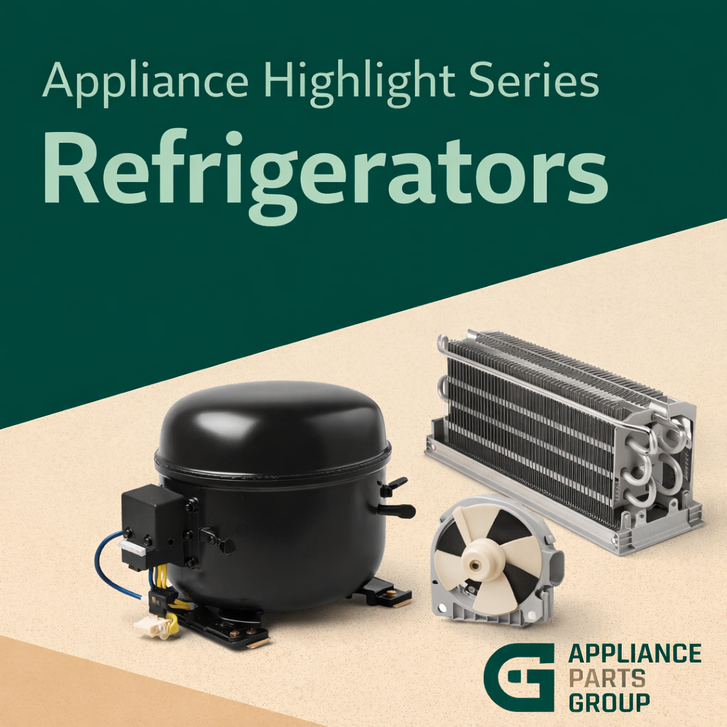
Key Takeaways
- Refrigerators rely on a sealed refrigeration system that moves heat away from stored food.
- Common refrigerator problems include poor cooling, frost buildup, water leaks, and unusual noises.
- Many refrigerator issues stem from failing components such as evaporator fan motors, thermostats, or condenser fans.
- Routine maintenance like cleaning condenser coils can significantly improve refrigerator efficiency.
- Using high-quality OEM replacement parts helps restore performance and extend appliance lifespan.
Introduction
The refrigerator is one of the most essential appliances in any home. It runs continuously, 24 hours a day, preserving food, protecting groceries, and supporting daily kitchen routines. Because refrigerators operate constantly, even small component issues can quickly turn into noticeable performance problems.
When a refrigerator stops cooling properly, begins making unusual noises, or starts leaking water, homeowners often assume the entire appliance has failed. In reality, many refrigerator problems are caused by a single worn or malfunctioning component that can be replaced.
This Appliance Highlight Series article explores how refrigerators work, the most common issues homeowners encounter, and the OEM replacement parts that often restore proper operation.
Understanding the core components and troubleshooting steps can help homeowners identify problems early and make informed repair decisions.
How Refrigerators Work
Modern refrigerators use a closed-loop refrigeration system that transfers heat from inside the refrigerator to the surrounding room. This process keeps the interior compartments cold enough to preserve food safely.
The system relies on several key components working together:
- Compressor
- Condenser coils
- Evaporator coils
- Expansion device
- Refrigerant
The compressor pressurizes refrigerant and sends it through condenser coils where heat is released. The refrigerant then expands and cools as it travels through the evaporator coils, absorbing heat from inside the refrigerator compartment.
Fans circulate air across these coils to maintain consistent temperatures throughout the appliance.
Common Refrigerator Problems
Refrigerator Not Cooling Properly
One of the most common refrigerator complaints is insufficient cooling. Food may spoil faster, beverages may not get cold enough, or the freezer may struggle to maintain freezing temperatures.
Possible causes include:
- Dirty condenser coils
- Faulty evaporator fan motor
- Malfunctioning thermostat
- Weak compressor performance
- Blocked airflow
Frost Buildup in the Freezer
Excessive frost buildup can interfere with airflow and reduce cooling efficiency. Frost accumulation often indicates a problem with the automatic defrost system.
Common causes include:
- Defrost heater failure
- Defrost thermostat malfunction
- Defrost control board issues
- Damaged door gasket allowing humid air inside
Water Leaking from the Refrigerator
Water leaks around the base of the refrigerator can be alarming but are often caused by relatively simple issues.
- Clogged defrost drain
- Cracked water line
- Ice maker supply problems
- Improper refrigerator leveling
Unusual Noises
Refrigerators normally produce some operational noise, but loud buzzing, clicking, or rattling sounds may indicate a failing component.
Noise-related issues often involve:
- Condenser fan motor
- Evaporator fan motor
- Compressor start relay
- Loose components or panels
Step-by-Step Troubleshooting
Before assuming a major failure, homeowners can perform several basic troubleshooting steps to identify the source of refrigerator problems.
- Check the temperature settings. Ensure refrigerator and freezer settings are correct.
- Inspect condenser coils. Dust and debris buildup can reduce cooling efficiency.
- Verify airflow inside the refrigerator. Avoid blocking vents with large food containers.
- Check door seals. Worn or loose door gaskets allow warm air to enter.
- Listen for fan operation. Evaporator and condenser fans should run during cooling cycles.
- Look for frost accumulation. Excess frost may indicate defrost system issues.
- Confirm the refrigerator is level. Improper leveling can affect drainage and door sealing.
- Inspect water lines if leaks are present. Ice maker lines can develop cracks or loose fittings.
These troubleshooting steps often reveal the source of common refrigerator issues.
Common Parts That May Need Replacement
Because refrigerators contain multiple mechanical and electrical components, several parts may eventually require replacement during the appliance's lifespan.
Evaporator Fan Motor
The evaporator fan circulates cold air throughout the refrigerator and freezer compartments. If this fan fails, cold air cannot move properly, leading to uneven temperatures or warm sections inside the appliance.
Condenser Fan Motor
The condenser fan helps cool the condenser coils and compressor. A failing condenser fan can cause overheating and reduced cooling performance.
Thermostat or Temperature Sensor
The thermostat regulates cooling cycles by monitoring internal temperatures. A malfunctioning thermostat can cause the refrigerator to run constantly or stop cooling altogether.
Compressor Start Relay
The start relay assists the compressor during startup. When this component fails, the compressor may struggle to start or produce clicking noises.
Door Gasket
Door seals keep cold air inside the refrigerator. Damaged gaskets allow warm air to enter, forcing the appliance to work harder to maintain temperature.
Defrost Heater
The defrost heater melts frost buildup on evaporator coils during automatic defrost cycles. If the heater fails, frost accumulates and restricts airflow.
Replacing worn components with high-quality OEM replacement parts helps maintain proper refrigerator performance and reliability.
Preventative Maintenance Tips
Routine maintenance can prevent many refrigerator issues and help the appliance operate efficiently for years.
- Clean condenser coils every 6–12 months
- Inspect and clean door gaskets
- Keep air vents inside the refrigerator unobstructed
- Check water lines for leaks or wear
- Maintain proper refrigerator temperature settings
- Ensure the appliance is level
- Avoid overloading shelves with heavy items
These simple maintenance practices can reduce strain on refrigerator components and minimize the likelihood of unexpected breakdowns.
Frequently Asked Questions
Why is my refrigerator running constantly?
A refrigerator may run continuously due to dirty condenser coils, poor door sealing, or incorrect temperature settings.
What temperature should my refrigerator be set to?
The recommended refrigerator temperature is approximately 37°F (3°C), while freezers should be set around 0°F (-18°C).
How often should condenser coils be cleaned?
Condenser coils should typically be cleaned every six to twelve months depending on household dust levels.
Why is my refrigerator making a clicking noise?
Clicking sounds often indicate a failing compressor start relay or compressor attempting to start repeatedly.
What causes frost buildup in the freezer?
Frost buildup usually results from defrost system issues or warm air entering through a damaged door gasket.
Can a refrigerator work with a faulty evaporator fan?
The refrigerator may still run, but cooling will become uneven and inefficient without proper airflow.
How long do refrigerators typically last?
Most refrigerators last between 10 and 15 years with proper maintenance.
Why is there water under my refrigerator?
Water leaks are often caused by clogged defrost drains or damaged water supply lines.
Do refrigerators require regular maintenance?
Yes, routine maintenance such as cleaning coils and inspecting seals helps improve efficiency and reliability.
When should refrigerator parts be replaced?
Parts should be replaced when they show signs of failure, such as unusual noises, cooling problems, or visible damage.
Are OEM refrigerator parts important?
OEM parts are designed to match original appliance specifications and ensure proper fit and performance.
Is repairing a refrigerator usually worth it?
In many cases, replacing a single component can restore refrigerator performance and extend its lifespan.
Entities and Terms
- Compressor
- Condenser coils
- Evaporator coils
- Evaporator fan motor
- Condenser fan motor
- Thermostat
- Temperature sensor
- Defrost heater
- Defrost thermostat
- Control board
- Door gasket
- Refrigerant
This article was written by an AI program as part of a beta test by Appliance Parts Group to explore how artificial intelligence can help inform and educate our customers.
Our goal is to use AI tools to provide clear, reliable information so you can make confident, well-informed purchasing decisions.