
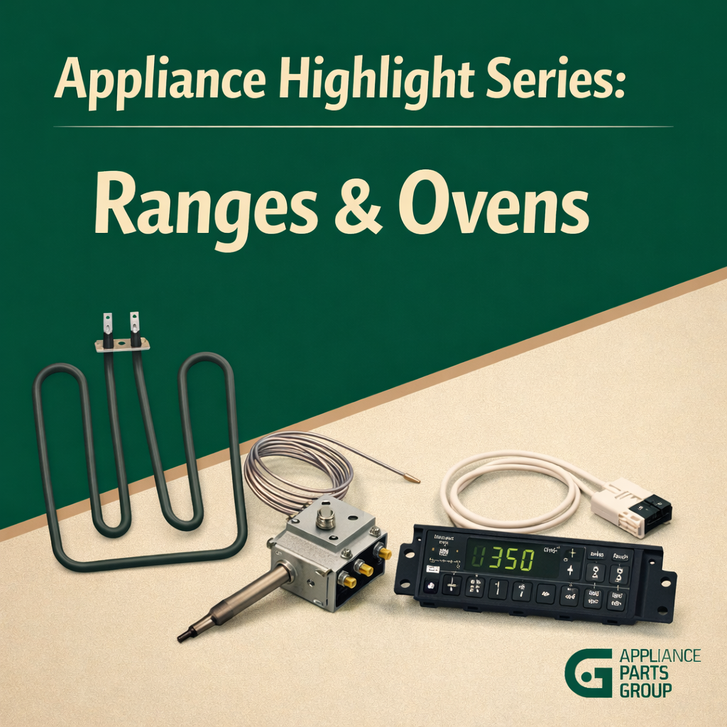
Key Takeaways
- Ranges and ovens are essential kitchen appliances with both gas and electric configurations.
- Common issues include uneven heating, ignition failures, and temperature inconsistencies.
- Many problems can be traced to key components like heating elements, igniters, and thermostats.
- Routine maintenance significantly extends appliance lifespan and performance.
- Using OEM replacement parts ensures proper fit, safety, and long-term reliability.
Introduction
Ranges and ovens are the heart of any kitchen, handling everything from quick weeknight dinners to elaborate holiday meals. Whether you have a gas range, electric oven, or a dual-fuel setup, these appliances are designed for precision and reliability.
But like any hardworking appliance, ranges and ovens can develop problems over time. From uneven baking to burners that won’t ignite, these issues can disrupt your cooking routine. In this Appliance Highlight Series, we’ll break down how ranges and ovens work, the most common problems homeowners face, and how to troubleshoot and repair them using high-quality OEM parts.
Understanding How Ranges & Ovens Work
Ranges combine a cooktop and an oven into one unit, while wall ovens operate independently. Depending on the model, they may use gas, electricity, or a combination of both.
Electric ovens rely on heating elements that generate heat when current flows through them. Gas ovens, on the other hand, use igniters to light a burner that produces heat. Both types use temperature sensors and control boards to regulate cooking temperatures.
Modern appliances often include advanced features such as convection fans, digital controls, and smart connectivity, all of which rely on additional components that can wear out over time.
Common Range & Oven Problems
1. Oven Not Heating Properly
If your oven isn’t reaching the correct temperature, the issue may lie with a faulty bake element, igniter, or temperature sensor. This can lead to undercooked or unevenly cooked food.
2. Burners Won’t Ignite
Gas burners that fail to ignite often have problems with the igniter, spark electrode, or gas supply. Clicking sounds without ignition are a common symptom.
3. Uneven Cooking or Baking
Hot spots or inconsistent cooking can result from a failing convection fan, damaged heating element, or inaccurate thermostat.
4. Oven Door Won’t Close Properly
A misaligned or damaged door gasket or hinge can cause heat loss, leading to longer cooking times and inefficient performance.
5. Control Panel Malfunctions
If buttons don’t respond or the display is inaccurate, the electronic control board or touchpad may need replacement.
Step-by-Step Troubleshooting
- Check Power or Gas Supply: Ensure the appliance is properly connected and receiving power or gas.
- Inspect Heating Elements: Look for visible damage such as blisters or breaks.
- Test the Igniter: For gas ovens, ensure the igniter glows and draws sufficient current.
- Verify Temperature Accuracy: Use an oven thermometer to compare actual vs. set temperature.
- Examine Door Seal: Check for gaps or wear in the gasket.
- Reset the Appliance: Power cycling can sometimes resolve electronic glitches.
- Inspect Wiring and Connections: Loose or damaged wires can disrupt performance.
Common Parts That May Need Replacement
When troubleshooting your range or oven, several key components are often responsible for common issues:
- Bake Element: Provides heat for baking in electric ovens.
- Broil Element: Generates high heat for broiling.
- Igniter: Lights the gas burner in gas ovens.
- Temperature Sensor: Monitors internal oven temperature.
- Control Board: Acts as the appliance’s brain.
- Convection Fan Motor: Circulates hot air for even cooking.
- Door Gasket: Seals heat inside the oven.
- Surface Burner Switch: Controls stovetop heat levels.
Choosing OEM replacement parts ensures compatibility and performance, helping restore your appliance to its original specifications.
Preventative Maintenance Tips
- Clean spills and grease buildup regularly to prevent damage.
- Inspect and replace worn door gaskets to maintain heat efficiency.
- Keep burner ports and igniters free of debris.
- Avoid slamming the oven door to protect hinges and seals.
- Periodically test oven temperature accuracy.
- Schedule routine inspections for gas connections and electrical components.
Frequently Asked Questions
Why is my oven not heating evenly?
This is often caused by a faulty heating element, temperature sensor, or convection fan.
How do I know if my igniter is bad?
If it glows weakly or fails to ignite the gas, it likely needs replacement.
Can I replace an oven heating element myself?
Yes, many homeowners can replace heating elements with basic tools and safety precautions.
What causes an oven to overheat?
A malfunctioning temperature sensor or control board is typically responsible.
Why won’t my gas burner light?
This may be due to a clogged burner, faulty igniter, or gas supply issue.
How long do oven parts typically last?
Most components last 5–15 years depending on usage and maintenance.
Is it worth repairing an old oven?
If the repair cost is reasonable and the unit is otherwise in good condition, repairs are often worthwhile.
What is a convection oven?
A convection oven uses a fan to circulate hot air for faster, more even cooking.
Why is my oven making unusual noises?
Noises often indicate a failing fan motor or loose internal components.
How do I clean my oven safely?
Use manufacturer-approved cleaners and avoid damaging sensitive components.
What does an oven control board do?
It regulates temperature, timing, and cooking functions.
How can I improve my oven’s efficiency?
Regular maintenance and timely replacement of worn parts help maintain efficiency.
Entities and Terms
- Bake element
- Broil element
- Igniter
- Temperature sensor
- Control board
- Convection fan motor
- Door gasket
- Surface burner switch
- Spark electrode
- Thermostat
This article was written by an AI program as part of a beta test by Appliance Parts Group to explore how artificial intelligence can help inform and educate our customers.
Our goal is to use AI tools to provide clear, reliable information so you can make confident, well-informed purchasing decisions.