
Key Takeaways
- Microwaves are essential kitchen appliances that rely on high-voltage components to heat food quickly.
- Common microwave issues include not heating, sparking, and turntable malfunctions.
- Key components like the magnetron, diode, and capacitor play critical roles in operation.
- Routine cleaning and proper usage can significantly extend microwave lifespan.
- OEM replacement parts ensure safety, performance, and compatibility.
Introduction
Microwaves have become one of the most widely used appliances in modern kitchens. Whether you're reheating leftovers, defrosting frozen food, or cooking quick meals, a microwave offers speed and convenience that few appliances can match.
However, like any appliance, microwaves can experience wear and tear over time. When issues arise—such as a microwave not heating or making unusual noises—it’s important to understand the underlying causes and how to address them. In this Appliance Highlight Series, we’ll break down how microwaves work, common problems, troubleshooting steps, and the key parts that keep them running efficiently.
How Microwaves Work
Microwaves use electromagnetic waves to heat food. At the core of this process is the magnetron, which generates microwave radiation. These waves excite water molecules in food, producing heat from the inside out.
Key components involved include:
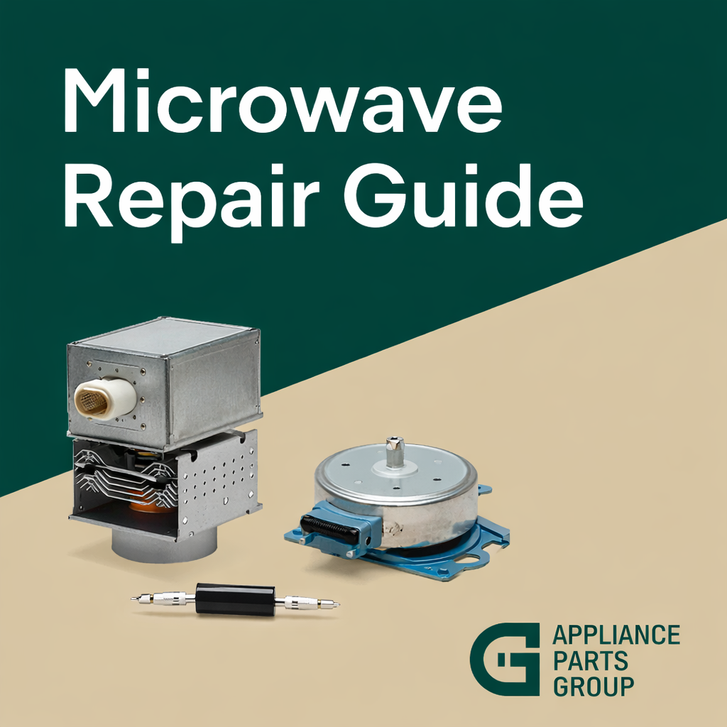
- Magnetron
- High-voltage capacitor
- Diode
- Turntable motor
- Control board
When any of these components fail, the microwave may stop functioning properly.
Common Microwave Problems
Microwave Not Heating
This is one of the most common issues. The microwave may appear to run normally, but the food remains cold.
Possible causes:
- Failed magnetron
- Defective high-voltage diode
- Faulty capacitor
Sparking Inside the Microwave
Sparks or arcing can be alarming and should be addressed immediately.
Possible causes:
- Damaged waveguide cover
- Food debris buildup
- Metal objects inside the cavity
Turntable Not Spinning
If the turntable doesn’t rotate, food may heat unevenly.
Possible causes:
- Worn turntable motor
- Broken roller guide
- Obstructed rotation path
Microwave Display Not Working
A blank or unresponsive display can make the microwave unusable.
Possible causes:
- Control board failure
- Loose wiring
- Blown fuse
Unusual Noises
Loud humming or buzzing noises often indicate internal component issues.
- Failing magnetron
- Worn cooling fan
- Loose internal parts
Step-by-Step Troubleshooting
- Unplug the microwave and ensure safety before inspection.
- Check the power supply and outlet.
- Inspect the door switch to ensure proper closure.
- Examine the interior for debris or damage.
- Test the turntable motor functionality.
- Look for signs of burning or electrical damage.
- Use a multimeter to test components like the diode and capacitor (if qualified).
- Replace faulty parts with OEM replacements.
Common Parts That May Need Replacement
Several components are more prone to failure due to frequent use or electrical stress:
- Magnetron: Generates microwave energy. A failed magnetron results in no heat.
- High-Voltage Diode: Converts AC to DC power for the magnetron.
- Capacitor: Stores electrical energy and supports high-voltage operation.
- Door Switch: Ensures the microwave operates only when the door is closed.
- Turntable Motor: Rotates food for even heating.
- Control Board: Manages settings and operation.
Using OEM replacement parts ensures compatibility, safety, and long-term reliability. These parts are specifically designed for your appliance model and meet manufacturer standards.
Preventative Maintenance Tips
- Clean the interior regularly to prevent buildup and arcing.
- Avoid placing metal objects inside the microwave.
- Use microwave-safe containers only.
- Do not run the microwave empty.
- Inspect the door seal and hinges for wear.
- Wipe down the control panel to prevent button failure.
- Ensure proper ventilation around the appliance.
Frequently Asked Questions
Why is my microwave running but not heating?
This is typically caused by a failed magnetron, diode, or capacitor.
Is it safe to repair a microwave yourself?
Microwaves contain high-voltage components. Repairs should only be done if you have proper knowledge and safety precautions.
What causes a microwave to spark?
Sparks are usually caused by metal objects, food debris, or a damaged waveguide cover.
How long do microwaves typically last?
Most microwaves last between 7–10 years with proper maintenance.
Can a blown fuse stop my microwave from working?
Yes, a blown fuse can prevent the microwave from powering on.
Why is my microwave making loud noises?
This may indicate a failing magnetron or cooling fan.
What does the diode do in a microwave?
The diode converts electrical current to power the magnetron.
Why won’t my microwave turntable spin?
A faulty turntable motor or obstruction is usually the cause.
Can I use aftermarket parts for repairs?
OEM parts are recommended for proper fit and performance.
What maintenance does a microwave need?
Regular cleaning and inspection of internal components help maintain performance.
Is it worth repairing an old microwave?
If the repair cost is reasonable compared to replacement, it can be worthwhile.
What is the most common microwave failure?
The most common issue is failure to heat due to magnetron problems.
Entities and Terms
- Magnetron
- High-voltage diode
- Capacitor
- Turntable motor
- Control board
- Waveguide cover
- Door switch
- Fuse
- Cooling fan
- Microwave cavity
This article was written by an AI program as part of a beta test by Appliance Parts Group to explore how artificial intelligence can help inform and educate our customers.
Our goal is to use AI tools to provide clear, reliable information so you can make confident, well-informed purchasing decisions.