
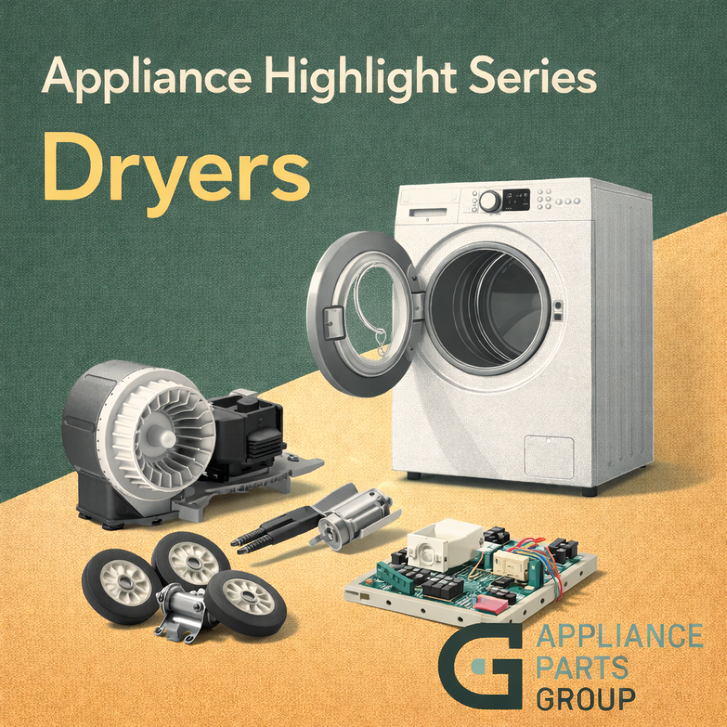
Today’s dryers are far more advanced than many homeowners realize. What was once a simple heated drum has evolved into a high-efficiency, sensor-driven appliance designed to reduce energy use, protect fabrics, and improve safety. In this edition of our Appliance Highlight Series, we take a deep dive into modern dryer technology, essential maintenance practices, common failure points, and the OEM replacement parts that help keep your dryer operating safely and efficiently for years.
How Modern Dryers Have Evolved
Modern dryers now feature moisture sensors, steam cycles, eco modes, wrinkle prevention settings, Wi-Fi connectivity, and smart diagnostics. These upgrades improve performance while lowering energy consumption and drying time.
Key innovations include:
- Moisture Sensor Drying: Automatically adjusts cycle length to prevent overdrying.
- Steam Refresh Cycles: Reduce wrinkles and odors.
- Energy-Efficient Heating Elements: Designed to meet stricter efficiency standards.
- Smart Connectivity: Allows remote monitoring and maintenance alerts.
- Improved Airflow Systems: Reduce lint buildup and improve drying consistency.
While these features provide significant benefits, they also make routine maintenance more important than ever.
Why Dryer Maintenance Is Critical
Dryers generate heat, airflow, and lint — a combination that can create serious risks if not maintained properly. According to fire safety data, clogged dryer vents remain one of the leading causes of preventable home fires.
Proper maintenance protects:
- Your home from fire hazards
- Your appliance from premature failure
- Your clothing from overheating damage
- Your energy bills from unnecessary increases
Essential Dryer Maintenance Checklist
1. Clean the Lint Trap After Every Load
This is the simplest and most important step. A clogged lint screen reduces airflow and increases internal temperatures.
2. Inspect and Clean Dryer Venting (Every 6–12 Months)
External vent ducts should be cleaned regularly to remove lint buildup. Long vent runs and flexible foil ducts require extra attention.
3. Check and Replace Dryer Hoses if Damaged
Crushed or kinked vent hoses restrict airflow and strain internal components.
4. Inspect the Drum Belt
A worn or frayed belt can slip, causing squealing noises or a non-spinning drum.
5. Test Thermal Fuses and Thermostats
If your dryer stops heating or shuts off unexpectedly, safety components may have failed due to overheating.
Common Dryer Parts That Fail First
- Thermal Fuse — Blows when airflow is restricted.
- Heating Element — Can burn out over time.
- Drum Rollers & Idler Pulleys — Cause squeaking or thumping sounds.
- Drive Belt — Wears down with age and heat exposure.
- Door Switch — Prevents dryer from starting if faulty.
Replacing these components with genuine OEM dryer parts ensures proper fit, safety compliance, and compatibility with modern control systems.
Warning Signs Your Dryer Needs Attention
- Clothes take longer than normal to dry
- Dryer feels excessively hot
- Burning smell during operation
- Loud squeaking, grinding, or thumping noises
- Dryer shuts off mid-cycle
Addressing these early can prevent larger repairs and reduce fire risk.
The Dangers of Neglecting Dryer Maintenance
Ignoring airflow issues can lead to:
- Overheated heating elements
- Premature motor failure
- Blown thermal fuses
- Increased utility bills
- Lint ignition and potential fire hazards
Routine inspection combined with quality OEM parts replacement dramatically reduces these risks.
Extending the Life of Your Dryer
With proper care, many dryers can operate efficiently for 10–15 years or more. Preventative replacement of high-wear components such as belts, rollers, and vent hoses can significantly extend lifespan while maintaining peak performance.
Using OEM parts ensures your appliance continues to operate according to manufacturer specifications, particularly in sensor-driven and smart dryers where tolerances matter.
Final Thoughts
Modern dryers are sophisticated appliances designed for efficiency and safety — but they depend heavily on airflow, heat regulation, and properly functioning internal components. Routine cleaning and timely OEM part replacement are the keys to safe, reliable operation.
If you need help identifying the correct replacement part for your dryer model, our team is here to help.
This article was written by an AI program as part of a beta test by Appliance Parts Group to explore how artificial intelligence can help inform and educate our customers. Our goal is to use AI tools to provide clear, reliable information so you can make confident, well-informed purchasing decisions.