
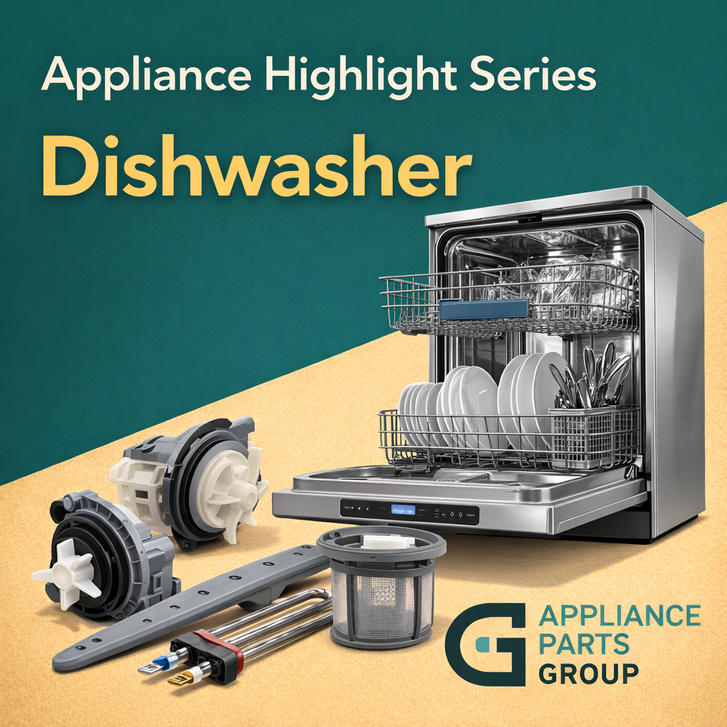
Modern dishwashers are far more advanced than many homeowners realize. Today’s models are engineered for water efficiency, quiet operation, targeted spray performance, and smart diagnostics. While they may look simple from the outside, internally they rely on multiple pumps, valves, sensors, heating systems, and control boards working together in precise coordination.
In this edition of our Appliance Highlight Series, we explore how modern dishwashers operate, what routine maintenance they require, the most common failure points, and how using genuine OEM replacement parts protects performance, efficiency, and appliance lifespan.
How Modern Dishwashers Have Evolved
Dishwashers today use significantly less water and energy than models from 10–20 years ago. Improvements in pump design, spray arm engineering, filtration systems, and electronic controls have transformed cleaning efficiency.
Key advancements include:
- Multiple Spray Arm Systems — Targeted spray zones improve cleaning coverage.
- Soil Sensors — Adjust cycle time based on how dirty the load is.
- High-Efficiency Wash Pumps — Deliver strong pressure while using less water.
- Condensation & Heated Dry Systems — Improve drying performance.
- Smart Diagnostics & Wi-Fi Connectivity — Provide maintenance alerts and error codes.
- Stainless Steel Tubs — Improve heat retention and durability.
While these innovations increase convenience and efficiency, they also increase the importance of preventative maintenance.
Why Dishwasher Maintenance Matters
Dishwashers handle heat, water pressure, detergent, food debris, and electrical components simultaneously. Without routine care, small issues can quickly escalate into leaks, poor cleaning performance, or costly electronic failures.
Proper maintenance protects:
- Your kitchen cabinetry and flooring from water damage
- The wash pump and motor from premature failure
- Heating elements from mineral buildup
- Control boards from moisture intrusion
- Your overall energy and water efficiency
Essential Dishwasher Maintenance Checklist
1. Clean the Filter Regularly
Most modern dishwashers have removable filters that trap food debris. Cleaning them monthly prevents clogs and wash pump strain.
2. Inspect and Clean Spray Arms
Clogged spray arm holes reduce cleaning effectiveness. Remove and rinse periodically to maintain strong water flow.
3. Check the Door Gasket
The rubber door seal prevents leaks. Wipe it clean regularly and inspect for cracks or tears.
4. Run a Cleaning Cycle
Use a dishwasher cleaner or vinegar cycle monthly to remove detergent buildup, grease, and mineral deposits.
5. Inspect the Drain Hose
A kinked or partially clogged drain hose can cause standing water or incomplete draining.
Common Dishwasher Parts That Wear Out
- Wash Pump Motor Assembly — Circulates water through spray arms.
- Drain Pump — Removes wastewater at the end of each cycle.
- Heating Element — Aids in drying and sanitization cycles.
- Water Inlet Valve — Controls water flow into the unit.
- Door Latch & Switch — Ensures safe operation.
- Float Switch — Prevents overfilling.
- Main Control Board — Coordinates all electronic functions.
Because modern dishwashers rely heavily on sensors and electronics, using genuine OEM parts ensures proper calibration and compatibility.
Warning Signs of Potential Dishwasher Failure
- Dishes remain dirty after a cycle
- Standing water at the bottom of the tub
- Unusual grinding or humming noises
- Leaking from the front or bottom
- Error codes on the control panel
- Drying performance declines
Addressing these symptoms early can prevent more extensive internal damage.
The Risks of Ignoring Maintenance
Neglecting dishwasher maintenance can result in:
- Water damage to flooring and cabinetry
- Burned-out wash motors
- Control board failure from moisture exposure
- Reduced cleaning performance
- Higher utility bills
Preventative OEM part replacement is significantly less expensive than emergency repairs or full appliance replacement.
How Long Should a Dishwasher Last?
With proper maintenance and quality OEM replacement parts, many modern dishwashers can operate efficiently for 10–15 years. Routine cleaning and early replacement of high-wear components dramatically improve reliability.
Final Thoughts
Today’s dishwashers are efficient, powerful appliances that depend on proper airflow, water pressure, heat regulation, and electronic coordination. Routine inspection and timely replacement of worn components with genuine OEM parts ensure long-term performance and peace of mind.
If you need help identifying the correct replacement part for your dishwasher model, our team is here to assist.
This article was written by an AI program as part of a beta test by Appliance Parts Group to explore how artificial intelligence can help inform and educate our customers. Our goal is to use AI tools to provide clear, reliable information so you can make confident, well-informed purchasing decisions.